OM System New Products 2026: OM-1III, new PEN and Tough?

Share

DClife predicted what OM SYSTEM could announce in 2026:

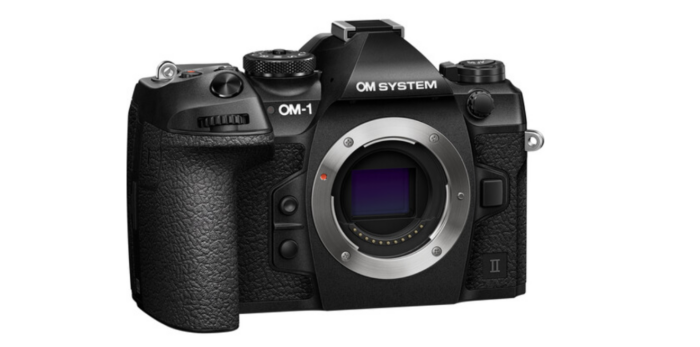
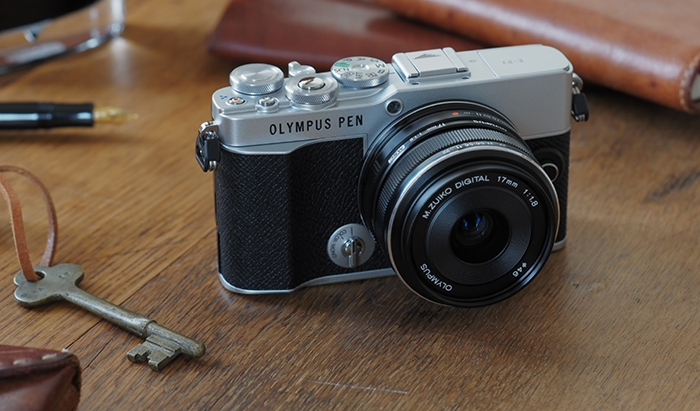
It’s about time to expect the arrival of a new generation of cameras. For example, I’d love to see the release of the “OM-1III” or a new Micro Four Thirds camera similar to the “PEN-F.” While the compact digital camera market seems to be booming recently, OM SYSTEM hasn’t seen any movement since the release of the “Tough TG-7” in 2023. Hopefully, we’ll see some movement in 2026. OM SYSTEM tends to announce new products in the lead-up to CP+, so we should expect information (rumors) starting around the new year. CP+ 2026 will be held February 26th-March 1st.

Yes, I think OM will announce something new before the CP+ show. Don’t see the OM1III coming yet, also a new PEN seems far out if we believe the statements from the manager. A new Tough camera is highly likely to be announced and maybe also a new MFT lens.

Share

a bit of everything…

Share


OM SYSTEM 150-600mm FULL REVIEW: Wildlife Photography Super Telephoto GAME-CHANGER?

Today deals at Amazon, BHphoto, Adorama, Amazon DE, Amazon UK, Amazon FR, Amazon IT, FotoErhardt DE, FotoKoch DE.
The (Almost) Perfect Minimal Camera Kit for Outdoor Photography (Henry Tunrner)
The picture quality you get from the “Plastic Fantastic” kit lens always amazes me (Reddit M43 group).
Cinema Cameras: What Filmmakers Need to Know (Explora)
Gear Up, Part 2: Must-Have Cameras and Lenses (42West)

Plenty of news on the facebook OMD group, Panasonic FF and the GH5 group.
I kindly invite you all to follow me on Youtube, Instagram, Threads for more broader camera talk.

Share

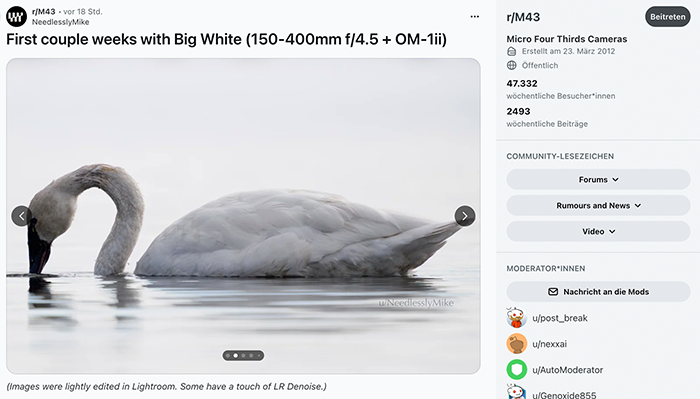
First couple weeks with Big White (150-400mm f/4.5 + OM-1ii)

Share

Reddit member Mike shared some very beautiful images shot with the $8999 (!!!) OM 150-400mm PRO lens. The images and his report got a ton if likes and comments so I think it’s worth to jump over to Reddit to see his images and also to read his findings I reposted here:

So, I’ve been slowly selling my equipment to save up for the 300 f/4. However, while stumbling around in Japan, I came across one of those rare “buy it now or you may regret it forever” situations…long story short, I passed on the prime and came back with Big White. Since my wallet wasn’t expecting this, I’ll be exclusively eating tomato soup in the foreseeable future. But whatever. I like tomato soup. 

Some things I’ve learned in recent weeks:

– Obviously the lens is fantastic, but I’m a little surprised why. The specialness comes from the versatility. The quality at every focal length + the 4.5 constant aperture + the TC + the lovely balance = a Swiss Army knife in the field. The image quality is just one bit of the equation.

– With that said, I’ll now say something that no Youtuber will ever say in a video lest they wreck their affiliate link potential: For most people, this lens is an absolute waste of money. There, I said it. This is a very niche product for a very niche user—I would wager that most people will find the 300 f/4 or the new 50-200mm to be a better buy. BUT if you tend to plan your trips around wildlife photography, or you often find yourself crawling through muck in freezing rain to inch closer to a bird’s stupid beak, I can’t think of anything more flexible. I’m very happy with my choice. 

– The OM-1 ii’s AF just works better with this specific lens (and the AF-All target mode is ridiculously good paired with it). It might be due to the motors or the extra light it’s gathering. Or maybe all my used equipment was just busted and I never knew better.

– After years of no photographer wanting to talk to me in the field, everyone and their grandma wanted to talk to me when I had Big White out. (I legit think they thought it was a new Canon lens.)To their credit, they were all very respectful when I went into my tedious monologue about the pros and cons of M43. And just to confirm the suspicion of OM Marketing, most of these guys and gals had no clue what Micro Four Thirds is.

(Side tangent: Photographers who own a Sony or Canon full frame 600mm f/4 will let you know very quickly, and it will always come up in an awkward way. Funny enough, none of them had the lens with them while they were out. They were just really proud to tell me it’s in their house.)

– I was afraid that a white lens would make animals more skittish, but there was no discernible difference. In fact, some even came up to me to talk about their FF 600mm f/4.

– This lens will NOT magically make you a better photographer or allow you to break physics: bad composition, atmospheric haze, and poor fieldcraft will still result in the same ol’ trash images…just slightly sharper. Drat.

I’m still learning the lens, but ask if you have any questions. Note, most of these photos were taken in not-great light. I’m pleased with the results, but I can’t wait for the sun to return to the PNW…

Share

Jerred Z tested BIG Prints: Micro Four Thirds vs The Myth

Share

Jerred Z posted this interesting video that debunks one of the never ending myths, the belief that OM Systems’ 20-megapixel sensors are inadequate.

Despite widespread skepticism, 20 megapixels can indeed deliver impressive prints. Jerred shares personal experiences successfully printing images as massive as 5 feet(!!!) wide without sacrificing quality. This challenges the traditional notion of needing higher megapixels for large prints.

Five Guiding Concepts for Large Prints

  • Good Technique and Lenses: Mastery of camera settings in manual mode combined with high-quality lenses can make a significant difference. The OM Systems lenses, such as the 12-100mm F4 and 50-200mm 2.8, are highlighted for their sharpness and reliability.
  • Utilizing High Resolution Modes: Techniques like handheld high-resolution modes can yield up to 50 megapixels, or even 80 in tripod mode, benefiting dynamic range and reducing noise. Using these modes creatively can enhance output.
  • Editing Matters: The editing process is crucial, like utilizing tools like Lightroom to improve image quality before printing.
  • Overcoming Challenges: By embracing editing methods such as denoising and sharpening, photographers can prepare their images for printing effectively, ensuring quality is maintained.
  • Collaboration with Printers: Establishing a relationship with a skilled printer is emphasized. Understanding how different paper types affect print results can lead to successful outcomes, even with lower resolutions.

Conclusion: Focus on Creativity

The discussion reiterates that final prints should delight viewers rather than satisfy pixel peepers. Photographers should focus on their craft and the emotions they want to convey through their work, rather than solely concentrating on technical specifications.

Share

a bit of everything…

Share


How to Set the L-Fn & Preset Button on the M.Zuiko 50-200mm f/2.8

Today deals at Amazon, BHphoto, Adorama, Amazon DE, Amazon UK, Amazon FR, Amazon IT, FotoErhardt DE, FotoKoch DE.
Capturing Christmas Lights with the OM SYSTEM OM-3 and F1.8 Prime Lenses (Red35)
Gävle Hamn – Between Steel and Mist (Olympus Passion)
Gifts for the Photographer Who Has It All (Explora)
Gear Up: The Hottest New Tools for Photographers and Filmmakers (42West)

Plenty of news on the facebook OMD group, Panasonic FF and the GH5 group.
I kindly invite you all to follow me on Youtube, Instagram, Threads for more broader camera talk.

Share

The Resurgence of Micro Four Thirds: A Catalyst for the Photography Community

Share
On Reddit MFT shooters are commenting about the m4/3 fresh momentum suggests the system is enjoying a genuine resurgence. Based on the comments there are a couple of reasons why this is the case:
  1. MFT cameras are renowned for portability—often a decisive factor for creators on the move. While full-frame bodies can offer advantages in absolute image quality and low-light performance, their size and weight can be a drawback for travel, street, and all-day shoots. MFT strikes a smart balance: high-quality results in a lightweight package.
  2. A major strength of the MFT ecosystem is its extensive lens catalog shared across brands. Because the mount is common, photographers can mix and match lenses—from ultra‑wide to super‑telephoto, as well as macro and fast primes—without being locked into a single manufacturer. This breadth invites experimentation and makes it easier to build a kit that’s tailored to your style and budget.
  3. Creators and influencers showcasing MFT setups have helped reshape perceptions around “small sensor” systems. Real‑world results—cinematic video, sharp telephoto work, and compelling street imagery—demonstrate that smaller cameras can deliver professional‑grade output when paired with the right technique and glass.

While Google Trends and other metrics prove MFT has gained some interest recently we truly need Panasonic and OM Digital to launch new cameras that do inspire confidence in the sytem.

 
Share