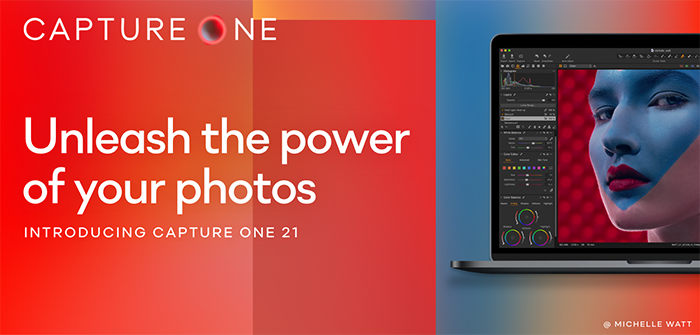
Capture One 21 officially released

Phase One released the new Capture One 21 software (full info here).It brings new features like the “Dehaze” tool, HEIC support, Speed Edit and more. You find the full press release down below as well as a number of videos that introduce some of the new tools.

COPENHAGEN, Dec 8th, 2020: Capture One, the premier name in photo editing software, celebrates the release of the newest version, Capture One 21.

Linking our heritage to our future, this new version of Capture One reimagines the relationship between form and function to create a seamless bond between creator and creation. Combining its best-loved elements like personalized Workspaces and powerful Color Editor with new and exciting features like Speed Edit for immersive editing and Dehaze, to improve atmospheric conditions, Capture One 21 brings a new type of user experience; one that helps creators push the boundaries of their creativity by removing distraction and making it easy to exploit one’s creative potential.

Carrying on the tradition of development driven by user feedback, Capture One 21 is rooted in developing solutions to current challenges and anticipating tomorrow’s needs. With new ProStandard Color Profiles Capture One 21 introduces color technology that preserves authentic colors to overcome the challenge of unwanted hue changes when applying adjustments, and new HEIC support means Capture One is ready to work with cameras of today and tomorrow. It is also now easier than ever to learn Capture One with enhanced tooltips and easy access to tutorials right from within the software. Complimenting this suite of new features are improvements to current ones, bringing faster asset management and an improved importer to make organization effortless and quick.

Furthering its commitment to providing unparalleled raw processing and tethering with more than 500 different camera models, Capture One is delighted to launch a new collaboration with Leica Camera AG to bring industry leading tethering support to a growing catalog of Leica cameras, starting off with the Leica SL2 and Leica S3.

“Capture One 21 bridges our heritage to the future, carrying forward the achievements of our team and the creative community we are inspired by,” says Jan Hyldebrandt-Larsen, VP Product Management, CPO at Capture One. “We understand that art and tastes don’t stop evolving, so we provide performance that won’t stop advancing. We are very excited about Capture One 21 and look forward to seeing what photographers create with it, and to embrace new generations of creatives.”

New features and tools in Capture One 21

  • Speed Edit
    Revolutionize how fast you edit photos. Speed Edit lets you work seamlessly without touching a slider on the interface – simply hold down selected hotkeys and scroll, drag or use the arrow keys to make rapid edits. You can even adjust multiple photos at once for the fastest ever batch edit.
  • Dehaze
    Eliminate haze and the most undesirable atmospheric weather conditions with the ease of moving one slider. The groundbreaking new Dehaze tool uses deep analytic algorithms to assess and automatically adjust contrast, saturation and a matrix of other parameters to remove haze and reveal the image you want.
  • Faster Asset Management
    Get seamless asset management. With increased power and speed, it’s now faster than ever to import, search and browse photos in Catalogs and Sessions.
  • Improved Importer
    With better selection, high-resolution thumbnails, and faster importing, it’s smoother, easier, and quicker to select images directly in the importer – and cull the ones you don’t want. Plus, import images from different folders all at once.
  • Enhanced Tooltips
    The onboarding experience and familiarization with Capture One is now smoothest it has ever been, thanks to the new enhanced tooltips. Navigate the Capture One interface with ease – simply hover over a tool for a quick explanation of how it works and links for more learning. Enable or disable them from Preferences as you like.
  • Learn
    It’s never been easier to get started and master Capture One. Together with the enhanced tooltips, the new “Learn” button allows users to quickly access a curated selection of tutorials designed to help you learn step-by-step, right from within the software, and immediately put new skills into practice.
  • HEIC Support
    With support for HEIC files (8-bit), you can now edit photos from your Apple devices and more in Capture One.
  • ProStandard Profiles
    Stay true to real life with the most authentic colors yet, using the new color science/technology in the new ProStandard Profiles. These new camera profiles overcome the challenge of unwanted color shifts while making adjustments, protecting hues from changes caused by contrast. This is a true game changer for portrait and product photography – and any image that relies on authentic color.
    Available for select camera models that can be found at support.captureone.com
  • Easy Brush Adjusting
    It’s now possible to easily change the size, hardness, opacity, and flow of any brush by using modifier keys and a mouse / trackpad / pen, removing the need to right-click.
  • Capture One & Leica
    Unlike other raw processors, Capture One’s camera profiles are uniquely developed for each specific camera model, a process that requires the use of the camera in and out of a controlled lab in Copenhagen, where a team of specialists engage each new model in various scenarios. They then evaluate all the performance parameters such as color, sharpness, and noise across hundreds of images and uses that data to deliver a truly tailored profile, which ultimately provides the best post-processing experience. Capture One 21 brings this level of support to a growing list of Leica cameras, and for the first time brings tethering capabilities to those models.

Read all about Capture One 21 at: www.captureone.com

New camera and lens support
Capture One provides users with the most accurate and powerful image editing available, and the wide-ranging support of cameras and lenses is a hallmark of the software. For enthusiasts and professionals alike, Capture One continually evolves to handle the newest cameras and lenses.

Capture One carefully evaluates and interprets each camera’s RAW formats, allowing Capture One to present images with the utmost fidelity, often bringing out nuances that other programs can’t even perceive.

Currently offering RAW support for more than 500 cameras, Capture One also provides profiling and image correction support for more than 500 lenses. As with the RAW file interpretation, Capture One carefully measures the optical characteristics of each supported lens and builds correction algorithms that compensate for the various optical imperfections of various designs. As a result, Capture One can correct for numerous common optical issues such as vignette, and chromatic aberration as needed for each of the supported lenses, providing you the best version of your image possible. And they are always adding support for the newest camera bodies and lenses.
Check out more details and pricing at the Capture One Page.

Olympus engineer Hiroshi Suzuki suggests future direction for the new JIP/Olympus company. Focus on Telephoto and Video niche.

In an interview released at Maptimes Olympus engineer Hiroshi Suzuki talks about the future direction of the JIP/Olympus company:

Micro Four Thirds will remain the focus because:

  • “The Micro Four Thirds system is the only mount system that realizes small size, light weight and high image quality at a high level”
  • “I think that the features of the Micro Four Thirds system are the overwhelming system mobility in the telephoto system”

About the future development:

  • “Our ideal is to be able to take the camera with you wherever you go and ensure that you get the exact picture you want in any scene. We believe that we are still in the middle of achieving this goal. We will continue to develop the product in order to provide ” a new experience beyond the imagination of our customers ” while making the best use of our strengths .
  • “We hope that you can expect the functions to further enhance the mobility, which is one of our strengths, and the ” creation of new needs ” that are not yet visible to our customers.”
  • “We sincerely apologize for causing concern and anxiety to many customers since the announcement of the transfer of our video business. However, as the representative of our company sends, we do not withdraw from the video business. We will continue to provide products, services and solutions to our customers, so please feel free to use them.”
  • “OMD / PEN / ZUIKO brand products will continue”

In Summary:
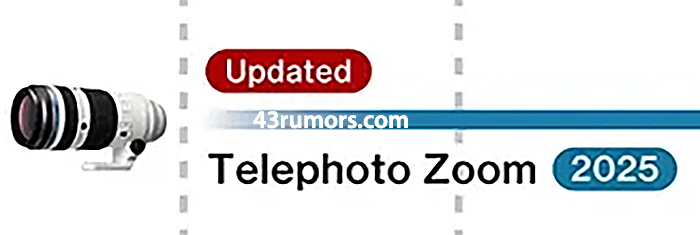
It’s clear their focus will be on the “telephoto” photographers niche and on Video. And so far they plan to keep the PEN line alive. Hope there is room for a new PEN-FII :)

Guest post by Cecil about the OM Digital Solutions Corporation

Our reader Cecil wrote down his thoughts on the future of the new OM Digital Solutions Corporation:

As you know, the future of OM Digital Solutions Corporation and the continuation of the camera lines we use is not yet clear. Sony has captured the primary position for video with the A7s III and Panasonic has apparently ceded the field of M43 for all practical purposes. All the major competitors remaining in the interchangeable lens camera business now have mirrorless offerings featuring technical improvements in sensor and new auto-focus technology.

Against this background, JIP is currently holding fire sales of existing Olympus camera inventory. They are clearly trying to turn surplus inventory into cash and eliminate some “white elephants” Olympus produced. These are reasonable actions for executives facing a hostile new market. JIP is also aware that they have to stop any run for the exits by existing Olympus users and especially influencers if they are to survive.

The body size advantages m43 had have evaporated as other firms have moved to mirrorless designs. However, the lens size advantages of the smaller sensor still exist. For a little while, JIP still has an advantage with long glass users. The original m43 ‘telecentric’ design means that m43 can deliver reach for less weight and cost. The 20MP sensor and its poor high ISO performance is a problem, but for some users this is not yet critical as the competition is lagging in alternative mirrorless products.

The risk to m43 has never been full frame (FF) cameras. It was always APS-C. The argument over mirrorless design vs DSLR is over, and mirrorless won. The argument of lens size, weight and cost is still going on. Fuji was the first major player to realize they could deliver enough resolution and high ISO performance with advance APS-C chips to carve out a segment with both professionals and consumers. Like Olympus, Fuji has a long history of excellent optical design. They leveraged this to produce the X series of cameras and lenses with APS-C BSI sensors. What Fuji has not yet done is produce a range of faster, long glass. This year they stated they will fix that in 2021. This will be a huge threat to JIPs target market.

Now Canon has finally decided to come to this party as well. When they finally released pro mirrorless bodies, Canon radically improved their sensor performance and resolution, added world class IBIS and challenged Sony for the state-of-the-art auto-focus title. They have admitted they are now going to offer all of this in a pro APS-C replacement for the venerable 7d mark ii. The 7d mark ii is one of the most accomplished success stories for wildlife photographers and anyone needed a portable camera with long reach. Canon will bring all its technical advances to a new APS-C pro body in 2021. This is a mortal threat to JIP as Canon already has the world standard in long glass for sports and wildlife photography.

And then we have Nikon. The main question is actually “do we have Nikon?”. It is not yet clear if Nikon is going to stay in the camera business. If they do, then JIP faces a triple threat. The D500 is the DSLR that comes closest to being the direct alternative to any Olympus pro camera. It has a comparable sensor (with about the same weaknesses), similar frame rates and outstanding autofocus that still beats all Olympus cameras in BIF tests by a little bit. However, there is not an announced plan for a mirrorless version of the D500 yet. If Nikon stays in business, they will have to release one when Canon drops the mirrorless 7D mark ii replacement or loose a huge number of sales they can ill afford. Like Canon, they already have excellent glass that is already the next to most popular for sports and wildlife shooters. Nikon is still struggling with catching Sony and Canon in auto-focus, but this is a “do or die” for them, and they have committed to being on par with Canon and Sony just to survive. They also already moved to BSI sensors and improved resolution when they went mirrorless, so they will have to stick with that for any APS-C offering to compete with Canons products.

This leaves Sony. Sony appears ambivalent over APS-C for professionals. I don’t expect that to change as the a7r IV already offers pros a crop mode many use for extra reach in wildlife shoots. At 60MP the Sony BSI sensor provides substantially more pixels than Olympus for the same sized target in any mode. Its noise performance is much better and that of Olympus cameras and its auto-focus in the new standard for people, animals and action. Sony has nothing left to prove, and they are not done innovating. Their target is Canon now, and of course the final crushing of Nikon. However, they are happy to consume other firms markets as a side benefit.  I don’t expect them to split off APS-C pro as an offering in 2021.

So what of JIP and the cameras we use?

JIP can try to keep selling what it got “as is” from Olympus to get as much money out of it as it can before the asset reaches no substantial value. This is the “new wine in old bottles” approach and has some business sense to it. If you just keep repackaging existing Olympus tech at lower price points you can capture a lot of people for whom the EM-1 mark iii is better than what they have.

However, Canon and Fuji want that market too, and even Sony wants the consumer APS-C market. They all have new offerings with improved tech at lower prices. I don’t think JIP could survive a price war with either Fuji or Sony over consumer level sales.

As for the professional market it is time to either deliver new product or go home. JIP has 6-9 months to get a new version of the EM-1 ready, or they will be caught by a flurry of releases from Fuji (long glass and new APS-C cameras) and Canon (an APS-C camera with existing long glass for mirrorless). Sony will continue to just come out with a new a7r and drop the price of the a7r mark IV with crop mode. Nikon will be late, but if they still play at all, they can at least announce a pro APS-C in 2021.

JIP has to have some sort of story to tell about how the sensor and autofocus in the next EM-1 generation is going to compete. If they don’t, then it is back to the “sell it all off as best we can” approach. There is no alternative when your sensor is over 4 years old.

The resolution is not the biggest issue. Unless a miracle of sensor design happens, no m43 sensor with good ISO performance will offer very high MP counts. But most professionals can work well with between 20MP and 30MP. 20 is a little low, but 24MP -32MP is enough if the ISO performance is at least 1 stop better. 1.5 stops or 2 stops would be safer, but at this point I just hope JIP stays in the game at all.
The next few months will show us if there is a longer-term future for Olympus gear. I hope there is, but if not, it will take a couple years to wind it down. It also might remain a vestigial firm like Pentax or Hasselblad. There is always the possibility that a new firm might enter the m43 area. A Samsung or similar tech-oriented group could shake this up again. If not, then the day will go to APS-C. This is the real story, as the sales for FF have never actually been there when compared against APS-C. The giants of the field just could not admit that due to having ego’s that go with their image as “leaders”. The money has always been in the higher volume crop sensors, but the glory never has followed. In the end the money wins. I only hope JIP carves out some of that money for m43 and OM Digital Solutions products.

a bit of everything…


Bird Photography with Ben Knoot and the M.Zuiko Digital ED 150-400mm F4.5 TC1.25x IS PRO

What You Need for a Home Vlogging Kit (Explora).
6. Oly-Forum Stammtisch: 150-400mm F4.5 TC1.25x IS PRO
Game Changers from Olympus 150-400 f/4.5 lens and Bird Detection AF (Tim Boyer)
A family affair: Why the Olympus system is perfecy for travel photography (Olympus Image Space).

Plenty of news on the facebook OMD group, Panasonic FF and the GH5 group.