



Adobe released a new major February update
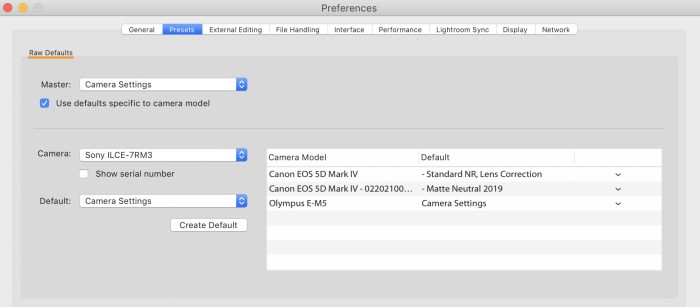
Screenshot showing Adobes improved raw default settings
Today Adobe has released a major update and you can check out the full list here.
Press text:
As fellow photographers and creatives, we care about the impact all Lightroom products have on our customers. We’ve been listening to your feedback and requests and we’re excited to share what’s coming out today and a preview of what we are actively working on for 2020.
For Lightroom Classic, performance, quality, and stability have all been a primary focus for our team. Since October 2018, we’ve released significant performance updates like GPU (graphics processing unit) accelerated editing, faster and more stable tethering, Library improvements, and more. But we’re not done. The team is constantly testing and re-evaluating the speed and quality of new and existing features, and in 2020 we are working to deliver more GPU-enabled functionality to get you to your “done” point smoother and faster.
Image editing, organizing, and workflow efficiency are also important functions to Lightroom Classic that we want to continually improve for both new and long-time customers. Within the last year and a half, we’ve added key updates like the Texture slider, Flat Field Correction, HDR and Panorama Merge, collection color labels, PNG support, AI-empowered features such as Enhance Details and Panorama Fill Edge, and much more.
Adobe is dedicated to developing the best in class tools and experiences to help all photographers find and express their visions. That’s why we’re actively investing in more Develop tools (including AI/ML features), workflow optimization, as well as refining the interface and experience to empower photographers of all levels to achieve desired results faster and easier than ever before. As customers of our own product, we’re personally excited to share these upcoming updates with you in 2020 and the years to come.
Check out the new feature updates and customer requests for Lightroom Classic, as well as bug fixes and feature polishing for Lightroom for Mac, Windows, iOS, iPadOS, Android, and ChromeOS below. Support for new cameras and lenses is also included in the update.
Check out their current subscription pricing here. Lightroom free trial is available here.
(FT5) Olympus E-M1III announcement at 6am London time!

I have been told Olympus will announce the new E-M1III and 12-45mm lens soon (Feb 12) at 6am London time! So be sure to be online on 43rumors on that hour to follow the live blogging!
The full press text and all images have already been leaked and can be seen here.
a bit of everything…
SIX Good Lumix FEATURES you have not used?
Chi-Town Representing with New Manfrotto Chicago Backpacks (Explora).
Well that was a damn fast transition: Canon says focus now is on “RF lenses” and there will be “no new EF lenses unless market demands it” (MirrorlessRumors).
Images showing how the new Leica SL2 gets manufactured (L-rumors).
Hopeless wanderers: shooting south Snowdonia with Olympus E-M5II (Olympus Imagespace).
Plenty of news on the facebook E-M1II group, Panasonic FF and the GH5 group.
(FT5) Leaked E-m1III and 12-45mm japanese price info
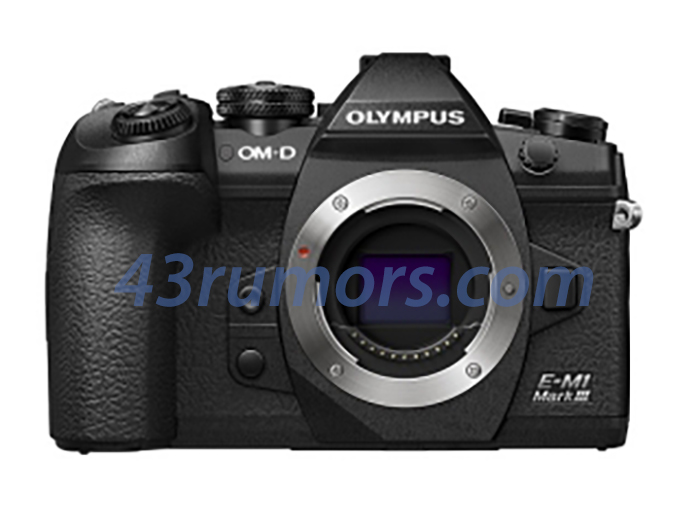
A source (Thanks!) just sent us the pricing of the new Olympus gear in Japan:
OM-D E-M1 Mark III Body: 217800 yen
OM-D E-M1 Mark III 12-40mm F2.8 PRO Lens Kit: 283800 yen
Audio cable KA335: 1300 yen
Shock mount adapter SM2: 3500 yen
M.ZUIKO DIGITAL ED 12-45mm F4.0 PRO: 74800 yen
Lens hood LH-61G: 3520 yen
The E-M1III and 12-45mm lens will be announced after tomorrow on February 12!!!
Reminder: UK pricing and full E-m1III press text can be read here.
a bit of everything…
How To Shoot Time Lapse With Olympus OM-D
Ted Forbes explains what “Sharpness” is (MirrorlessRumors).
Mirrorless 24-70mm Shootout at Petapixel: Panasonic makes the best lens! (L-rumors).
10 Cameras to Help Raise Your Selfie Game (Explora).
Five reasons you still need vintage lenses in 2020 (Dpreview).
Plenty of news on the facebook E-M1II group, Panasonic FF and the GH5 group.
Olympus 17mm f/1.2 PRO review at Opticallimits: “A real highlight is the quality of the bokeh”
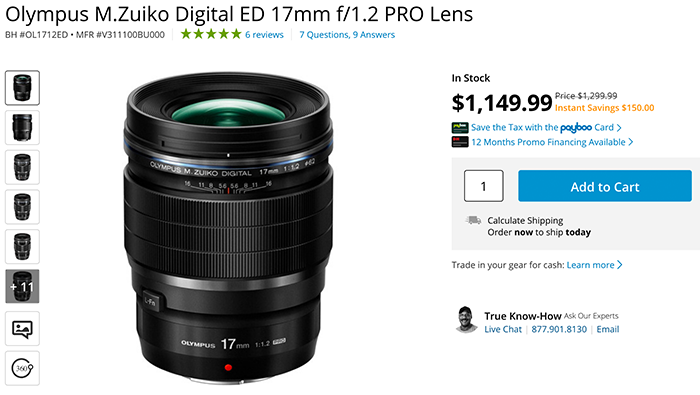
17mm at Amazon, BHphoto, Adorama and GetOlympus.
Opticallimit tested the Olympus 17mm f/1.2 PRO lens and writes:
The Olympus M.Zuiko 17mm f/1.2 PRO may not be quite as stellar as the 45mm f/1.2 PRO but it doesn’t mean that it’s a dud. It’s far from it. The resolution characteristic doesn’t show any weaknesses but there is a drop between the center and border/corner quality. The center is very good to excellent at f/1.2 whereas the borders are more in the good to very good range. That’s actually impressive at f/1.2 just to stress this. Stopping down boosts the center but the outer image field … not so much. Lateral CAs are low though so this contributes to the high sharpness perception. Auto-correction takes care of image distortions which are clearly present in RAW files. The original vignetting is quite high at f/1.2 but, once again, auto-correction will come to the rescue here for most users anyway.A real highlight (no pun intended) is the quality of the bokeh which is very smooth and that’s especially impressive considering the wide-angle nature of the lens. That’s for the technical bokeh at least. If you had a look at our sample images, you may, however, recognizes that the sheer ability to produce a shallow depth-of-field is rather limited. On the 45mm f/1.2 this isn’t so much of an issue simply because of its relatively long focal length but the 17mm f/1.2 doesn’t have this advantage. In terms of depth-of-field we are talking about a “34mm f/2.4” (in full format terms) here so keep that in mind.
The build quality of the Zuiko is excellent thanks to a tightly assembled all-metal and sealed construction. It’s even freezeproof down to -10C which is something few other manufacturers can claim for their professional-grade lenses. Whether you like the focus-clutch mechanism for switching between AF and MF is a matter of taste. It is quite inevitable to shift the focus when doing the switch. However, the clutch does give you a mechanical focus coupling with a distance scale which is rare on mirrorless lenses. Most will still prefer to use the MSC autofocus and both its speed and accuracy are very high.The Olympus M.Zuiko 17mm f/1.2 PRO is a pricey lens. If high speed and a great bokeh are your priorities, it is an obvious mainstream choice. As far as sharpness goes, there are more affordable options available that can give you just as much.