
George Holden: Don’t Ignore These (MFT) Cameras for Street Photography

Here is a short summary:

  • Gear isn’t everything – older, cheap cameras can teach you more about street photography than chasing the latest models.
  • Always carry a camera – Matt Stewart’s famous shot of a dog “driving” a car only happened because he brought his camera along.
  • Vision matters most – Tarav Pong Pratam Wong proves that creativity and persistence create great photos, regardless of the camera used.
  • Technique over specs – Eduardo Ortiz shows how thoughtful settings and approach can maximize even modest gear.
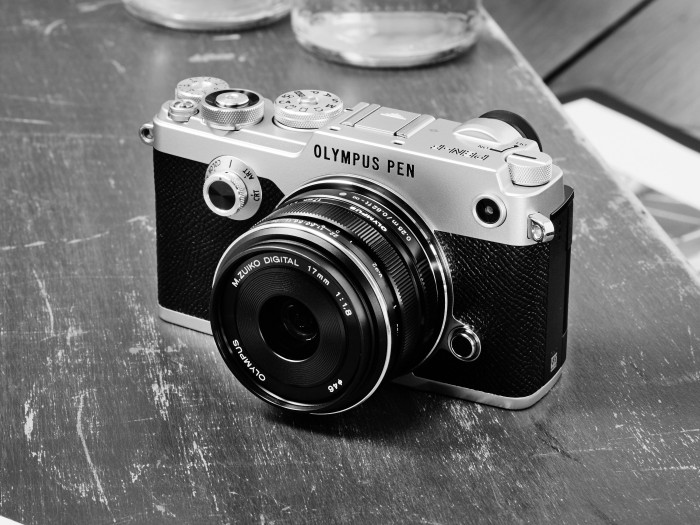
  • Everyday camera picksLumix GX80, LX100, GM1, GX1, and Olympus PEN-F are compact, affordable choices for street photography.

Robin Wong review of the Olympus E-PM2

In his latest video, Robin Wong revisits the Olympus PEN Mini E-PM2 and shows why it’s still a joy to shoot with for street photography.

  • Ultra compact and lightweight: Easily fits in a pocket or small bag, yet feels solid thanks to a metal-reinforced build.
  • Great colors and image quality: The 16MP Micro Four Thirds sensor produces sharp, vibrant images with lovely Olympus color rendering.
  • Discreet design: Perfect for street photography — non-intimidating and helps you blend in.
  • Lens compatibility: Works with all Micro Four Thirds lenses, offering ultimate flexibility.
  • 2-axis IBIS: Basic stabilization helps nail handheld shots even without modern 5-axis tech.
  • Fast autofocus: Quick enough for street moments, even in today’s standards.

Robin’s verdict? It’s not about specs — it’s about fun, simplicity, and capturing great images without distractions. If you find a good used copy of the E-PM2, don’t hesitate — it’s still a little powerhouse worth owning.

OM System vs Nikon Full-Frame: Scott Keys Puts the $7,500 M.Zuiko 150-400mm PRO to the Test

Wildlife photographer Scott Keys published an in-depth comparison between the OM System OM-1 paired with the M.Zuiko 150-400mm f/4.5 PRO lens and the Nikon Z9 using a Nikkor Z 800mm f/6.3 and a 400mm f/2.8 with 2x teleconverter. The test explored sharpness, background separation, ISO performance, and real-world field usage with songbirds and butterflies.

He previously held a bias against smaller sensors but admits the OM setup exceeded expectations. For photographers who don’t need extreme cropping or massive prints, OM System is absolutely viable, lightweight, and feature-rich.

Here’s a list of all gear mentioned with affiliate links:

Snappiness review of the Alice Camera

The Alice camera is now available at BHphoto (Click here).

In a new video, YouTuber Snappiness gives an in-depth look at the much-anticipated Alice Camera, a unique smartphone-camera hybrid featuring a Micro Four Thirds sensor and interchangeable lens mount.
Unlike traditional cameras, the Alice clips directly onto your smartphone and relies on an app for controls, offering a modern twist for mobile-first content creators. It combines computational photography with real optics—thanks to the Micro Four Thirds lenses mount support.

Key Highlights

  • Smart design with cold shoe, USB-C, headphone jack, and tripod mount
  • 64GB internal storage (no SD card slot)
  • Excellent white balance and color science
  • Built-in AI subject detection autofocus
  • Support for manual lenses and classic MFT glass

The Alice Camera doesn’t work as a standalone camera—it needs the app to shoot. But in return, it gives you lightning-fast wireless transfers, deep manual control, and flexible AI-assisted shooting modes.

What Needs Work

  • Autofocus is still not perfect—especially for fast-moving subjects
  • Boot time is slow compared to traditional cameras
  • No SD card support limits expandability
  • Resolution is just 11MP—fine for web, but not for cropping or large prints

Despite the downsides, Alice is among the most advanced attempts yet at merging smartphones and dedicated cameras. It’s perfect for hybrid shooters, vloggers, and tinkerers who want to travel light without sacrificing image quality.

Would you consider switching to a camera like this? Let us know in the comments!

Tom Calton’s review of the Yi M1 – The Ambitious Chinese MFT That Never Took Off

The Yi M1 is perhaps one of the most underrated and forgotten cameras in the Micro Four Thirds space. Launched in 2016, it boasted a 20MP Four Thirds sensor developed by Sony (same as in the Panasonic GX8 and Olympus PEN-F).

Despite impressive specs and a Leica-inspired design, it failed miserably. Why? Poor launch timing, weak autofocus at launch, lack of features like IBIS, viewfinder, and even basic options like RAW+JPEG initially. It felt more like a smartphone with a lens mount—operated entirely via touchscreen with minimal physical controls.

Over time, firmware updates did improve many aspects including autofocus and UI, but the damage was done. Yi discontinued the camera quietly and never followed up with a successor. Tom Calton still thinks that this camera is a collector’s oddball gem—and proof that even bold entries can fail without polish.

The Best Tiny Micro Four Thirds Lenses for Your Everyday Carry – Micro Four Nerds’ Top Picks


If you love Micro Four Thirds for its portability, then this video from Micro Four Nerds is a must-watch. It dives into a handpicked selection of the smallest and most versatile MFT lenses — ideal for building a lightweight, high-quality everyday carry kit.