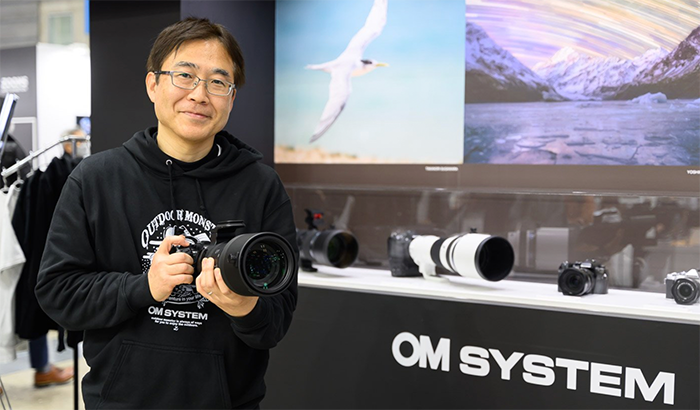
Omar Gonzalez keeps testing his new OM-3 and he loves the gorgeous colors, surprisingly good dynamic range and fantastic in-body stabilization in a compact, weather-sealed package. He thinks the 20MP sensor is more than enough when you fill the frame and the SOOC JPEGs look wonderfully filmic, making it a great “fun” or travel camera. The only real downsides are limited cropping flexibility compared to high-MP full frame and 8-bit video unless you shoot LOG.
Lumix GX80 / GX85 – Chosen for its compact size, 5-axis IBIS and surprisingly good 4K quality. A great cheap hybrid starter camera.
Sony RX100 V – Ultra-pocketable with excellent autofocus and great 4K (short clips only before overheating). A tiny but capable daily carry.
Z Cam E1 – Weird but fun “sensor in a box.” Interchangeable lenses, 4K, Z-Log, and tiny size. Great for creative video snippets.
Panasonic Lumix G100 – Mis-marketed as a vlogging cam, but actually great behind the camera. Tiny, light, stabilized with OIS lenses, good EVF, mic input.
Canon PowerShot V10 – Modern, compact, video-focused camera with excellent built-in mics, internal ND filters, great touchscreen, long recording without overheating.
Caira – MagSafe micro four thirds “smart-camera” module for iPhone users. Great IQ, unique form factor, AI tricks, and easy instant sharing.
OM System OM-5 / OM-5 Mark II – Great photography camera with industry-leading IBIS and PDAF. Weather-sealed and tiny. Video is only 8-bit, but fine for small clips.
Sony ZV-1 Mark II– Pocketable hybrid with strong video features and good AF. Weak stabilization due to no optical IS, but still a solid small video/photo option.
Insta360 Ace Pro 2– An action camera transformed into a “real” camera with the Explorer Grip. Excellent video, good 50MP photos, top stabilization, great audio.
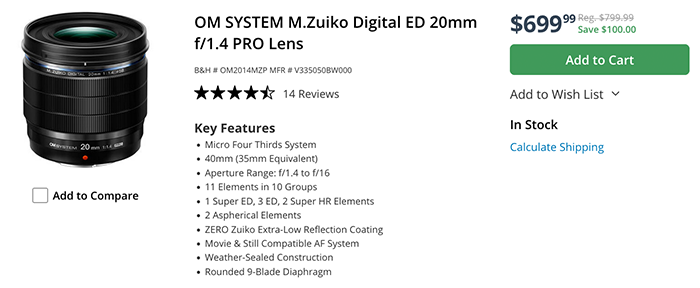
Panasonic Lumix LX15 / LX10– A tiny classic with a fast f/1.4 Leica lens, great 4K, strong stabilization, flip screen, and truly pocketable size.
Final Note: These cameras all balance size, image quality, and video capability — but the Lumix LX15/LX10 and Canon PowerShot V10 stand out as her personal favorites for everyday video clips.
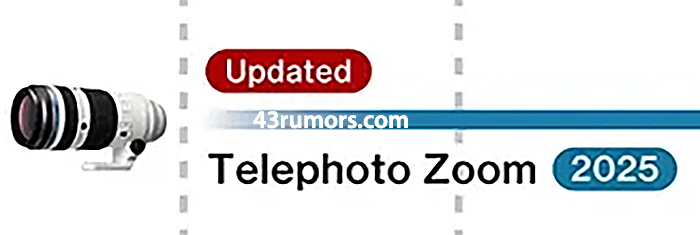
After a month of intensive testing, this new OM System lens proves to be one of the most versatile and high-quality telephoto zooms in the Micro Four Thirds ecosystem. It delivers exceptional optical performance, fast autofocus, and superb stabilization — even when paired with 1.4x or 2.0x teleconverters.
Ideal for birders, wildlife photographers, macro enthusiasts, and astrophotographers, the 50–200mm f/2.8 offers an effective 100–400mm range (up to 800mm with 2.0x TC), all in a lightweight and weather-sealed body.
Whether you’re shooting songbirds, moon landscapes, or even comets, this lens delivers. It’s a strong contender to become the go-to pro zoom in the OM lineup — possibly even replacing the legendary 40–150mm f/2.8 for many users.
In his latest video, Robin Wong proves that you don’t need high-end gear to capture professional-looking images. Shooting a mini concert from the audience with the compact Olympus OM-D E-M10 and the budget-friendly Olympus M.Zuiko Digital ED 40-150mm f/4-5.6 R, he delivered sharp, vibrant, and emotionally powerful photos — even in challenging low-light conditions.
The takeaway? Skill, timing, and understanding your gear matter more than the price tag. Robin’s message is a welcome reminder that with the right mindset and discipline, even entry-level gear can shine.
Micro Four Nerds revisits the Panasonic Lumix GX80/GX85, calling it one of the most balanced and underrated cameras ever made — even nearly a decade after its release. She also wishes Panasonic would release a GX90 or GX100 successor, let’s hope this dream will become true!
Can a camera really make you a better street photographer? George Holden explored this question in a recent video, and his answer might surprise you. While high-end gear can help refine your technical skills, it won’t necessarily improve your ability to spot great moments on the street.
He compared the Olympus Pen F to the technically superior Sony A9 III. On paper, the Sony—with its global shutter and 120 fps RAW shooting—is flawless. But Holden argues that the Olympus Pen F, with its manual controls and vintage charm, better captures the essence of street photography: simplicity, intuition, and imperfection.
Interestingly, his Olympus 17mm f/2.8 lens broke down over time, forcing him to use manual focus. That accident turned out to be a blessing—it recreated the “Leica-like” shooting experience through zone focusing, where you pre-focus about 1.5 to 2 meters ahead and shoot freely within that range. According to Holden, this limitation brought back the joy and creativity often lost with modern cameras overloaded with automation.
He admits that his Sony A7C II is the better camera for video and professional work, but it feels more like a “work tool” than a creative companion. The Pen F and Fuji X-T2, on the other hand, make him want to shoot for fun again.
Holden ends on a simple truth: image quality isn’t about megapixels. A 10MP CCD DSLR in great light can beat a 100MP medium-format camera in bad lighting. What matters most is how you see, not what you shoot with.
Wildlife photographer Scott Keys set out to prove that full-frame systems outperform Micro Four Thirds in macro work — but the results surprised him. After testing the OM System OM-1 II with the M.Zuiko 90 mm f/3.5 Macro IS PRO against the Nikon Z6 III with a 180 mm macro lens, he found the smaller OM System consistently delivered sharper detail and greater usable depth of field — even at f/22, where diffraction should have ruined sharpness.
Despite theoretical disadvantages from its smaller pixel pitch, the OM System somehow mitigated diffraction better than expected, producing crisp, contrasty macro images with deeper focus. The Nikon setup still offered richer files and better cropping flexibility, but in practical, real-world close-ups the Olympus/OM combo simply performed better.
Keys’s takeaway: for pure macro photography, OM System wins on portability, depth of field, and surprising image quality. For broader wildlife work and heavy cropping, full-frame still holds the edge — but for anyone focused mainly on macro subjects, the OM System may now be the smarter choice.