Weekly 43rumors readers pictures roundup.


Tore Hansen‎
Shining Future
Model: Heidi Ariélle Nestaker
Olympus OM-D E-M1
Olympus m.zuiko 12-40mm f.2.8 PRO

1) You can share your pics by using the message box on our 43rumors Facebook page (Click here).
2) All 43rumors readers pictures can be seen here: facebook.com/43rumors/photos. Like the pictures you like and chat with the authors if you want to know how they took the shot!
3) The most liked pictures and some pics selected by myself will be posted weekly on 43rumors

This is the weekly selection:

Read more

A bit of everything…


Manual focus techniques for mirrorless cameras

Using the LX100 in studio at Mirrorlessjourney.
E-Pl7 review at Trustedreviews.
Asian Design award won by the GM5, GX7 and 40-150mm PRO lens (Phileweb).
The Extremely Wonderful Olympus M.Zuiko 75mm F/1.8 Lens (Soundimagesplus).
Comparison between the Fuji X-T1 and the Olympus E-M1 at Fotodesign.
GM5 test at DC.watch.

Kevin:https://vimeo.com/113183920. Shot with the Panasonic GH4. Sleeping in The Cosmos is a portrait on driver (sleeper mechanic) Scott Sousa. In late 2014 Scott took his sleeper Saturn up to the line against a 5th generation Chevy Camaro and not only won, but achieved an entirely new record for himself putting the car into a whole new time bracket. Join Scott on a journey through the cosmos to understand what makes him and his car tick!

Andrew:Your readers may be interested in some of the unique architecture in Rangoon (Yangon), Burma: http://worldofdecay.blogspot.com/2014/11/burmese-days-1-very-odd-lim-chin-tsong.html This is a very odd mansion built a century ago by a Chinese businessman. http://worldofdecay.blogspot.com/2014/11/burmese-days-2-decay-at-pegu-club.html This is the famous Pegu Club, the British gentleman’s club from 1882, now deserted with fate unknown. Most photographs taken with the Olympus 9-18mm lens, processed with PhotoNinja software.

Shaun:This short documentary was filmed entirely on the Lumix GH4. The story is about a young teenager who loves photography, has never visited a college campus, but is given the opportunity to go to a Duke University football game and photograph it with an all access media pass. https://www.youtube.com/watch?v=b6lARirchro

Mike:I just got my GM5 a few days ago and did a first impressions review focusing on the size advantage and how it works with various micro four thirds lenses: http://backgroundblur.com/#!/articles/547e16cd4306f47b33c62b10

Lawrence:I recently purchased the LX100 through your links and just spent a week with it in Japan. I took a few stills (attached 4 pictures from Japan and one from Seattle – feel free to share ) but focused mostly on video.
The video is below – originally shot in 4K, then downsampled to 1080p and edited in Premiere Pro (with a little color grading, levels, vignetting applied). Everything was handheld except for the time lapse scenes. So far I’ve found the LX100 to be a joy to use – substantially better handling than the RX100 series I had been using previously, with far better options for video and just as good image quality.
https://vimeo.com/113366484

Technical note: Please clear browsers cache or reload page to get rid of a caching issue.

Hi!

Since November 27 our server had a caching issue. What happens is that new posts will not show up on the main 43rumors homepage.
We now solved the problem but to see new content on the homepage you may be required to clear your cache or reload the homepage with “control + F5” button. Do it …also because there is a rumor coming in 1 hour you will not want to miss to read ;)

Cool! Blackmagic Pocket Cinema Camera shoots pictures in space!

Bildschirmfoto 2014-12-02 um 19.28.02
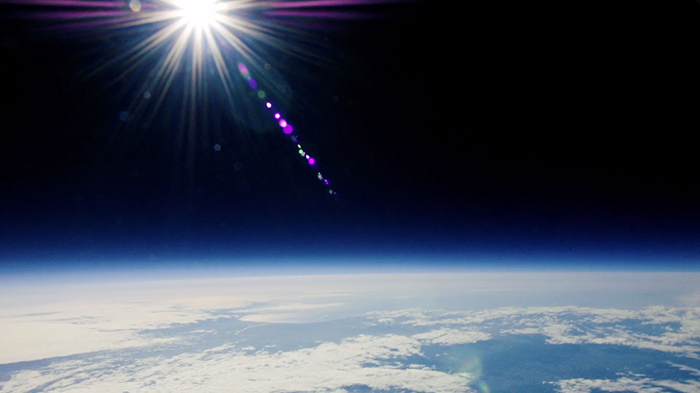
What you see here on top is a frame from a video shot with the [shoplink 49834 ebay]Micro Four Thirds BlackMagic Pocket Cinema Camera[/shoplink] sent with a ballon on the space frontier! The lens Keisuke Iwaya used to shoot this is the [shoplink 49835 ebay]Panasonic Lumix G Vario 7-14mm f/4.0[/shoplink]. The video can be seen here:

Fusen Ucyu – BMPCC GOES TO SPACE from Raitank on Vimeo.

Keisuke writes:

“Fusen Ucyu (Baloon Space) Project” is a young ambitious amateur astrophysicist, Keisuke Iwaya’s private mission to send various cameras up to space beyond the earth’s atmosphere with Meteorological balloons to shoot beautiful images of our blue planet.

On 20th of July, 2014, Blackmagic Pocket Cinema Camera was sent up for the first time with Atomos NinjaStar, with 128GB CFast card, to capture the whole two-hour-long journey from the ground to 28.5km (17.7mile) peak at stratosphere, and free-fall back to the Mother Earth.

Newshooter writes:

Going into space was going to push the camera to its absolute limits. The BMPCC is only rated to work in temperatures between 0-40c. The camera also had to free fall for 30 minutes and then survive the impact once it came back to earth. The team designed several features that enabled all the equipment to return intact and operational.

The amazing pictures of the tools they used can be seen at raitank.jp/archives/18184. What a great project!

Finally a really great article about “Sensor Crop Factors and Equivalence” from Nasim Mansurov!

sensor

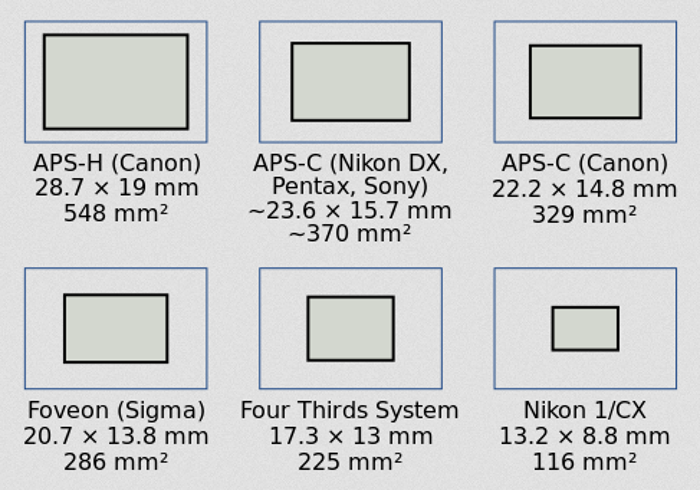
On 43rumors plenty of commenters keep saying that there is a “4 times factor” difference between Full Frame and Micro Four Thirds. For those people a f/2.8 PRO zoom from Olympus actually has an “equivalent” Full Frame aperture of f/5.6. Now, while I agree that this is in a very abstract theory correct… it is actually absurd and wrong if you look at the full aspects of the camera technology.

And without me having to explain you why it is so just read the super well written “”Sensor Crop Factors and Equivalence” article written by from Nasim Mansurov on Photographylife. Particlualry point 8) Total Light explains you why that “virtual equivalence” made by so many bloggers and commenters is de facto nonsense:

8) Total Light
“Equivalence” created another ugly child: total light. This theory, which is brought up by some photographers, says that smaller sensors get less total light than larger sensors just because they are physically smaller. That’s how they explain that small sensors have worse noise performance / overall image quality. That a full-frame sensor looks cleaner at higher ISOs than say Micro Four Thirds, just because its sensor area is four times larger. I don’t know where these theories originate from, but I fond the idea of “Total Light” and its relevance to ISO absurd. Explaining why sensor of one size has a cleaner output when compared to a smaller sensor just because it is physically larger has one major flaw – it is actually not true once you factor in a couple of variables: sensor technology, image processing pipeline and sensor generation. If larger sensors did receive more “total light” than smaller sensors, then every full-frame sensor made to date would beat every APS-C sensor, including the latest and greatest. Consequently, every medium format sensor would beat every full-frame sensor made to date. Is that true? Absolutely not. Just compare the output of the first generation Canon 1DS full-frame camera at ISO 800 to a modern Sony APS-C sensor – have a peek at this review from Luminous Landscape and have fun comparing. Surprised to see APS-C beat full-frame? No, not really. Newer sensor technologies, better image processing pipelines and other factors make modern sensors shine when compared to old ones. Simply put, newer is better when it comes to sensor technology. APS-C has come far along in terms of noise performance, easily beating first generation full-frame sensors in terms of colors, dynamic range and high ISO performance. CMOS is cleaner than old generation CCD that struggled even at ISO 400! Until recently, medium format cameras used to be terrible at high ISOs due to use of CCD sensors (which have other strengths). But if we look at the theory of “total light”, medium format sensors are supposed to be much better than full-frame just because their sensor sizes are bigger. But if we look at high ISO performance and dynamic range, it turns out that it is actually not the case. So these folks now add a few words / disclaimers at the end of their statements like “as long as the sensors are of equal efficiency and generation”. When we talk about aperture or shutter speed, there is no such thing as a new generation aperture and shutter speed, and yet they think they can slap on those words for sensor performance. Don’t be fooled by such statements, as they make no sense. The theory of “total light” is too darn confusing, so it is not worth wasting time on.

Thanks Nasim Mansurov for bringing down that discussion to a very “practical – reasonable” level :)

A bit of everything…


Panasonic LX100 Hands-on Review feat. Lok in London

Panasonic LX100 review at ThePhoBlographer.
Panasonic Varicam 35 Has a duel native ISO of 800 and 5000. How do they do it? (Newsshooter)
Panasonic GM5 test at Dc.watch.
Panasonic TZ60 review at Camerahoarders.
Limited Number of Panasonic’s DMC-CM1 to Make a Welcome Arrival to the UK (Panasonic UK).
40-150mm PRO lens test at Kasayapa
Nur echt mit…. und News zum Kamerabuch zur E-PL7 (Pen And Tell).

Riccardo:gh3 + 14-42 @ real world studios http://youtu.be/97hdejRoEvU

Ivan Mazza:GH4 4K reportage in Sicily on Youtube“.

Mohammad: http://vimeo.com/112092478 Captured using GH4 with Panasonic 12-35 2.8 & 35-100 2.8