

Weekly 43rumors readers pictures roundup…

Karsten Gieselmann
Eternal triangle
Staircase in an office building in Munich
E-M1II, M.Zuiko 7-14mm, ƒ/5.6, 12mm, 1/13s ISO 400
https://www.flickr.com/photos/karstengieselmann/49388371037/
#microfourthirdsgallery
1) To submit your picture for the weekly readers roundup post you can choose one of the following two options:
– Instagram: Follow @microfourthirdsgallery and tag us on your picture to give us the permission to repost your image on the instagram gallery and on 43rumors (we will credit you)
– Facebook: Submit your picture on our group: facebook.com/groups/microft. Please add the hashtag “#microfourthirdsgallery ” to grant the permission for reposting on 43rumors. Without the hashtag we will not add your picture!
2) Like and comment the pictures from other readers here: instagram.com/microfourthirdsgallery and facebook.com/groups/microft
3) A selection of most liked pictures by the community and by me 43rumors admin will be posted weekly on 43rumors.
Note: When sending a pic feel free to also add a link to your site to promote yourself! And please do share one single picture per week only. Do not spam :)
This is the weekly selection:
Get Topaz Denoise AI for $50 using this coupon code

Topaz launched a new $20 rebate on their Topaz Denoise AI software (Click here). And you get additional 15% off using the checkout code “BATCH15”. Final price will be $50!
Interview with E-M1X developer Hisashi Takeuchi
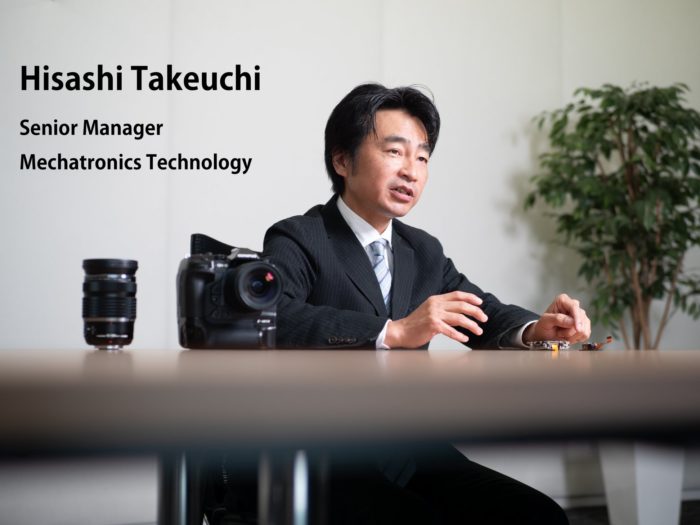
Here is the nterview with Hisashi Takeuchi, Mechatronics Technology, Senior Manager at Olympus. This interview was conducted at the OM-D E-M1X touch and try event in Tokyo:
When combined with the M.Zuiko Digital ED 12-100m f/4.0 IS PRO lens, the E-M1X can provide image stabilization performance of 7.5 steps, which – as of the beginning of 2019 – is the highest level in the world. According to our own in-house performance evaluation, this system can maintain a stable image was stable even at a shutter speed of 4 seconds and using a focal length of 40mm (equivalent to 80mm on a 35mm camera).
This is an improvement of 1 step over the stabilization effect provided by the combination of the same lens with the E-M1 Mark II. Among the factors making this possible are the development of a new gyro sensor and the design of several algorithms to maximize stabilization performance.
We have long been a leader in image stabilization technology, but in order to take that cutting edge performance to the next level we needed to develop a gyro with performance equivalent to an optical fiber gyro. Optical fiber gyros are so precise that they are used in aircraft and launch vehicles. They are also big and expensive. Our goal was to implement that kind of performance in a small sensor comparable in size to our previous models. This was no easy task, but finally, after three years of joint development with a parts manufacturer, we succeeded.
The new sensor isn’t just a step up to a new level of performance, it enters a whole new dimension. So powerful was this new gyro, that we found it nearly impossible to update our algorithms to take advantage of its performance. To succeed, we had to go through a long process of trials and errors.The new gyro sensor isn’t just a step up to a new level of performance, it enters a whole new dimension. So powerful was this new gyro, that we found it nearly impossible to update our algorithms to take advantage of its performance. To succeed, we had to go through a long process of trials and errors.
The first problem we encountered was the impossibility of accurate evaluation. As the gyro sensor cannot be accurately evaluated in a building with a quake-absorbing structure, we had to build a lab specifically for this purpose. However, even when we executed measurements in accordance with the optimum evaluation technique, our results still varied with every measurement. Eventually we realized that accurate measurement was not possible at the current level of technology and that we would need dedicated equipment and a more difficult environment in order to properly evaluate this new gyro sensor.
There was also a surprise in the camera manufacturing process. Assembly of the image stabilizer has always been an extremely difficult process that imposed a burden on the operator. We found that some cameras were unable to manifest the expected performance even when they were precisely assembled by skilled operators. What this meant was that the gyro sensor performance and the target image stabilization performance were so vastly improved that issues previously regarded to be inconsequential suddenly loomed large. To deal with the emergence of these new problems, we had to revamp the manufacturing process itself.
Ultimately, our goal is to eliminate the need for a tripod altogether and make it possible for photographers to enjoy handheld shooting in any scene under any conditions.
via OMD FB group.
a bit of everything…
Canon to Micro 4/3 Smart Autofocus Adapter in Chicago
30mm F3.5 Macro tested at Asobinet.
Sharpest Low Budget Cinema Lens for Micro Four Thirds MEIKE 16mm T2 2 Review
40 Things You Didn’t Know You Needed in Your Camera Bag (Explora).
Latest CIPA November data shows again bad sales… (MirrorlessRumors).
Plenty of news on the facebook E-M1II group, Panasonic FF and the GH5 group.
Olympus US will increase the PRO lens prices on February 1

Olympus US sent out a Newsletter to confirm that on February 1 the PRO lens prices will increase. If you need one of those get them now at GetOlympus, BHphoto, Adorama or Amazon before the price increases.
Robin Wong: Everything Wrong With Cameras Today
Olympus Ambassador Robin Wong writes:
I believe there are many things that should have been improved in modern cameras, including overall camera design, better camera operations without having dozens of buttons and control dials on the camera, having larger more functional LCD screen, direct connectivity to cloud storage, bluetooth connectivity to peripheral devices such as microphones and headphones, better image file format to replace the outdated JPEG format and of course, lastly not having new lenses becoming monstrous in size compromising balance and handling on camera.