Panasonic releases “LUMIX Tether for Streaming (Beta)” software program for PC integrating new LIVE VIEW mode for live streaming purpose

Share

You can download it here: panasonic.jp/support/global/cs/soft/download/d_lumixtether_b.html

Press text:

Panasonic announced the release of “LUMIX Tether for Streaming (Beta)” on June 8, 2020. The beta software program for Windows is derived from conventional “LUMIX Tether (Ver.1.7)” with an additional display option for the cases where this software is used for live streaming purposes. It may help user convenience in the growing self-streaming opportunities.

As “LUMIX Tether” is a software program originally designed for tethered shooting, GUIs such as a focus area mark as well as control panels are displayed with live view images on the PC monitor during USB tethering. However, these graphic items become a hindrance when the software is used to capture camera view for live streaming. In response to the demands of customers to resolve this issue, LIVE VIEW mode has been added on “LUMIX Tether for Streaming (Beta)”. It enables displaying camera view only, making it easy for the separate streaming software to read it. Users can choose to show or hide these graphic items during USB tethering according to the usage purpose.

“LUMIX Tether for Streaming (Beta)” is provided as a pre-release version that is currently still under development. Please note that this software is not eligible for operation warranty and customer support.

Compatible models: DC-GH5, DC-G9, DC-GH5S, DC-S1, DC-S1R, DC-S1H

Richard Wong shows you how this works:

Share

Rumors roundup: Double PEN-F launch, GH6 specs

Share

Here is a recap of the rumors we posted lately:

Olympus:
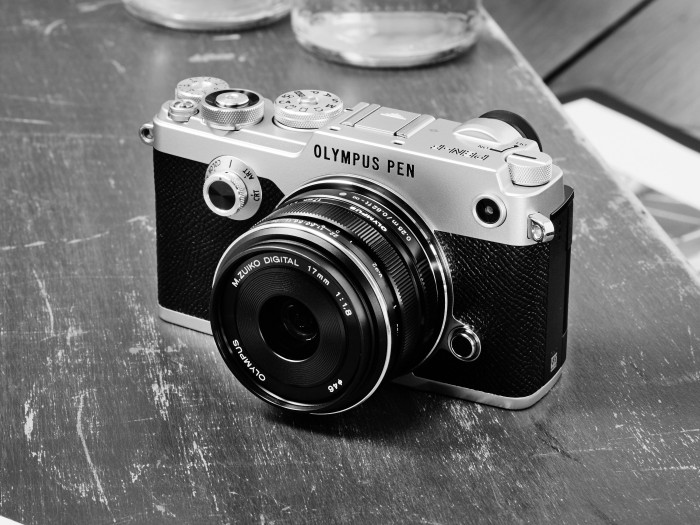
– Wild rumor about two PEN-F cameras coming this autumn (article here).
– PEN-FII rumor via UK magazine (article here).
– New major E-M1X firmware update is coming soon (article here).
– There is definitely a 100mm macro on the roadmap (article here).
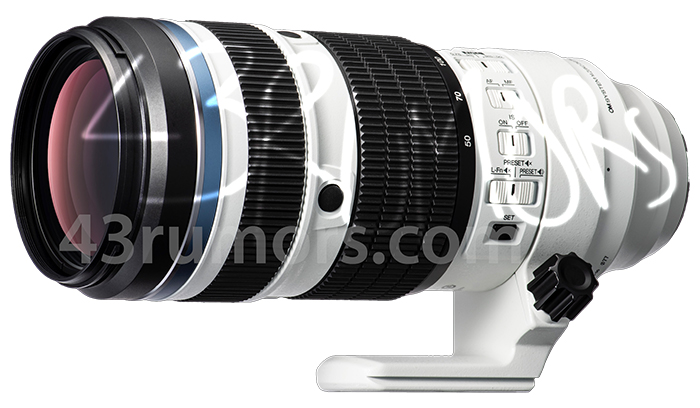
– 100-400mm lens will be definitely launched this summer (article here).

Panasonic:
– Panasonic will announce new L-mount lenses soon. But there is now word about new MFT gear (article here).
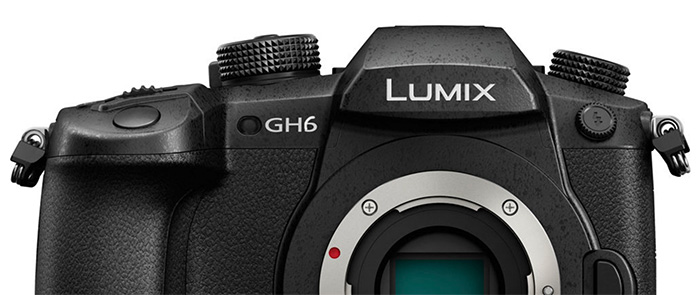
– First super wild rumors about the GH6 specs (article here).
– Panasonic managers promises to energize the MFT world (article here).


Share

a bit of everything…

Share


Prime Lens, Zoom Lens – Wide or Tele?

Seagate: Which Drive Is Right for You? (Explora).
Sigma 18 – 35mm on MFT camera review (Wedding Film Geeks)
Olympus EM1 Mark III: 3 Fatal Flaws To The BEST Camera I’ve Tried (Camera Conspiracies).

Rob:

Hi! I thought your readers might benefit from a video I just posted about getting the best quality raw processing for Olympus files in Lightroom.
https://youtu.be/g7ZsnVB1iao

Plenty of news on the facebook OMD group, Panasonic FF and the GH5 group.


Share

Olympus M.Zuiko Digital ED 12-45mm f/4.0 PRO review at Lenstip

Share

Olympus 12-45mm PRO at Amazon, Adorama, BHphoto, GetOlympus.

Lenstip tested the new Olympus M.Zuiko Digital ED 12-45 mm f/4.0 PRO lens and concludes:

Pros:

  • solid, sealed casing,
  • excellent image quality in the frame centre,
  • good image quality on the edge of the frame up from the maximum relative aperture,
  • moderate longitudinal chromatic aberration,
  • low lateral chromatic aberration,
  • sensible coma correction,
  • slight astigmatism,
  • quiet, fast, and accurate autofocus.

Cons:

  • very high distortion on RAW files,
  • noticeable vignetting on RAW files,
  • performance against bright light should have been better.

Even though the cons list of the tested lens features as many as three positions, I still assess its performance very positively indeed. First of all it impressed me with excellent sharpness already from the maximum relative aperture. The task of Olympus optics specialists was very difficult and they managed to execute it exceedingly well. What about the flaws, then? Two of them are of a smaller calibre. A high distortion for RAW files is caused by a specific approach toward lenses in this system. It leaves distortion correction to software of a camera; in return you get more leeway when it comes to correction of other optical aberrations. Vignetting is noticeable but, compared to other standard zoom lenses of the Micro Four Thirds system, and also some instruments designed for bigger sensors, it still looks good. The only flaw that should be considered a serious slip-up of this lens and criticized more harshly is performance against bright light. I think the lens should have performed a lot better in this area

Share