


First reviews of the new new Yongnuo 25mm 1:1.7 MFT lens
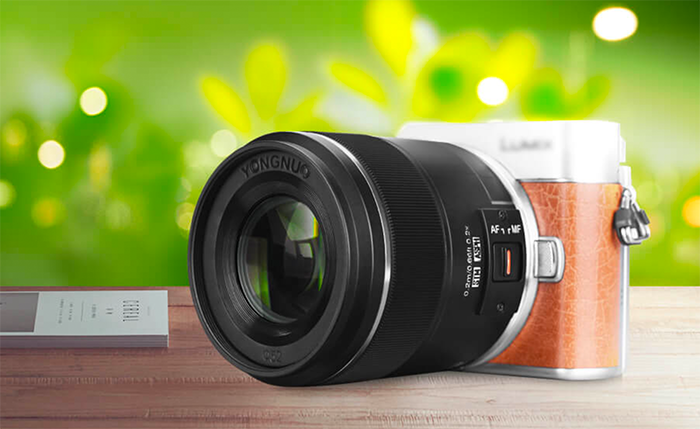
The new Yongnuo 25mm f/1.7 lens is now in Stock at Amazon US, Amazon DE, Amazon UK, Amazon FR.
And if you wanna see how good this lens is check out the first review posted by Radojuva.com. The summary:
main advantages:
*low cost (about 110 $)
*light weight, metal mount
*quiet stepper motor
*internal focusing
*small Minimal Focus Distance
*AF / MF focusing mode switch
*one low-dispersion element and 2 aspherical elements in the optical scheme
*good optical performance overallmain disadvantages:
*there is a complete incompatibility with some old cameras (the lens is not recognized by the camera)
*AF / MF focus mode switch does not work with some cameras (lens always uses autofocus)
*no hood included; non-bayonet type hood
*the diaphragm control makes a noticeable noise
*original lenses are more compact and with a smaller filter diameter (52 mm for Yongnuo 25 / 1.7, versus 46 mm for PANASONIC 25 / 1.7 and OLYMPUS 25 / 1.8)
*no USB port for firmware updates
*poor backlight resistance, noticeable vignetting at F / 1.7
And here is the review from Richard Wong:
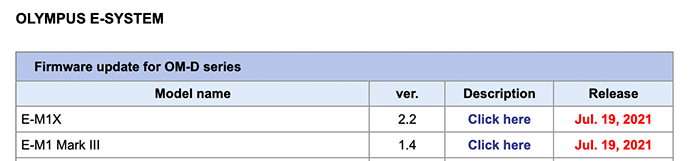
a bit of everything…
Olympus M.Zuiko 8-25mm f4 Pro is the BEST M43 Zoom Lens?
Olympus Registers New Camera, Nikon Zfc, Panasonic, Canon and more… – RED35 VLOG 060
10 Best Lenses for Sony A7III to Buy in 2021 (42West).
Tilta Has You Covered (Explora).
E-P7 Fazit (Pen And Tell).
Plenty of news on the facebook OMD group, Panasonic FF and the GH5 group.
(FT4) The new Olympus “WOW” camera will be similar to a E-M 1 Mk III
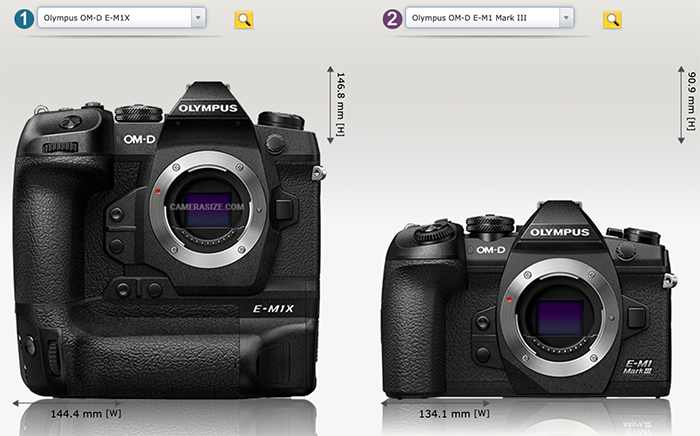
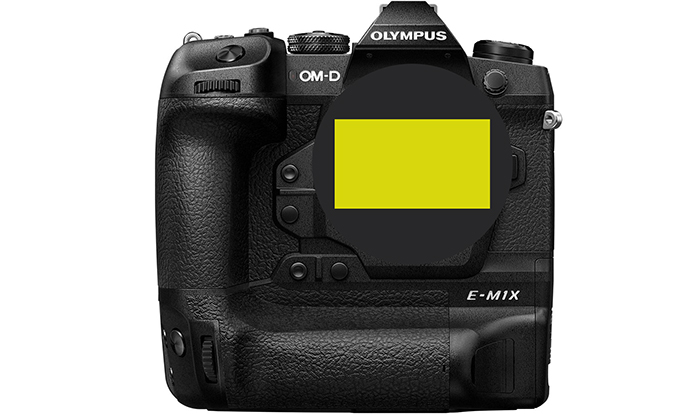
E-M1X vs E-M1III via camerasize
I have been told that the “WOW” camera that OM Digital said would come in early 2022 will not be a E-M1X successor. It will have more the size of a classic E-M1 body. Makes sense to me…
a bit of everything…
LUMIX Live : AMA
You DON’T need a new camera, you need THIS (Ted Forbes).
10 Best Lenses for Sony A6400 to Buy in 2021 (42West).
Hands-On Review: The Lupo Superpanel Dual Color 30 LED Panel (Explora).
Panasonic Lumix GH5 II | Detailverbesserungen für einen Foto-Video-Klassiker (ValueTech)
Plenty of news on the facebook OMD group, Panasonic FF and the GH5 group.
Panasonic Lumix GH5 II Review by ePhotozine
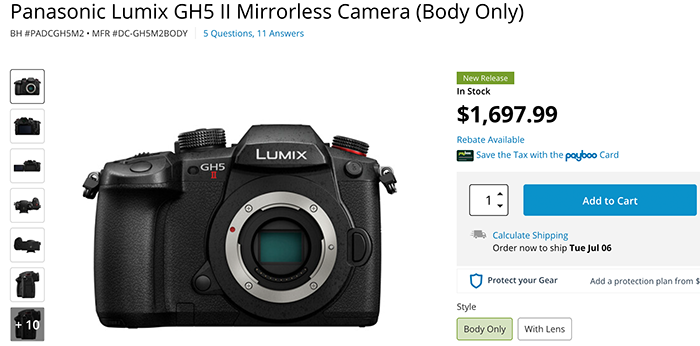
GH5II at BHphoto, Adorama, Amazon. Calumet DE, Park Uk.
ePhotozine published the full review and concluded:
Much of the GH5 II is the same or very similar, you get the same 20mp Micro Four Thirds sensor, with improved sensor-based 5-axis image stabilisation, combined with the lens’ optical image stabilisation, which gives benefits for both stills photography and video recording. You’ve also got 6K Photo, and you can shoot unlimited photos at 30fps, giving you 18-megapixel images. 4K Photo shoots unlimited photos at 60fps, although these are at a resolution of 8 megapixels.
Image quality from the camera is very good, with the camera producing pleasing images, with good levels of detail, and good colour. The use of a Micro Four Thirds sensor, which is smaller than APS-C CMOS sensors means that at high ISO settings noise performance isn’t as good as APS-C or FF cameras, however, the camera does produce usable results up to ISO3200 and ISO6400. This is likely to be the case until Micro Four Thirds sensors make the next leap in sensor technology, to backside-illuminated sensors.
For some, the lack of phase-detection AF could be disappointing, and there are times when continuous AF will hunt or wobble when recording video.
The GH5 II offers a list of video features and specifications beyond what most people need, but the headline features are that the camera can record unlimited 4K video, with higher quality recording possible internally, without the need of an external recorder, plus Live Streaming support (at up to FullHD resolution).
The Micro Four Thirds system is ideally suited to 4K video, as the compact range of lenses means the system is much smaller than if you were to use a full-frame (or APS-C) DSLR for 4K video recording. High-speed FullHD video recording is also available at up to 180fps.
If CINE 4K is something you need, or you do any video, then the 5-axis image stabilisation system will help here, dramatically improving the stability (and professional look) of your videos, without the need of a tripod, and this gives the GH5 II (and other cameras with in-camera IS) an advantage over most DSLRs.
You also benefit from a very good electronic viewfinder (EVF), which features a high resolution of 3.68m dots, and the magnification is good at 0.76x. This makes using the EVF a pleasure, with impressive levels of detail visible. The 3.0inch touch-screen is also very good, letting you quickly change settings and options. Battery life can be extended to 1200 shots with energy-saving options switched on.
If you’re a stills photographer primarily, then the Panasonic Lumix G9 or Olympus OM-D E-M1 Mark III could be a better choice. Then there are also a variety of APS-C cameras available with higher resolution on offer, from Sony, Canon, and Fujifilm.
If you shoot video then the GH5 II is a great choice, assuming you don’t already have the GH5, and assuming you can’t wait to see what the GH6 is going to offer. If you don’t need higher speed video (4K 120fps: Canon EOS R5, Sony Alpha A7S III, or 8K: Canon EOS R5, Sony Alpha 1), then the GH5 II is a great choice, and is also considerably cheaper than these alternatives. If you don’t need live streaming, then the GH5 is likely to be great value for money while still available, but if you’re looking for live streaming, then the GH5 II is a great choice.