Interesting speculation: Is the new OM-1 nearly entirely made from Sony parts?

Share

Preorders:
OM-1 at BHphoto, Adorama, Amazon. GetOlympus.
OM-1 in EU at Calumet DE. Fotokoch DE. Wex UK. Olympus DE, Olympus UK, Olympus FR, Olympus IT, Olympus ES. Olympus NL. Olympus BE. Olympus AT. Olympus CH.
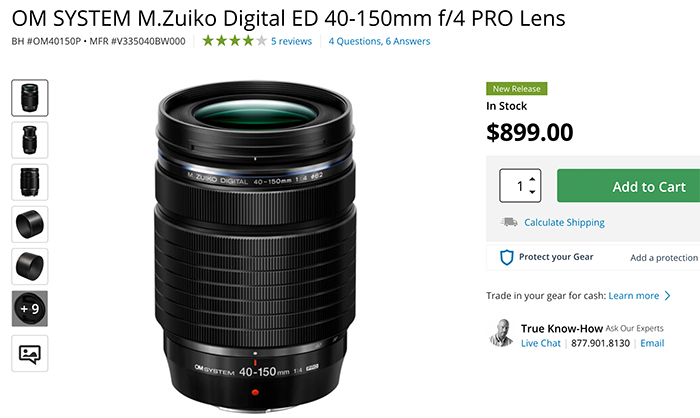
40-150mm f/4.0 at BHphoto, Adorama, Amazon. GetOlympus. Calumet DE. Wex UK.
12-40mm II at BHphoto, Adorama, Amazon. GetOlympus. Calumet DE. Wex UK.

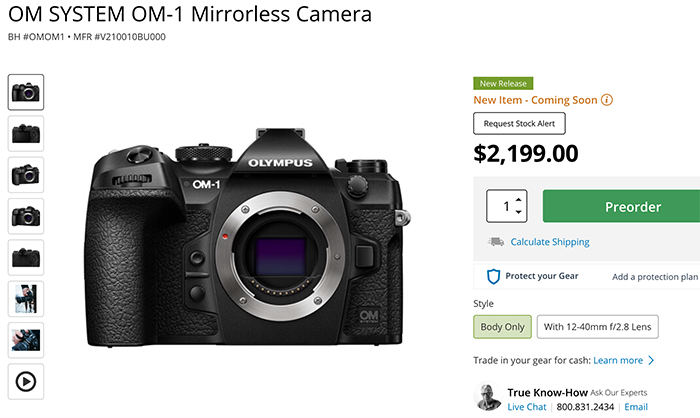
A Russian blogger made this interesting speculation. He claims the OM-1 is a Sony camera with the OM System brand imprinted on it. If you look at the tech inside the camera you will notice:

  • The sensor is from Sony
  • Processor and, judging by everything, the entire motherboard (precisely the power system with PD on 27v) – from Sony. They even gave the name to the processor with the traditional Sony letter X.
  • The 5.7g dots EVF is exactly the same as the one from the Sony A7rIV
  • Battery new BLX-1 in dimensions, weight and capacity perfectly matches the current “mirrorless” battery Sony NP-FZ100
  • The operating system and OM-1 menu is nothing but Sony’s new menu – one-on-one, including hints, some icons, placement of elements on the screen and in the browser. Straight from A1, A7S3, A7M4
  • And even the updated branded software for PC from OMDS – now it looks like Sony software before mixing.
Share

Panasonic Develops Low-Cost FIR Lens

Share

Image Sensor World reports:

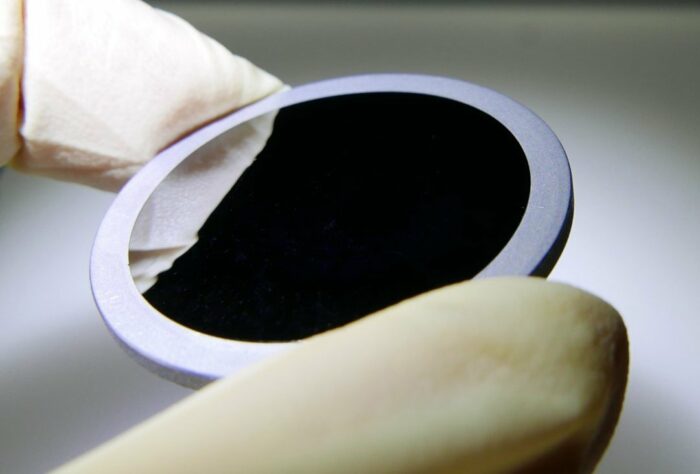
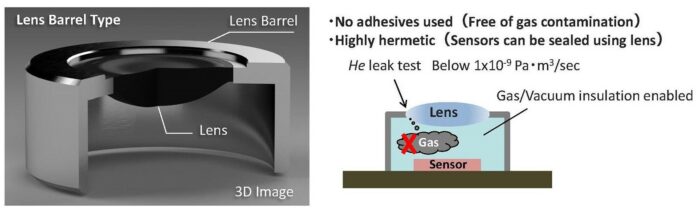
Panasonic has developed a mass production technology of low-cost far-IR aspherical lenses. These lenses are made of chalcogenide glass having excellent transmission characteristics in the far-IR. In addition to realizing low-cost (approx. half compared to the company’s conventional method) by newly developed glass molding method and mold processing technology, Panasonic is now able to offer a variety of lenses such as diffractive lens, the world’s first* highly hermetic frame-integrated lens without using adhesive (leak detection accuracy of less than 1×10⁻⁹ Pa・m3/sec in helium leak test).

A low-cost silicon that has been commonly used as the lens material for far-IR sensors is not suitable for high pixel counts due to its low transmittance, so germanium spherical lenses having high transmittance are widely used as the number of pixels increases. However, as the pixel count increases further, the effect of aberration caused by a spherical lens becomes more pronounced. To reduce this effect, combination of many spherical lenses and an aspherical lens will be required, which leads to increase in cost and size.

To resolve this problem, Panasonic has developed a new technology for the low-cost production of high-performance aspherical lenses suitable for far-infrared optical systems, based on the glass molding technology the company cultivated through the production of visible light aspherical lenses for cameras.

Hermetic sealing is important for thermal imaging camera modules. A low cost lens solution makes thermal cameras more accessible to general consumer applications.

Share