
At last!!! Panasonic GH5 Preorders will start at 1PM Wed Jan 4 !!!

Share


Hurray! The Panasonic GH5 will be available for preorder oin January 4th!

The info we can share in advance is that:

– The GH5 has the in sensor stabilization just like the G80
– The camera has 2 SD card slots
– No more limit about the duration of recording. 29 minutes in Europe.
– The audio XLR microphone hotshoe mounted I/O interface will be compatible with the DMC-GH4.
– It has full size HDMi
– The main sizes are identical of the GH4. Advantage : You can use ANY same accessory like Cage, Etc. from your previous GH3 or GH4.
– Panasonic plans to start shipping out the GH5 in March/April!
– Body only: Price will be between 1 800 € and 2 000 € in Europe for the DMC-GH5.
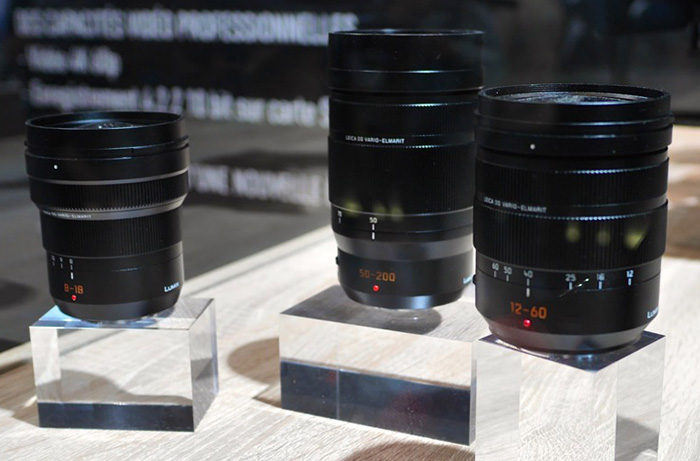
– Price will be ± 2 900 € for the DMC-GH5 + the new Panasonic Leica 12-60 Lens (not the older 12-60mm lens!)

Stay tuned and join the GH5 facebook group for more news!


This news has been first posted on 43rumors!
To bloggers and other rumors sites copying our news: Please be kind and link back to 43rumors if you continually repost our news and rumors. Thanks!


Share

a bit of everything…

Share


Quick GH4 Trick: Better Auto Exposure in Video Mode

Test – Olympus OM-D E-M1 II : présentation et caractéristiques (Focus Numerique)
Olympus E-M1 Mark II Field Test Part II: Putting continuous autofocus to the test and more (Imaging Resource).
Top 10 Photographic Items for Non Photographers (Explora).
Tips For Photographing Family Portraits for Holiday Cards (ALC).
Cokin launches vintage-styled Riviera Classic tripod (Dpreview).
Panasonic Lumix ZS60 sensor review (DxOmark).

Olympus: German photographer Adrian Rohnfelder took the OM-D E-M1 Mark II to Mont Blanc and to Iceland, to shoot in some harsh conditions. See his fascinating photos and read his commentary in the OM-D Pro Gallery of the Olympus Cameras and Lenses website.
http://cameras.olympus.com/…/photographe…/adrian_rohnfelder/

Share

(FT5) The new Leica 12-60mm lens will ship in March/April

Share

leicalenses

Highly trusted sources confirmed the new Leica 12-60mm lens will ship in March/April along the new GH5. Price has yet to be determined.


For sources: Sources can send me anonymous info at 43rumors@gmail.com (create a fake gmail account) or via contact form you see on the right sidebar. Thanks!
To get notified on all upcoming news and rumors be sure to subscribe on 43rumors here:
RSS feed: https://www.43rumors.com/feed/
Facebook: https://www.facebook.com/43rumors
Twitter: https://twitter.com/43rumors

Rumors classification explained (FT= FourThirds):
FT1=1-20% chance the rumor is correct
FT2=21-40% chance the rumor is correct
FT3=41-60% chance the rumor is correct
FT4=61-80% chance the rumor is correct
FT5=81-99% chance the rumor is correct

Share

Olympus note on the E-M1II: “Due to overwhelming demand new orders may not ship until January.”

Share

Olympus just released a note on their E-M1II GetOlympus page (Click here) which says: Due to overwhelming demand new orders may not ship until January. And Olympus Japan today issued an official note to apologize for the slow shipment which is caused by the higher than expected demand. Bad news for customers but good new for Olympus :)

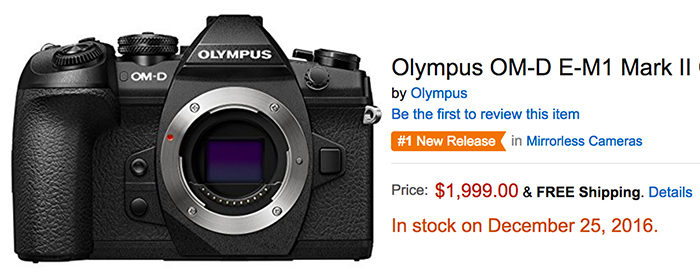
At Amazon (Click here) you will get the E-M1II on Christmas if you order it now.

Share

A smart idea from Ming Thein: Create sensors with irregular shaped pixels

Share

qp_fuji_fig2

I still shoot film (with the [shoplink 60642 ebay]Mamiya 7[/shoplink]) and I always wondered if it would be possible to get that “natural” and “irregular” film look on digital cameras. Ming Thein has an idea about that:

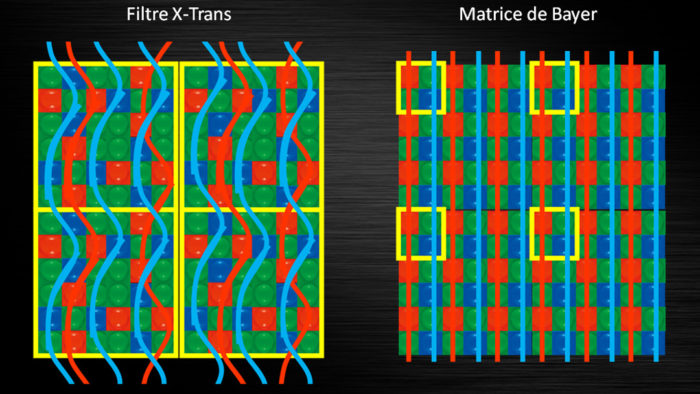
Here we come to the crux of the matter: I think the limitation of digital lies in the geometry and shape of the photosites, not the number or density. If we had irregular pixels (which could be a repeating pattern over a much larger area) the sensors would be able to better match the irregular nature of the subject (which in turn forms an irregular input signal). The pixels could be each the same area to avoid gain problems, and they could be fairly large in order to maintain good noise, color and dynamic range characteristics. Fuji tried to change the sensor with diagonal arrays and small-large arrays, but they were still fundamentally too regular – resulting in even worse strange artefacts because we were now trying to output an image with an underlying 45 degree structure onto a 90 degree orthogonal output medium. The files printed well, however, because of the dithering process during print explained previously.

If that would really work I hope Panasonic-Olympus will do such a sensor one day!

Share