What Tony Northrup expects from OM Digital in 2026
Tony Northrup doesn’t foresee anything radically new from OM Digital in 2026. In his view, OM will mostly repurpose current technology—more reshuffling than reinvention.
Sensor status quo: He predicts OM System will stick with the familiar 20MP Micro Four Thirds sensor family. No major readout gains or new architecture on the level of stacked or global shutter that would reset the conversation.
Wildlife focus continues: OM’s identity remains wildlife-first. However, he argues the historic Micro Four Thirds advantage is eroding as full‑frame kits—especially from Canon—get lighter and more affordable for wildlife work.
Marketing vs. real‑world kits: Expect the “smaller, lighter, cheaper” message to keep circulating, even as more buyers find full‑frame kits competitive in size, weight, and price.
Analysis: Where OM System could still surprise
The recent 50–200mm PRO lens launch showed encouraging ambition from OM Digital, and renewed interest in PEN bodies suggests room for a hit if the right cameras land.
There are Micro Four Thirds sensors from Sony that could meaningfully change the narrative:
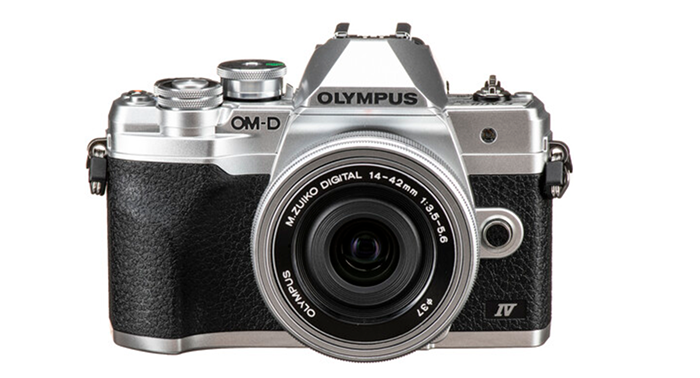
A bold OM‑1 II successor built on one of these sensors would make waves. Likewise, a PEN‑9 or PEN‑F revival using a modern 25MP sensor (like the Lumix G9 II) could be a crowd‑pleaser.
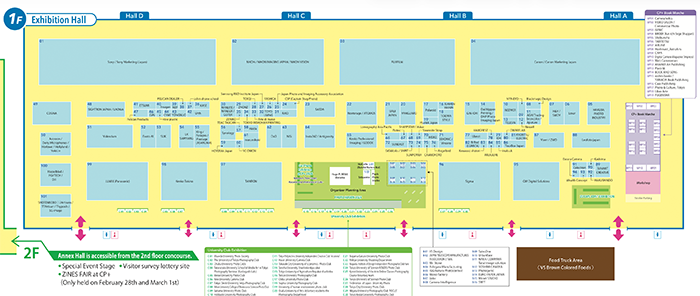
The official CP+ 2026 venue map is live. Explore it on the CP+ venue map page. Here’s how the largest booths stack up by footprint, using Sony as the 100% baseline.
Booth size comparison (relative to Sony = 100%)
Booth size doesn’t equal quality, but larger footprints typically allow more hands‑on areas, stage talks, demo zones, and smoother traffic flow—useful for brands planning busy schedules or broad product lines.
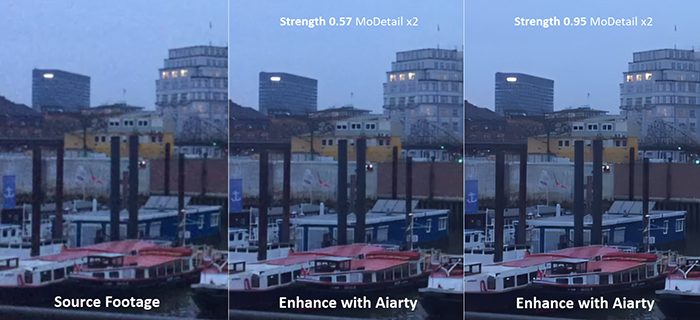
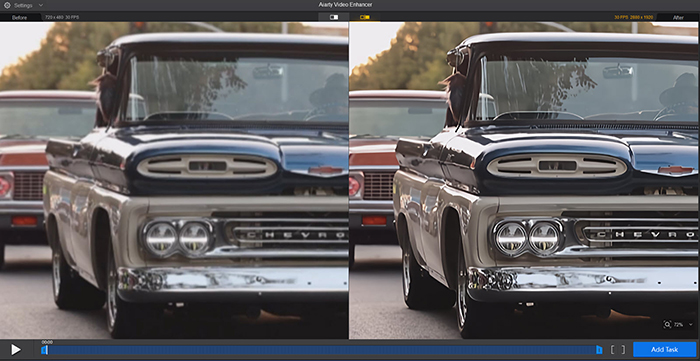
With the holidays approaching and year-end projects piling up, video noise, soft focus, compression artifacts, or slow internet can slow down post-production. Aiarty Video Enhancer works offline to process mirrorless footage, documentaries, and family videos.
Unlike cloud-based tools, Aiarty Video Enhancer processes files locally for privacy and speed. Recent updates include the Strength Slider for controlled enhancement and Step Mode for high-resolution footage. Upcoming features such as color consistency and YUV 422/444 export are included in the Lifetime License.
Lifetime License with Holiday-Exclusive Discount
Save 36% on the Lifetime License, plus use code XMASSAVE for an extra $5 off—valid until Jan. 10th, 2026. The license includes unlimited free updates and can be installed on up to three computers (Mac or Windows). No subscription or extra fees.
“After testing many video enhancers, I feel Aiarty is the winner. It has different modes depending on the clip. One is designed for low light situations, which is very helpful. There is also a blend percentage control for softening the result.”
— John Kempt, Artist
“I recently downloaded the trial and I am testing it for my YouTube channel workflow (Atmospheric/Cinematic content). The texture recovery on nature scenes is impressive compared to other tools I’ve used.”
— Tarcisio Resende, Content Creator (@ClassicalImmersion)
Aiarty Video Enhancer: Key Features at a Glance
Aiarty works entirely offline, supporting large or sensitive files and on-the-go editing. Key features include:
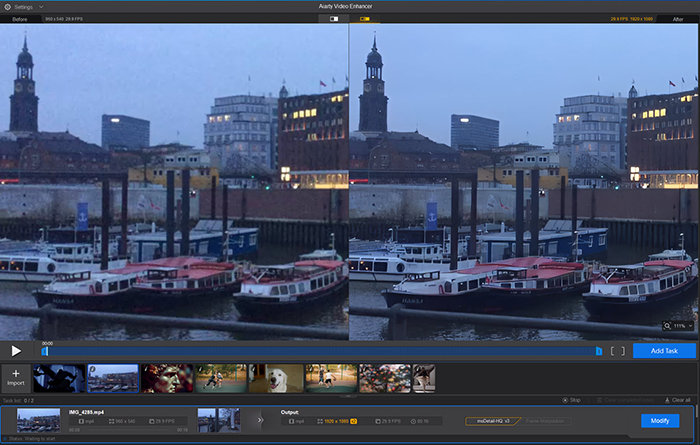
AI Upscaling & Denoising: Use moDetail-HQ v2 for fine textures or superVideo vHQ for heavy sensor noise. Includes a Strength Slider for manual refinement.
VRAM & Speed Optimization: Toggle between Turbo Mode for speed or Step Mode to reduce VRAM usage—essential for processing high-res footage on different hardware.
Pro Workflow Tools: Fully offline Batch Processing for large sets, plus SDR to HDR conversion and Frame Rate Boosting for smooth slow-motion.
Integrated Toolkit: Clean up audio with AI Audio Denoise and handle quick edits (cut, crop, rotate, color) without leaving the app.
Real-World Use Cases
Mastering Low-Light & Night Footage
Even with high-end mirrorless sensors like the Sony A7S III, ultra-high ISO footage can suffer from chroma noise and lost texture. Aiarty’s superVideo vHQ model removes artifacts while preserving natural grain and the original footage’s integrity.
The Strength Slider allows you to retain natural grain when needed.
Restoring Legacy & AI-Generated Footage
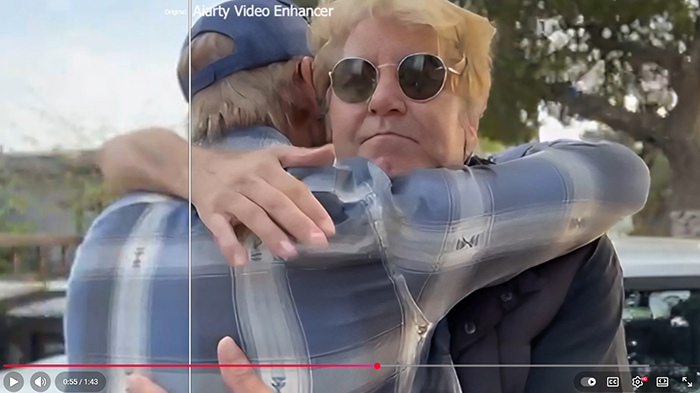
Bring 360p, 480p, or 720p footage into the modern era. Whether you are restoring family archives or upscaling AI-generated content, Aiarty recovers lost details to bring your vision into 4K focus.
High-Action & Outdoor Clarity
Action shots often suffer from motion blur or compression artifacts. Aiarty improves clarity and detail retention, even in high-frame-rate 240fps clips. “Footage recorded in FHD, 240fps, then upscaled to 4k using Aiarty Video Enhancer.” — A Red Dot Explorer, nature videographer
Try Aiarty for Your Holiday Projects
For 1080p footage from mirrorless or DSLR cameras, Aiarty restores texture and clarity when upscaling to 4K. Its offline workflow allows full control without relying on cloud services, integrating denoising, upscaling, and batch processing in one tool.
Here is Petapixel’s 2026 BOLD camera prediction list. With BOLD they mean a bit over the top and unlikely to happen. When it comes to OM Digital and Panasonic this is what they had to say:
Jordan: think there will be a new OM Tough camera. And I do think OM is definitely working on a successor but the camera isn’t extremely old yet (announced in 2023). I am not sure there will be a new model in 2026…2027 seems more likely.
Richard Butler: He want OM/Lumix to make a small MFT camera (New PEN or GF/GX or GM). Panasonic could save some money and reuse the Lumix S9 body to save costs. But don’t think that’s a good idea, I like the smaller size of the GM series!
My take that a new PEN and GM are unlikely to happen. Why? Because I saw no hint that makes me think the management understood what’s going on on the market. And this while the PEN-7is selling hot, used Lumix MFT compact cameras price is increasing and CIPA reports the compact camera market is booming.
Sorry if I sound pessimistic, I really hope to be proven wrong!