a bit of everything…


Kamlan 50mm F1.1 II Review – Affordable Manual Lens, But Is It Good Enough?

Lumix S1H vs GH5 Live Photo Comparison (Stronz Vanderploeg)
Flat-Field Lenses and Why They Matter When Shooting Close-Ups (Explora).
Online Stream über die neue OM-D E-M10 Mark IV und das M.Zuiko 100-400 mm (Olympus Europe).

Ben:

I’ve just made a new video that may be of interest to your readers.  It’s a long-term, practical review of the Panasonic Lumix G9 based on real-world use.  I focus on how firmware 2.0 has made the camera a powerhouse for videographers, especially at it’s current price which is considerably lower than the popular GH5.  What’s great about this and other MFT cameras is that they never overheat, unlike newer and much more expensive alternatives from other brands ;)  I’ve also included lots of sample footage captured with the camera so people can get a good idea of it’s capabilities in the real world. youtube.com/watch?v=CdqoNKCCt7A

Plenty of news on the facebook OMD group, Panasonic FF and the GH5 group.
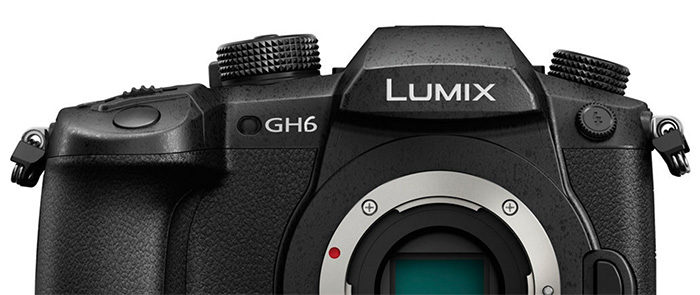
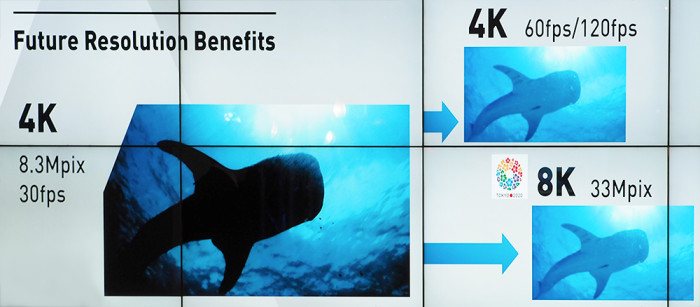
Panasonic manager Yamane explains why Micro Four Thirds (and particularly the GH line) has a future

Imaging Resource had a chat with Mr. Yosuke Yamane, Director of Panasonic’s Imaging Business Unit. This is what he had to say about the future of MTF:

There is some video footage which only Micro Four Thirds can realize, in terms of optimum depth of field, mobility, zoom ratio and so on. So Micro Four Thirds is also a precious asset for us to cover video shooting needs. The GH-series has been already used by lots of videographers, and it is used for high-end video shooting by one-man operations. So without fail, by using the GH, customers can make very attractive footage using the characteristics of Micro Four Thirds. We are now studying how we are going to evolve GH series going forward, [to make the most of its advantages].

Thanks to Micro Four Thirds’ smaller sensor size, it is good for high-speed response; high frame-rate video

For telephoto or super-telephoto, maybe we should go with the Micro Four Thirds, which makes a more compact package with high-zoom. So we are studying the future development plan, including Micro Four Thirds.

Interesting to hear that Panasonic basically gives up the compact fixed lens camera business:

Looking at the evolution of smartphones, they will have a multiple sensors and lenses to adapt to various focal length shooting conditions. So this category is gradually being taken over by the smartphone. Especially compact cameras with middle-range zoom lenses, they will be the most affected by the smartphone evolution and expansion of the smartphone. Personally, I use LX or GX for snap shooting, and this is very effective. But we have to admit that this category is the most affected by the smartphone’s expansion.

Summary:
Miro Four Thirds will focus on video and telephoto performance. While the fixed lens camera business is death.

a bit of everything…


Are Olympus Actually Selling?

Punch It up with the New Creamsource Vortex8 LED Panel Light (Explora).
A trip to the New Zealand with the E-M1III (David Hosking).
Does Micro Four Thirds Have a Place? XT4 vs GH5s at Camera Conspiracies.

Ben:

I’ve just made a new video that may be of interest to your readers.  It’s a long-term, practical review of the Panasonic Lumix G9 based on real-world use.  I focus on how firmware 2.0 has made the camera a powerhouse for videographers, especially at it’s current price which is considerably lower than the popular GH5.  What’s great about this and other MFT cameras is that they never overheat, unlike newer and much more expensive alternatives from other brands ;)  I’ve also included lots of sample footage captured with the camera so people can get a good idea of it’s capabilities in the real world. youtube.com/watch?v=qlxhybrrVmE

Plenty of news on the facebook OMD group, Panasonic FF and the GH5 group.