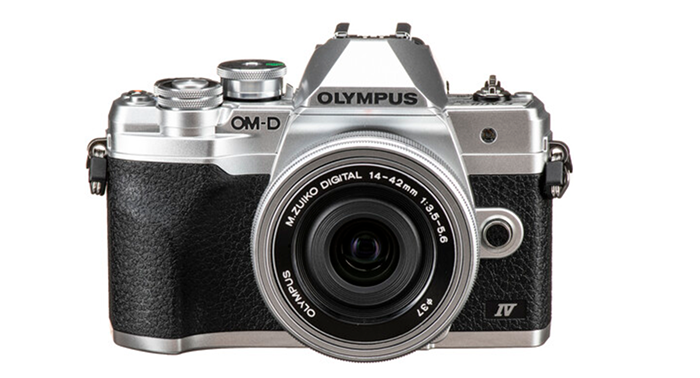
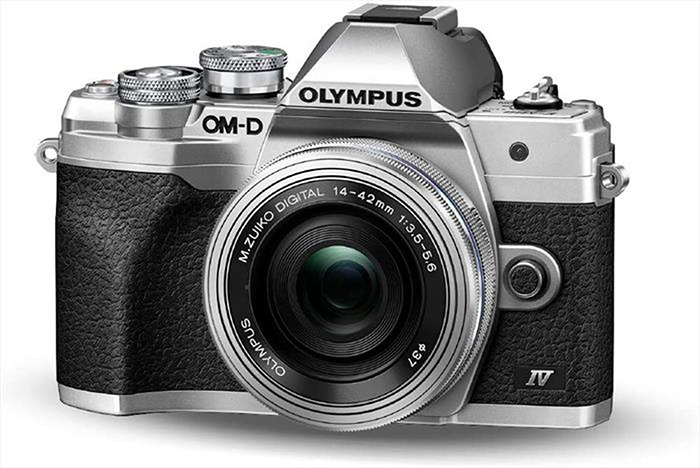
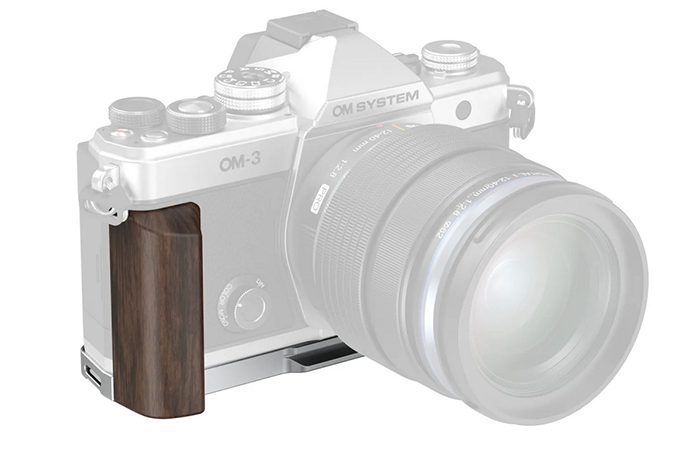
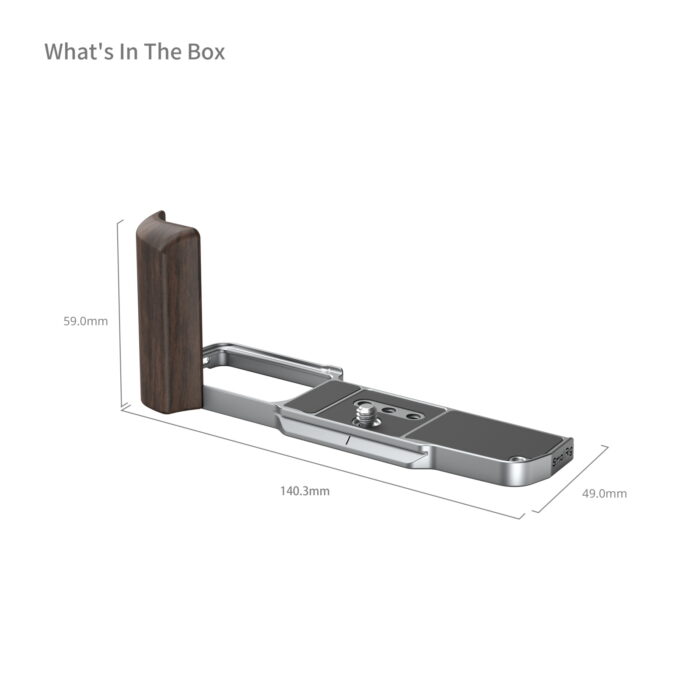
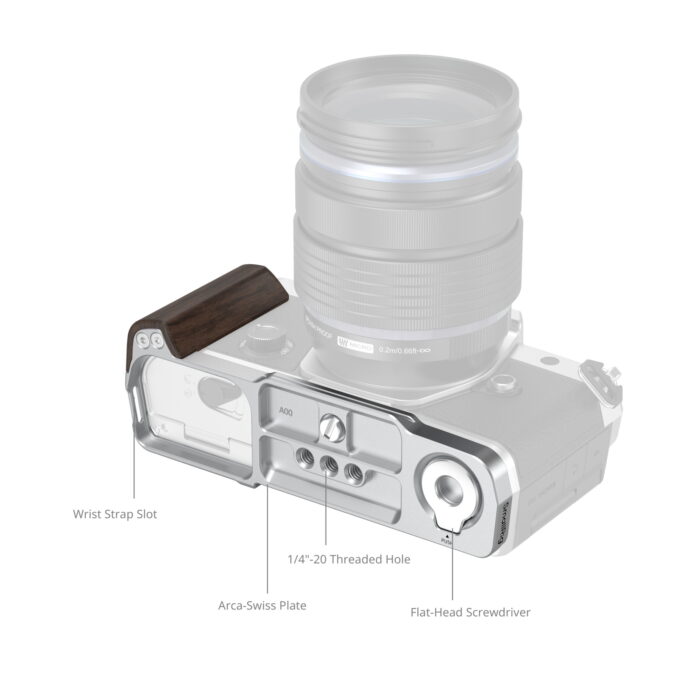
· Ergonomic Wooden Handle: The slim, compact design ensures superior grip comfort · Natural Wood Handgrip: Adds a touch of retro elegance to your camera setup · Built-in Arca-Swiss Quick Release Plate: Facilitates quick and easy tripod mounting · Unobstructed Access: Provides full access to all ports and controls, including the battery compartment, card slot, Creative Dial, and more · Lightweight and Compact: Weighs only 62g (2.2oz)
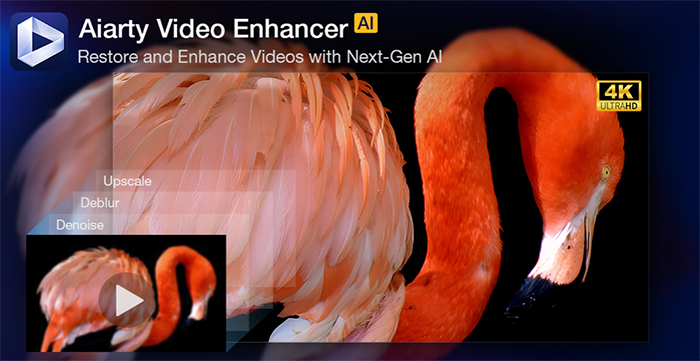
Aiarty Video Enhancer V2.5 delivers powerful upgrades for photographers and videographers. Fully offline for maximum privacy, it reduces noise, restores details, and enhances video quality—perfect for high-end footage from mirrorless and DSLR cameras.
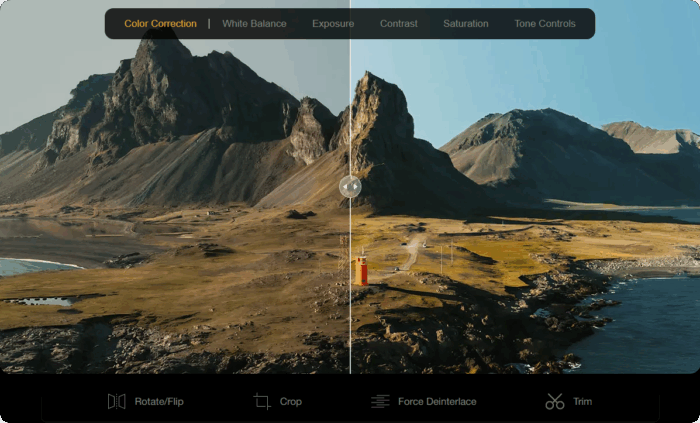
Color Correction Controls: Fine-tune your footage with temperature, tint, exposure, contrast, saturation, and more.
Copy Subtitle Tracks: Preserve subtitles while enhancing or upscaling videos.
NVIDIA 50-Series Boost (Windows): Faster, smoother processing with the latest GPUs.
AV1 Export (Mac): Output high-quality videos with the efficient AV1 codec.
Free License & Limited-Time Upgrade Deal
Last-Minute Launch Offer:Try a free license on your footage—no watermarks.
Limited-Time Upgrade Deal: Use the exclusive coupon to get an extra discount on the Lifetime License — the best price available. This one-time payment covers up to 3 devices, includes unlimited access to all features and free updates forever, and comes with a 30-day money-back guarantee.
What Professionals Are Saying
A Sony A7S III User
“Tried AIarty video enhancer and I am very impressed. It achieved better sharpness and denoise than other tools I use for video. It’s got a nice simple user interface that is easy to use. I just want it to work and don’t want a ton of sliders I have to change. I like the turbo mode which makes processing faster.”
Tests from a Singapore Videographer
Footage recorded in 4K and slowed down by 50% using Aiarty Video Enhancer.
Footage recorded in FHD, 240fps, then upscaled to 4K using Aiarty Video Enhancer.
New! Color Correction with Precise Control
Aiarty Video Enhancer adds color correction controls in the latest version, letting you fine-tune every detail of your shots. Adjust white balance, exposure, contrast, saturation, highlights, shadows, and more—all within a single, streamlined color panel.
Key Features of Aiarty Video Enhancer
Reduce Noise & Recover Details – Ideal for low-light, high-ISO, or compressed footage from mirrorless and DSLR cameras.
Upscale to 4K for Larger Screens – Bring older FHD or drone footage to life on TVs, monitors, or projectors.
Refine Soft or Slightly Out-of-Focus Shots – Subtly restore natural sharpness for a more polished look.
Slow-Motion & Audio Enhancement – Smooth out playback and improve sound quality directly from your camera files.
Optimized AI Models – Up to 95% GPU efficiency for high-performance editing on powerful rigs.
Tips to Boost Post-Production Workflow
Turbo Mode – Faster exports without compromising quality.
Pre-Edit Tools – Cut, split, rotate, and flip clips quickly for efficient editing.
Limited-Time Upgrade Deal
To get the most out of Aiarty Video Enhancer, you can use the coupon for a special discount on the Lifetime License. One payment lets you use it on up to 3 PCs or Macs, includes all future updates for free, and comes with a 30-day money-back guarantee for peace of mind.
Robin Wong revisits the Olympus E-1 and explains why Olympus once called its sensor “full frame.” He shows sample photos and argues that you don’t need the latest gear to enjoy photography. Key Takeaways:
Why “full frame” back then? Early Olympus materials for the E-1 described a “full-frame transfer CCD.” In context, “full frame” meant the sensor used its entire designed image area (no internal crop relative to its own standard), not 35mm equivalence. Over time the industry standardized “full frame” to mean 35mm, and Four Thirds was referred to as a 2× crop vs. 35mm.
Built-for-digital system: Unlike brands that adapted film mounts, Olympus designed Four Thirds from scratch—new mount + digital-first sensor—which reduced compromises seen when reusing film-era designs.
Telecentric optics advantage: Four Thirds lenses were designed to project light more perpendicularly onto the sensor (telecentric design). Benefits: better corner performance, more uniform sharpness, and efficient light capture. Robin notes Canon RF and Nikon Z later embraced similar digital-first optical thinking (mirrorless, short flange, large throat diameters).
Shooting the E-1 in 2025: Despite “only” 5 MP and no IBIS, the E-1 still feels great in hand, is responsive enough, and produces warm, pleasing Kodak CCD colors that Robin loves for street photography.
Big message: Gear perfection isn’t required—use what you enjoy. A camera that was great 20 years ago can still be great today.
OM SYSTEM M.Zuiko 12-40mm f/2.8 PRO II (telecentric-friendly, digital-first zoom): Amazon
Panasonic Lumix G9 II (modern MFT body alternative): Amazon
OM SYSTEM M.Zuiko 25mm f/1.8 (compact prime for street): Amazon
Final Thoughts
The E-1 shows how early digital-first thinking (Four Thirds + telecentric lenses) anticipated today’s mirrorless advantages. If you value handling and color as much as specs, classics like the E-1 can still deliver a uniquely satisfying shooting experience.