Chief Technology Officer of OM Digital Solutions says: We plan to launch many products this year including one that will make you “WOW” (in about 1 year)

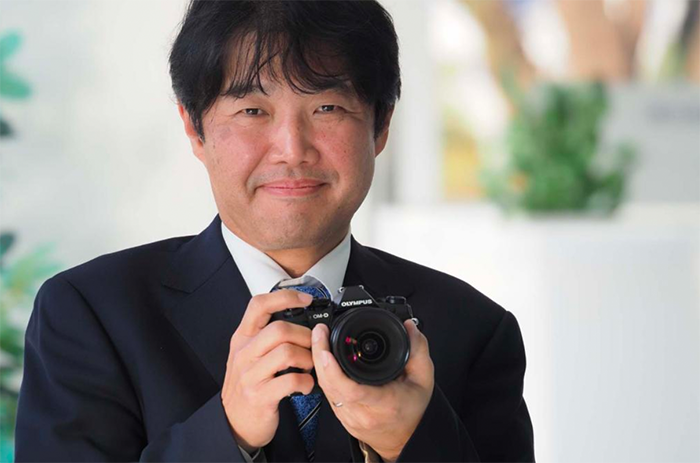
Asahi published an interview with Chief Technology Officer of OM Digital Solutions Mr. Kataoka.. The key info here is that he said:
-
- They plan to launch multiple new products in 2021
- They will stick to MFT (of course)
- It’s possible they will make a PEN-FII
- There will be at least one product that will make you “WOW” sometimes in around one year.
UPDATE: A reader made me notice that something got lost in translation. That new “WOW” product will not be announced by end of 2020 but sometimes in one year from now. Which means it might be coming in early 2021.
Digicameinfo summed up the interview (google translated text below):
How did you decide on the company name?
In the past and now, the value of our products has not changed. (How did you decide on the company name?) The value of our products has never changed, and we thought that “OM” was the best way to convey the message that we will continue our business.
How long can we use the Olympus logo?
At least for the time being, we will continue to use “Olympus. (How long can we use the Olympus logo?) At least for the time being, we will continue to use the name “Olympus. I want to think about this carefully. In any case, we have no intention of making a brand change that will cause anxiety among our customers.
How did you launch the new company in the midst of a shrinking camera market?
Why did you start a new company when the camera market is shrinking?) It is difficult for Olympus to change the contents of the organization to match the changes in the camera market. We need to create a structure that allows us to more simply manufacture products, deliver them, and sell them to customers. In order to create a structure that enables us to do this, it would be better for us to become independent from Olympus and continue our business by allowing us to do various things at our own discretion.
The number of employees in the new company has been reduced to about half that of the previous division. The global workforce is about 2,000, of which 280 are in Japan. Since lenses are the key to the imaging business, we had a lot of optical designers come to work for us. However, we have reduced the number of people in the development division as a whole.
If the company doesn’t return to profitability, will it be sold by JIP?
We have lightened the structure of the company considerably and are building a system that can withstand the current fluctuations in the Corona disaster and the camera market. We are changing our business structure so that we will be able to turn a profit according to a plan that is not too unreasonable. I hope you can rest assured about that.
Isn’t it necessary to stick to the Micro Four Thirds?
The Micro Four Thirds system has achieved the No.1 position in the domestic market in 2020 in terms of the share of units by lens mount. I think this is a sign that the Micro Four Thirds system is needed, and we would like to continue expanding the system.
Is it possible to release a camera like the PEN-F at a price that would be profitable?
I think there is a possibility. (Is it possible to make a camera like the PEN-F profitable?) I think it’s possible. If we sell hobbyist products at a low price, we won’t be able to make a profit at all, so if we do, we will sell them at a reasonable price. If we do, we will sell them at a reasonable price. Products for hobbyists cannot be sold in large quantities, but the numbers themselves are quite large. I think there is a possibility that we can release them if we can properly identify them.
WOW products:
Within the year…… I can’t give you a time frame, but we are working hard on it. I get angry if I talk too much but, at the very least, we’ll continue to release products that will make people feel glad that we’ve continued to make cameras even after establishing a new company. Naturally, there will be more than one product (Akagi: Oh my!). Some of these are products that include such special features that you’ll say “ooh” and “ahh” over them.