You now save $100 on the ZoloCam S7 streaming camera sold on Amazon (click here). But as PetaPixel wrote: The YoloLiv YoloCam S7 is undeniably interesting—but perhaps more for its marketing oddities than its capabilities. It’s hard to recommend confidently without substantial, unbiased reviews.
Robin Wong revisits the Olympus E-1 and explains why Olympus once called its sensor “full frame.” He shows sample photos and argues that you don’t need the latest gear to enjoy photography. Key Takeaways:
Why “full frame” back then? Early Olympus materials for the E-1 described a “full-frame transfer CCD.” In context, “full frame” meant the sensor used its entire designed image area (no internal crop relative to its own standard), not 35mm equivalence. Over time the industry standardized “full frame” to mean 35mm, and Four Thirds was referred to as a 2× crop vs. 35mm.
Built-for-digital system: Unlike brands that adapted film mounts, Olympus designed Four Thirds from scratch—new mount + digital-first sensor—which reduced compromises seen when reusing film-era designs.
Telecentric optics advantage: Four Thirds lenses were designed to project light more perpendicularly onto the sensor (telecentric design). Benefits: better corner performance, more uniform sharpness, and efficient light capture. Robin notes Canon RF and Nikon Z later embraced similar digital-first optical thinking (mirrorless, short flange, large throat diameters).
Shooting the E-1 in 2025: Despite “only” 5 MP and no IBIS, the E-1 still feels great in hand, is responsive enough, and produces warm, pleasing Kodak CCD colors that Robin loves for street photography.
Big message: Gear perfection isn’t required—use what you enjoy. A camera that was great 20 years ago can still be great today.
OM SYSTEM M.Zuiko 12-40mm f/2.8 PRO II (telecentric-friendly, digital-first zoom): Amazon
Panasonic Lumix G9 II (modern MFT body alternative): Amazon
OM SYSTEM M.Zuiko 25mm f/1.8 (compact prime for street): Amazon
Final Thoughts
The E-1 shows how early digital-first thinking (Four Thirds + telecentric lenses) anticipated today’s mirrorless advantages. If you value handling and color as much as specs, classics like the E-1 can still deliver a uniquely satisfying shooting experience.
In this video Gary discusses how Micro Four Thirds (MFT) cameras can thrive in the AI era by focusing on authenticity and real-life storytelling rather than flawless, synthetic imagery. As AI-generated photos become common, people will value meaningful, imperfect, and real moments.
MFT’s strengths—small size, light weight, affordability, and good image quality—make it ideal as an everyday carry (EDC) camera for capturing spontaneous, genuine moments without the bulk of larger systems. The tactile shooting experience, fast operation, and enjoyable handling (e.g., Panasonic Lumix G100) provide satisfaction that AI can’t replicate.
To succeed, Panasonic and OM System should produce small, fun-to-use cameras with fast boot times, responsive controls, and a touch of nostalgic design (e.g., Pen F Mark II, GX9 Mark II) to appeal to enthusiasts.
Gary contrasts MFT’s practicality with the limitations of Leica M (manual focus, high cost) and Sony ZV-E10 (slow startup, less suited for stills). The key opportunity lies in positioning MFT as the go-to camera system for authentic, everyday storytelling in a world dominated by AI imagery.
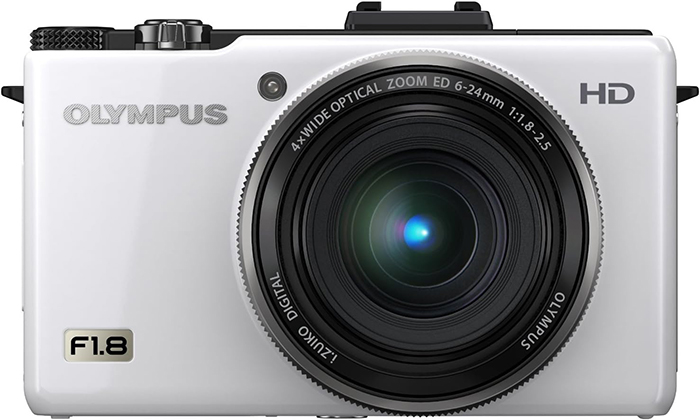
ThePhoblographer suggested that OM Digital should bring back the Olympus XZ-1, giving it a modern update. With the growing demand for retro-style, high-quality compact cameras—like the Fujifilm X100 series—a refreshed XZ-1 could be a perfect fit for today’s market.
The original XZ-1 was announced back in 2011 but still looks cool today! And you find it used for just under $300 on Amazon (Click here).