

72 hours left to get new Luminar Extensions for the best price

Use code “43RUM” to get an additional 10$/€ discount on the extension pack (Click here). And by the way, you can see what you can do with the extensions on this page.
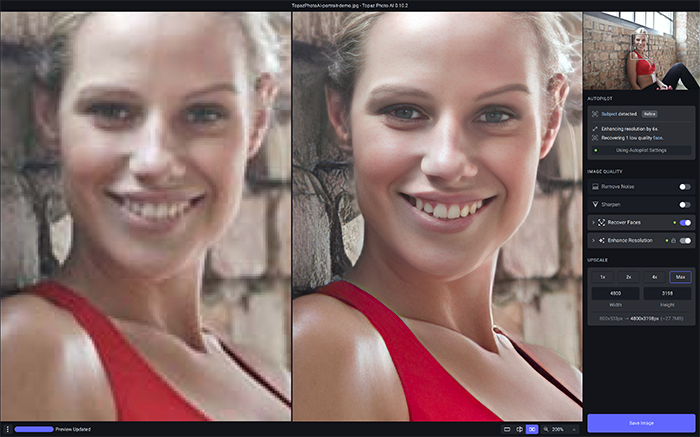
Reminder: Topaz announced the brand new Photo AI APP (Click here to read all details). Use the coupon code “GETPHOTOAI” to save 15% on your order! The deal runs until the 7th of October only.
Yongnuo will soon announce a new 12-35mm f/2.8-4.0 MFT lens
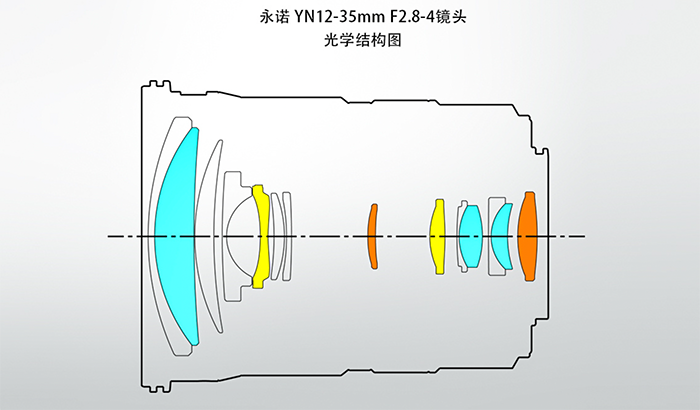
The schematics above shows what’s going to be a new Yongnuo 12-35mm f/2.8-4.0 MFT lens. Some specs:
- autofocus lens
- internal zoom and internal focus structure
- construction: 14 elements in 11 groups, including 2 SA super aspherical lenses, 2 ASPH aspherical lenses and 3 LD low-dispersion lenses
- 318g
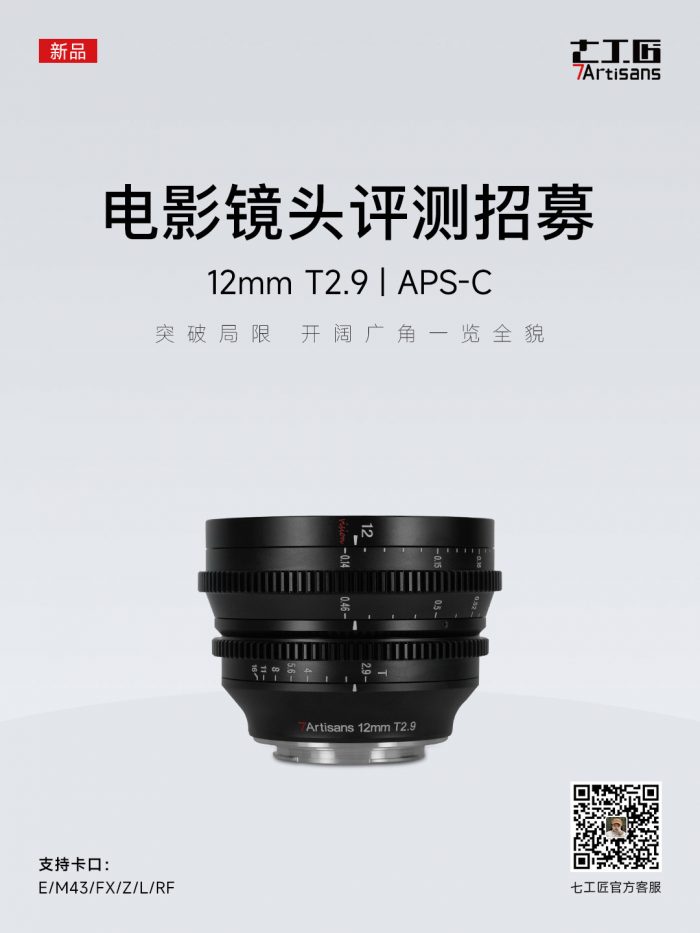
First images of the new 7Artisans 4mm f/2.8 drone lens and the 7Artisans 12mm t/2.9 Cine Lens (both MFT-mount too)
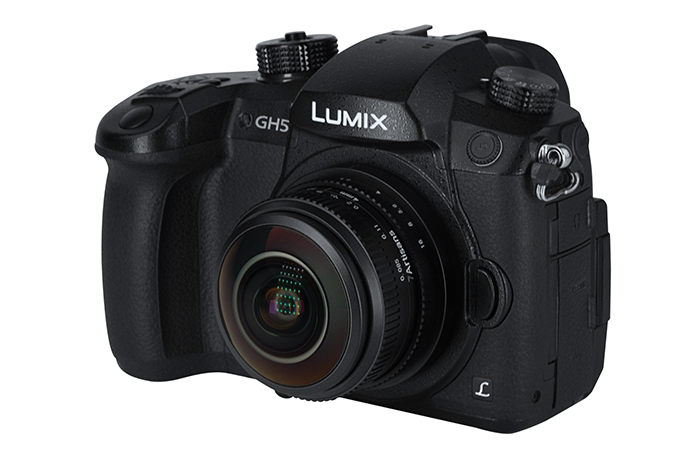
7Artisans is displaying two new APS-C lenses on their Chinese social media platforms, that will both be available for Sony E-mount too:
- 7Artisans 4mm f/2.8 drone lens
- 7Artisans 12mm T2.9 Cine Lens

via Fujirumors
DxO announces the world’s most comprehensive set of camera and lens calibrations for unparalleled image quality

Big news for DxO software owners:
DxO announces the world’s most comprehensive set of camera and lens calibrations for unparalleled image quality
In addition to adding support for a host of new cameras and lenses, DxO Labs, the company that invented optical corrections for digital photography, has synchronized its peerless Optics Modules across the full range of its software.
Users of all DxO titles — DxO PhotoLab 5, PureRAW 2, ViewPoint 3, FilmPack 6, and Nik Collection 5 — now have access to more than 75,000 camera and lens combinations, offering incredible range and unrivaled quality.
As each new Optics Module is created from individual camera and lens combinations, they present the most complete and high-quality approach to optical correction. The latest update — available now — includes the following cameras:
- DJI Mini 3 Pro
- Fujifilm X-H2S
- Nikon D810A
- Nikon Z30
DxO also adds support for a huge range of new lenses, and unlike its competitors, who offer only generic profiles, DxO gives photographers certainty that corrections are optimized for their specific camera and lens setup. The list includes:
- Canon RF-S 18-45mm f/4.5-6.3 IS STM
- Canon RF-S 18-150mm f/3.5-6.3 IS STM
- Fuji 150-600mm f/5.6-8 R LM OIS WR
- Fuji 150-600mm f/5.6-8 R LM OIS WR with XF TC 1.4x WR
- Fuji 150-600mm f/5.6-8 R LM OIS WR with XF TC 2x WR
- Panasonic Lumix Leica DG Vario Summilux 25-50mm f/1.7 ASPH
- Sony E 15mm f/1.4 G
- Sony FE 24-70mm f/.8 GM II
- Sony FE PZ 16-35mm f/4 G
- Sony E PZ 10-20mm f/4 G
- Sony FE 50mm f/1.2 GM
Pioneers of technology
Almost 20 years ago, DxO patented the concept of lens corrections and since then, the analyses performed in its purpose-built laboratory have set the standard for the digital photo editing industry. The quality and precision of DxO’s Optics Modules remain unmatched by its competitors, not least because of the way they are created.
DxO CEO Jérôme Ménière is proud of the company’s achievements. “Optical corrections are fundamental to DxO’s ethos,” he explains, “guaranteeing photographers the best possible results in terms of sharpness and clarity. Not only do these Modules transform the performance of lower-end gear, they can do the same for pro-level kit, too – even the best lenses can have their performance radically improved when DxO’s modules are applied.”
What makes DxO’s corrections superior?
DxO’s unique dual-calibration system assesses each individual lens and camera body together, delivering truly bespoke and outstanding optical corrections. This leads to an exclusive set of characteristics that no other system can provide. There are two significant benefits:
DxO Optics Modules assess 100% of the pixel area as being the true field of capture. Other solutions — including those from camera brands and competitor software — are forced to crop the resolution when reducing optical distortion. By contrast, DxO Optics Modules keep up to 10% more pixels compared to the competition.
DxO uses an exclusive lens sharpness algorithm that delivers tailor-made adjustments and corrections across each lens’s field of view. Unlike competitors, sharpening is applied at different levels, specific to a lens’s idiosyncrasies. For instance, sharpening might increase towards the edge of the frame to balance any radial softness. This achieves superior results when compared to applying general sharpening across the entire image — an approach taken in lesser software.
DxO Optics Modules also correct the following imperfections as standard:
Vignetting
Geometric distortions
Longitudinal and lateral chromatic aberrations
What’s more, DxO’s Optics Modules are the only way to benefit from anamorphic deformation compensation — exclusive technology that restores the natural proportions of a scene or subject after having been distorted by the characteristics of a wide-angle lens. This means that using shorter focal lengths is no longer an issue when photographing large groups of people (particularly at weddings), or in landscape and architectural photography.
a bit of everything…
OM-1 Owner MUST HAVE, SmallRig OM-1 Cage – RED35 REVIEW
Today deals at Amazon, BHphoto, Adorama, Amazon DE, Amazon UK, Amazon FR, Amazon IT, FotoErhardt DE, FotoKoch DE.
Shallow Depth of Field | 6 Factors To Consider (42West).
Sony, Olympus, and Sony Olympus Medical Solutions Collaborated in the Development of a Surgical Endoscopy System (Sony.net).
LUMIX Live: Photo Setup and Editing with LUMIX Cameras
What Photograph Have You Missed? (Explora).
Plenty of news on the facebook OMD group, Panasonic FF and the GH5 group.