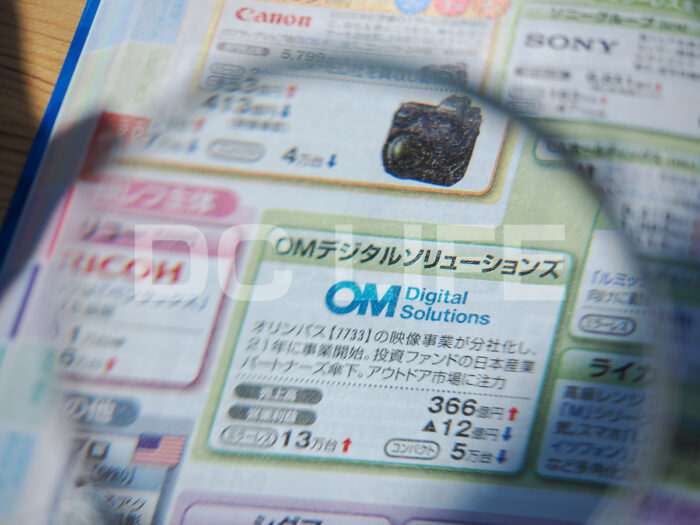
According to figures in Industry Map 2026, OM Digital’s operating profit for 2024 is expected to be negative, reversing the recent improving trend and extending the company’s post-spinoff deficit.
OM Digital Results (2024)
Sales
¥36.6 billion
Operating profit
−¥1.2 billion
Mirrorless cameras
130,000 units
Compact cameras
50,000 units
Note: Sales increased versus 2023, but operating profit deteriorated, keeping OM Digital in the red.
Trend (2021–2023) — “Industry Map” prior edition
Year
Sales
Operating profit
2023
¥29.2 billion
−¥0.21 billion
2022
¥28.2 billion
−¥0.64 billion
2021
¥21.9 billion
−¥1.8 billion
What might be behind the 2024 deterioration?
Higher input and logistics costs outpacing price/mix improvements.
Increased marketing and sales-promotion spend to defend share.
Up-front R&D/product investments that have not yet translated into revenue.
Many camera and lens makers have posted healthier results in recent years, suggesting OM Digital’s challenges may be structural or timing-related rather than industry-wide. Continued sales growth and disciplined cost control will be key if the company is to return to operating profitability.
Figures for 2024 are expectations cited from Nikkei’s Industry Map 2026; final reported results may differ.
–
via DClife
Eric Jannigs says that after spending a couple of weeks with both the Nikon Zf and the OM System OM-3, the differences between these two retro-styled cameras become very clear.
The Nikon Zf impresses with its premium build touches such as brass top dials and a metal shutter button, paired with a well-thought-out mix of classic dials and modern control wheels. The fully articulating screen, excellent EVF, and robust manual focus assist (with eye tracking and magnification) make it a capable hybrid shooter. Under the hood, its 24MP full-frame sensor and strong autofocus performance shine, and it offers the flexibility to adapt F-mount lenses and use Nikon flashes. On the downside, it’s chunky and not pocketable, most Nikon Z lenses don’t match the retro styling unless you pair it with manual focus options like Voigtländer lenses, and the dual card slots (SD + microSD) are awkwardly placed in the battery compartment.
The OM System OM-3 is physically closer to a classic film camera in size and feel. It sports high-quality metal dials with satisfying tactile feedback, a more convenient side card slot, and a better battery door/tripod plate layout. A unique color/mono switch and easily customizable profiles add to the fun factor. Most importantly, the Micro Four Thirds lenses like the Olympus M.Zuiko 12mm f/2 and Olympus M.Zuiko 25mm f/1.8 are compact, premium-feeling, and visually match the OM-3 perfectly. However, the 20MP Micro Four Thirds sensor can’t match the Zf’s full-frame image quality, its EVF and manual focus aids lag behind, it only has a single card slot, and the on/off switch is less ideally placed.
In the end, the Nikon Zf delivers better image quality, EVF, and full-frame performance, while the OM System OM-3 wins in ergonomics, retro charm, compactness, and lens system cohesion. For pure shooting enjoyment, the OM-3 comes out ahead, but for maximum technical performance, the Zf remains the stronger choice.
To help keep track of your camera, you can now grab discounted Apple AirTags on Amazon and BHphoto, along with the discounted SmallRig AirTag mount plate—also available on Amazon and BHphoto.
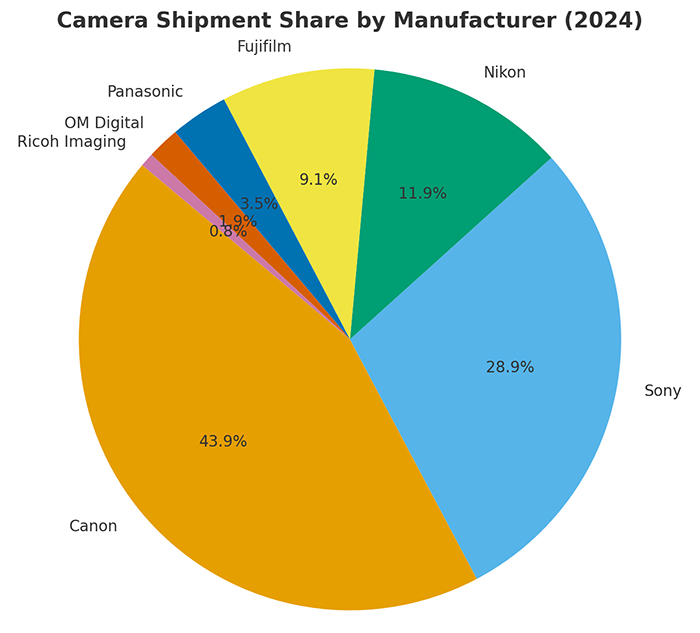
Basically all manufacturers except OM Digital managed to increase the numbers of cameras sold. In general global shipments of digital cameras in 2024 were up for the first time in seven years.