Osaka, Japan – Panasonic Holdings Co., Ltd. (hereinafter referred to as Panasonic HD) has developed an image recognition AI with a new classification algorithm that can handle the multimodal nature of data derived from subject and shooting conditions. Experiments have shown that the recognition accuracy exceeds that of conventional methods.
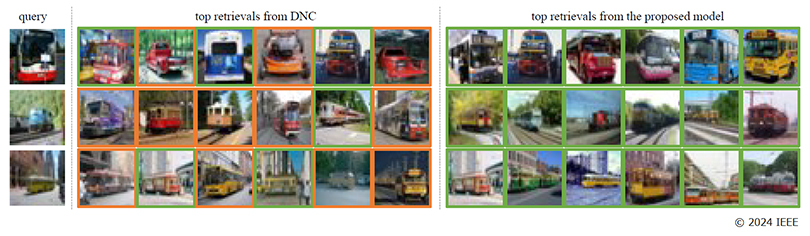
Image recognition AI recognizes objects by classifying them into categories based on their appearance. However, there are many cases when even objects belonging to the same category, such as “train” or “dog”, are classified under subcategories such as “train type” or “dog breed”, having very different appearances. Furthermore, there are many cases in which the same object can appear to look different due to differences in shooting conditions such as orientation, weather, lighting, or background. It is important to consider how best to deal with such diversity in appearance. In order to improve the accuracy of image recognition, research to this point has been carried out with the aim of achieving robust image recognition that is not affected by diversity, and classification algorithms have been devised to find similarities within subcategories and features common to objects in a given category.
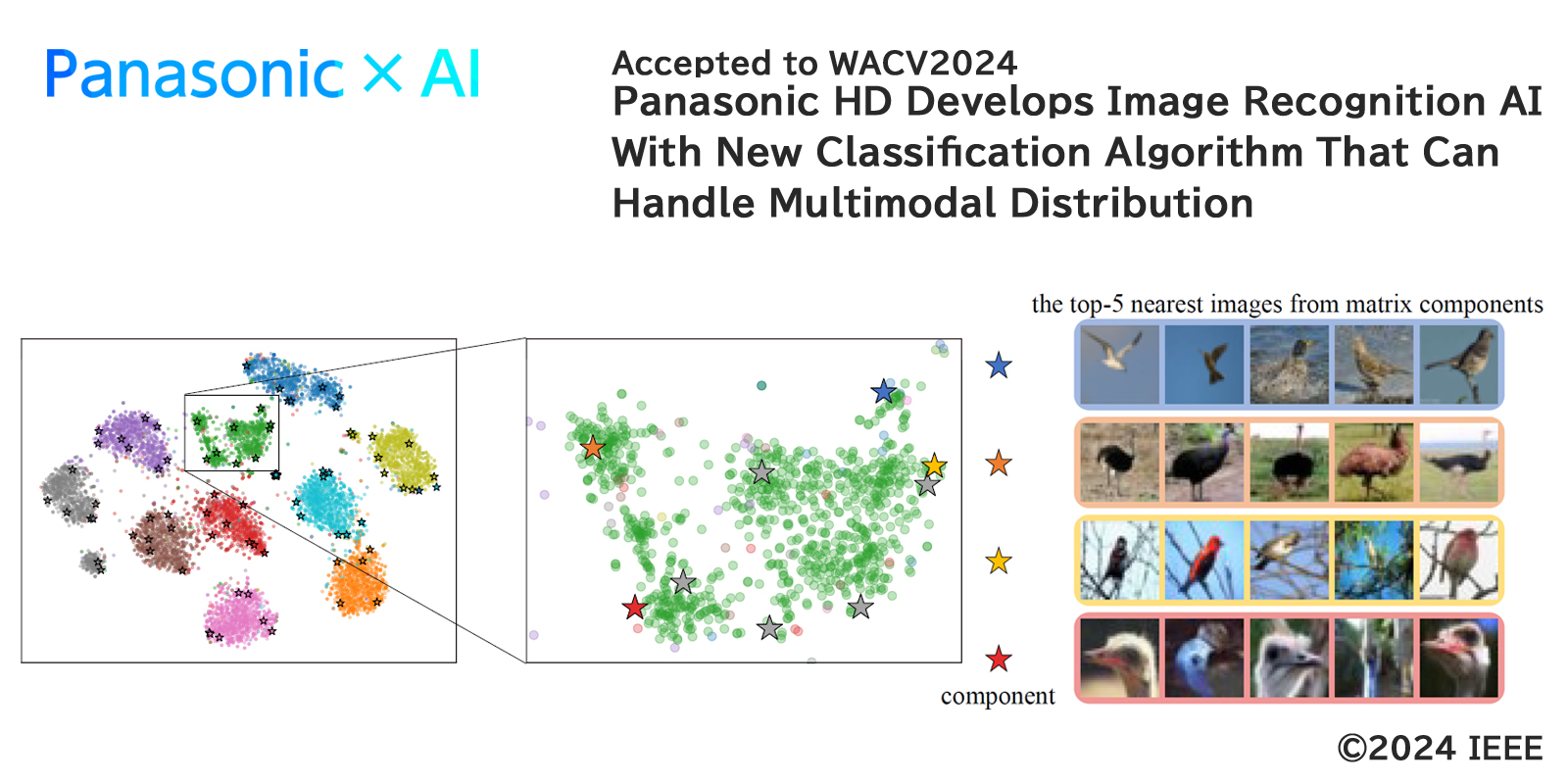
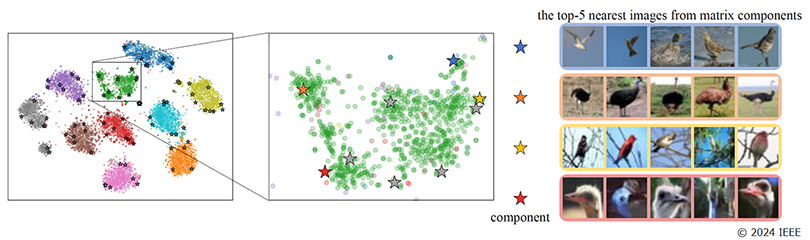
As AI continues to be deployed in a variety of settings and a large number of diverse images are being handled, the limits of the approach of “finding common features” have become apparent. In particular, when there are subcategories with different appearance tendencies within the same category (multimodal distribution), AI often has trouble successfully recognizing such objects as being in the same category, resulting in a decrease in recognition accuracy.
Therefore, our company has focused on taking advantage of differences in appearance and developed a new classification algorithm that captures the diversity of images using a two-dimensional orthonormal matrix. Using a benchmark dataset*1, we demonstrated that it is possible to perform highly accurate image classification even on data with a multimodal distribution, which is difficult for AI.
This technology is a result of the research of REAL-AI*2, the Panasonic Group’s AI expert training program, and was accepted to the IEEE/CVF Winter Conference on Applications of Computer Vision (WACV 2024), a top conference in the computer vision field. A presentation will be made at the plenary conference in Hawaii, USA, which will be held from January 4 to January 8, 2024.
Panasonic HD will promote the research and development of AI technology that accelerates its social implementation while also focusing on training top AI experts.