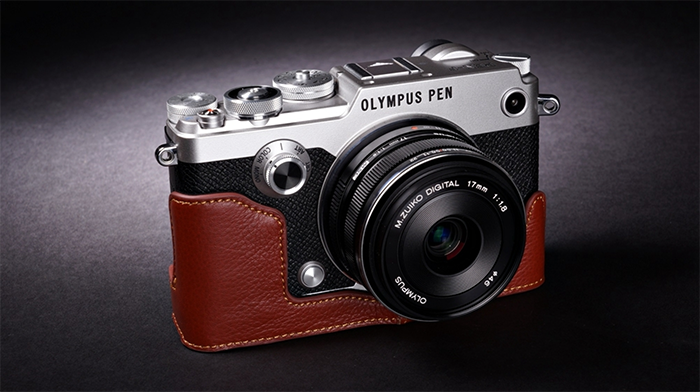
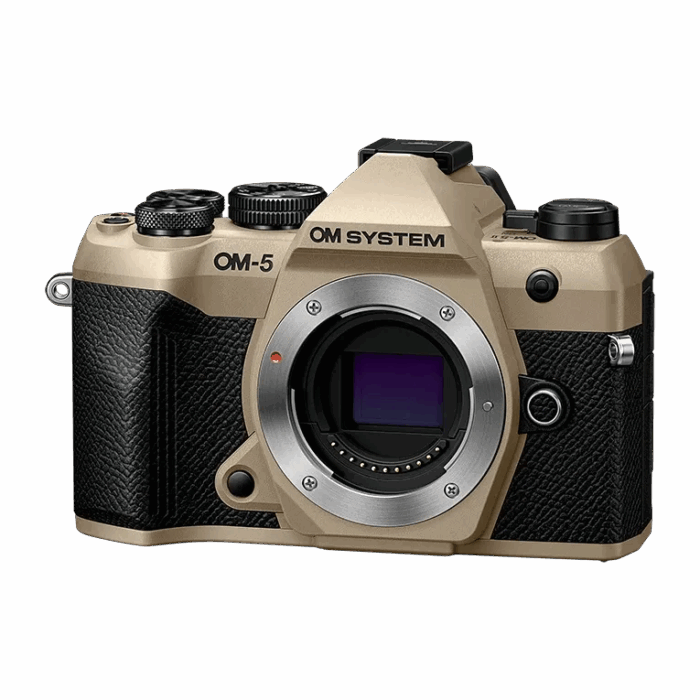
Omar, usually a full-frame and medium format shooter, tries Micro Four Thirds (OM-3) for the first time. He’s impressed by the small size, retro design, and lens compactness. Build feels good but lacks front grip. He appreciates the OM-3’s travel-friendly setup, though it’s not ideal for one-handed use. He’s intrigued by the system’s potential and excited to explore it more.
Zach Mayfield focus of the review is the OM System OM-3 as a filmmaking tool.
The camera’s standout feature is its adjustable in-body stabilization (IBIS), which can be tuned for strength. The default IS-2 mode already delivers gimbal-like steadiness. It includes a digital teleconverter (usable in photo and video), zebra warnings, tally lights, a red recording frame, and a 1/48 shutter option for natural motion blur. Rolling-shutter performance is excellent, avoiding “jello” effects.
Essential Setup Tip
Switch the codec from H.264 (8-bit) to H.265 (10-bit C4K up to 60 fps). The H.265 footage looks dramatically better—richer color, less banding, and full-sensor readout in long-GOP mode.
Color and Log Performance
OM-Log 400 isn’t as flat as Sony S-Log3 but is easy to grade. In DaVinci Resolve there’s no direct CST, so use the official OM Log 400 → Rec.709 LUT or build a grade manually. The reviewer praises its natural skin tones, smooth highlight roll-off, and surprisingly clean image even in low light for a Micro Four Thirds camera.
Downsides
Despite being MFT, the body is larger than expected and not pocketable even with a small prime. It’s also relatively expensive—at a similar price point you could consider a capable full-frame hybrid. Still, the overall build and feature balance justify the cost for many creators.
Verdict
The OM System OM-3 is an impressive everyday hybrid: strong 10-bit video, excellent IBIS, great colors, and refined design in a compact form. Not the cheapest or smallest, but easily one of the most satisfying all-around “Everyday Cinema Carry” cameras available today.
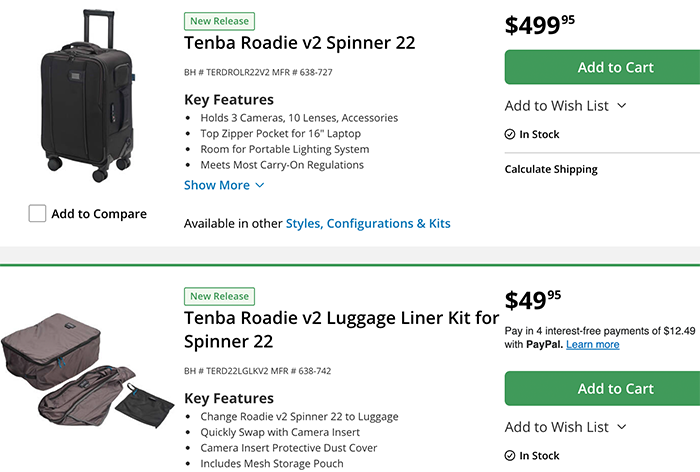
Photographers on the move just got a major upgrade. Tenba’s new Roadie V2 lineup (here at BHphoto) is the first-ever rolling camera case system that converts into a backpack — ideal for navigating both airports and rough terrain.
Available in multiple sizes (from international carry-on to oversized roller), the Roadie V2 features optional backpack straps, a rigid crushproof shell, water-repellent ballistic nylon, and room for multiple camera bodies, large lenses, and even a laptop. There’s even a hidden AirTag pocket for tracking.
For hybrid shooters and travel pros, this is a smart, durable, all-in-one solution — roll when you can, carry when you must.