

George Holden: You Don’t Need a Full Frame Camera for Street Photography

George Holden explains why Micro Four Thirds cameras are uniquely powerful tools for street photography: they are small, discreet, inexpensive, and offer a natural advantage for layered compositions thanks to their deeper depth of field and 4:3 aspect ratio. He argues that full-frame is unnecessary for most street work, and that Micro Four Thirds lenses provide outstanding versatility at a fraction of the size and cost. Holden also demonstrates how aperture equivalence helps street photographers achieve bright exposures while retaining deep focus for complex, multi-layered images.
Recommended Micro Four Thirds Lenses
12mm prime (BHphoto),
14mm prime (BHphoto),
15mm Leica prime (BHphoto),
17mm prime (BHphoto),
20mm prime (BHphoto)
Holden says these compact primes (24–40mm FF equivalent) are ideal for layered street images.
Kit Lens Option
12–42mm kit lens
A very cheap, flexible way to explore the Micro Four Thirds system.
Filter System Mentioned
KN&F Concept magnetic filter kit (Variable ND, CPL, Black Diffusion 1/4)
Camera Suggestions
Micro Four Thirds beginner cameras
Holden recommends an ultra-budget model for newcomers and a slightly more advanced option depending on needs.
Key Technical Points
• Micro Four Thirds 4:3 aspect ratio gives taller compositions.
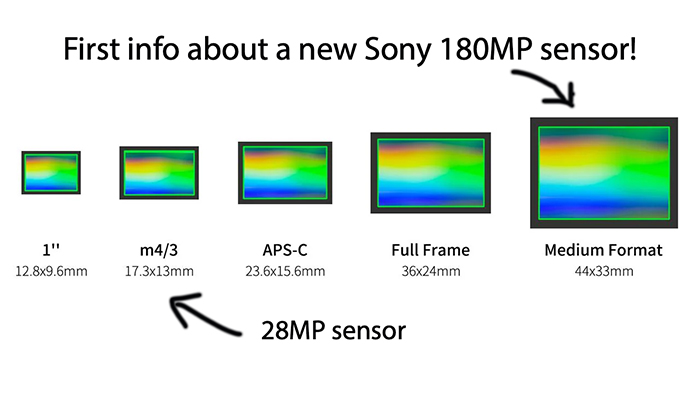
• f/2.8 on MFT ≈ f/5.6 full-frame depth of field, ideal for layered street scenes.
• Smaller sensors make achieving deep focus effortless without stopping down to f/8 or f/11.
• Small lenses and bodies make the system discreet and travel-friendly.