The first full Olympus 100-400mm reviews: “Olympus has produced a superb lens””
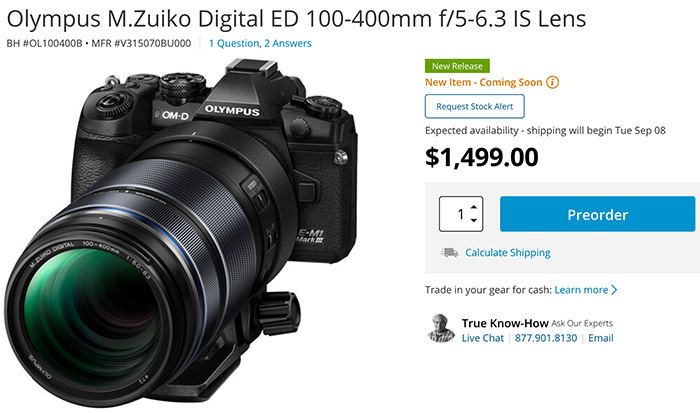
Preorders:
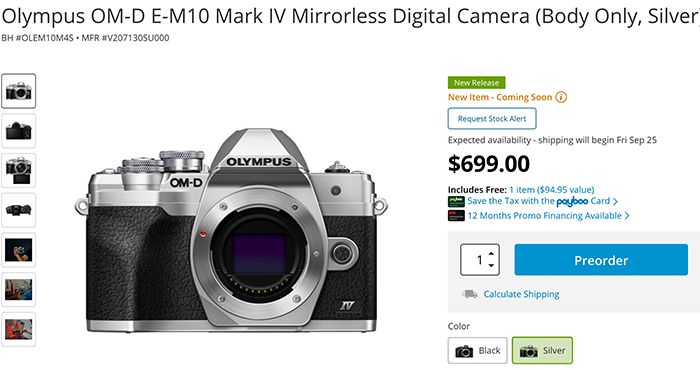
Olympus E-M10IV at Adorama, Bhphoto. GetOlympus. Amazon.
100-400mm at Adorama, Bhphoto. GetOlympus.

Photographyblog writes:

With fast and accurate auto-focusing for both still and moving subjects, 3-stops of built-in image stabilization, full weather-proofing and decent close-focusing, this lens is well-suited to the life in the field, despite not even having the PRO billing that Olympus bestows on its very best optics.

This is backed up by the excellent optical performance. Detail is sharp throughout the zoom range, with both the center and edges of the image proving to be excellent even when using the lens wide-open. Chromatic aberrations are not really an issue, distortion is automatically corrected on Olympus bodies, and bokeh is appealing thanks to the 9-bladed aperture.

Bird, wildlife and sports photographers looking for a big zoom lens that doesn’t have a massive price-tag will love the new Olympus 100-400mm F5.0-6.3 lens.

ePhotozine writes:

First off, there is no doubt that Olympus have produced a superb lens, both for ease of use and for features provided. Performance is also excellent, better than the bald figures suggest. The IS system works well, extending the usefulness of the lens as the light levels fall. The price is also excellent, just over £1000 being a very fair price point for such a long lens.

For those who are already using the Olympus system this could just be the wildlife lens you have been waiting for – I personally would not hesitate. Those who are looking to lighten their load may well be tempted also as similar lenses for DSLR are generally much heavier and bulkier.

Olympus have re-asserted themselves in the marketplace with a very strong offering indeed and their splendid new Olympus M.Zuiko ED 100-400mm f/5.0-6.3 IS lens is Highly Recommended.
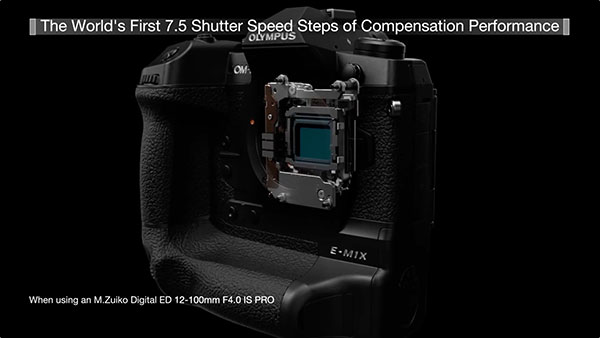
Olympus E-M1III review at Dpreview: “our favorite Micro Four Thirds cameras for stills shooters”

Dpreview published the complete E-M1III test and concluded:

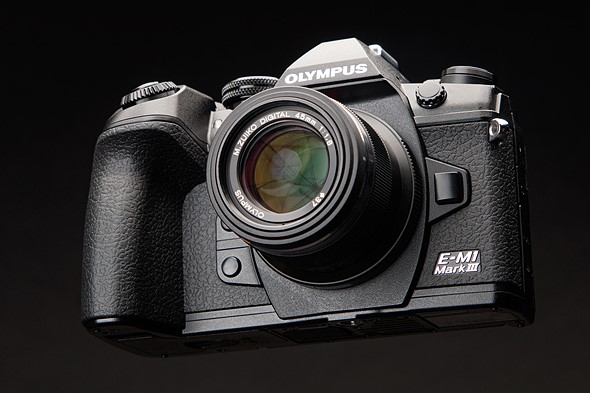
The Olympus E-M1 III is our favorite Micro Four Thirds cameras for stills shooters, as of publication. It’s capable of very good image quality and jam-packed with fun and useful features. It’s also no slouch when it comes to 4K video capture and offers some of the best image stabilization around. All this in a supremely well-built, comfortable, customizable and attractive body. That said being said, there are more capable, large sensor cameras available for the money.

Robin Wong: Electronic Shutter Is The Future – But Can You Use It All The Time?

Robin Wong:

When it comes to silent shutter, I have been frequently asked if it can be left as a default on the camera, the answer is not that straightforward. Again, each and every time I want to answer a question, it seems like I would need to spend about half an hour to just draft an email. Therefore, making this video will solve all my future problems on similar topic.
I can be lazy and just give a simple yes or no, but you know me, I am doing my best to be thorough and share as much as I can.
Using Electronic Shutter breaks a lot of camera limitations, and is the future of imaging technology. Olympus allows burst sequential shooting up to 60fps RAW, breaks shutter speed limit up to 1/32000 and implemented creative composite computational imaging features such as PRO Capture Mode, High Res Shot, Live ND, Live Composite, Focus Stacking, just to name a few. Silent shutter is not just for shooting silently, it offers a lot more benefit that pushes the boundaries of modern photography.
However, currently electronic shutter is still evolving and still has some limitations, which the photographers must be aware of. Using electronic shutter will introduce jello/rolling effect, banding issues in artifical light and imposes restrictions for flash photography.
I hope this video clears up all questions about silent/electronic shutter and helps you make better decisions on choosing which mode for the photography that you are doing!
0:36 What is Electronic Shutter?
2:32 Why is Electronic Shutter Important? How Electronic Shutter pushes the boundaries of imaging technology and is the future of camera evolution?
4:04 How to enable Silent Shutter in your Olympus OM-D camera
5:17 Can I use Silent Shutter all the time? Limitations of Electronic Shutter and when not to us it?
9:00 In what situations Silent Shutter can be favorable?