

DigitalCameraWorld suggest you to buy the E-M10IV instead of the FujiFilm X100VI

Olympus E-M10 Mark IV at BHphoto, Amazon, Adorama, Fotokoch, FotoErhardt, Calumet, WexUK, Clifton.

DigitalCameraWorld made the “Impossible” comparison between the two cameras and brings the case why people should consider the OM System E‑M10 Mark IV.

The OM System E‑M10 Mark IV is a 2020 model that’s become an excellent budget mirrorless option—often priced under $700 (~£700) on Amazon.

It checks three big-hit boxes: small, retro, and cheap—and it beats even some premium compacts like the X100VI for value

Key Highlights:
– 20 MP Four Thirds sensor delivers crisp stills, outperforming smartphones and compact cameras
– 5-axis in-body stabilization (approx. 4.5 stops) keeps handheld shots sharp
– Flip-down 3″ touchscreen enables easy vlogging and selfies
– 4K video capture and live-light tools like Live Composite mode add creative flair

Pros:
– Compact, well-built retro design with tactile controls
– Excellent for beginners thanks to intuitive layout and IBIS
– Strong value for travel, street, and everyday photography

Cons:
– No weather sealing (unlike higher-tier OM‑5 Mark II)
– Contrast-detect AF only (no phase-detect), not ideal for fast-moving subjects
– Lacks mic input and USB‑C (limits serious hybrid video use)

Bottom Line:
The E‑M10 Mark IV offers a rare combination: retro looks, strong stills/stabilization performance, and compact size—all at a budget-friendly price. It’s a compelling entry point into OM System’s ecosystem—but shoot fast action or video? You might prefer stepping up to the OM‑5 or OM‑1 series

Get the Olympus E-M10 Mark IV at BHphoto, Amazon, Adorama, Fotokoch, FotoErhardt, Calumet, WexUK, Clifton.
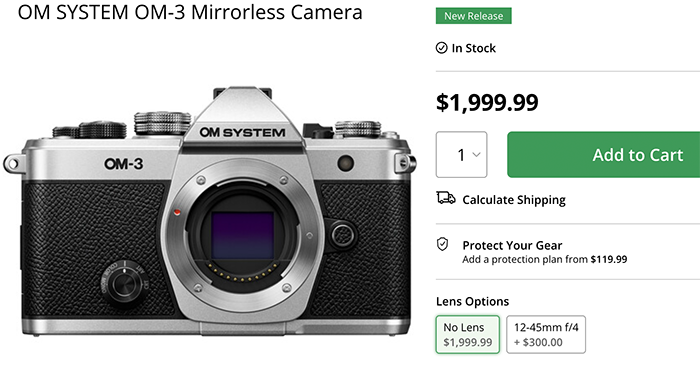
DigitalCamerWorld OM-3 review: “The perfect camera… for me”

OM-3 at BHphoto, Amazon, Adorama, OM store USA.

DigitalCameraWorld reviewed the OM-3 and writes and the camera is praised as a stunning heir to both the PEN‑F-inspired design and the flagship tech of the OM‑1 Mark II:

Strengths:
– High-end computational photography with creative flexibility
– Pocketable power ideal for travel, street, and everyday shooting ()
– Gorgeous metal build, vintage styling, and ergonomic refinement ()

Drawbacks:
– No joystick and only a single SD card slot
– Slightly less stabilization and lower EVF resolution than OM‑1 Mark II

In conclusion, the OM‑3 blends classic OM aesthetics with cutting‑edge features—appealing to enthusiasts who prize both beauty and technical excellence in a micro four‑thirds body.

OM-3 at BHphoto, Amazon, Adorama, OM store USA.

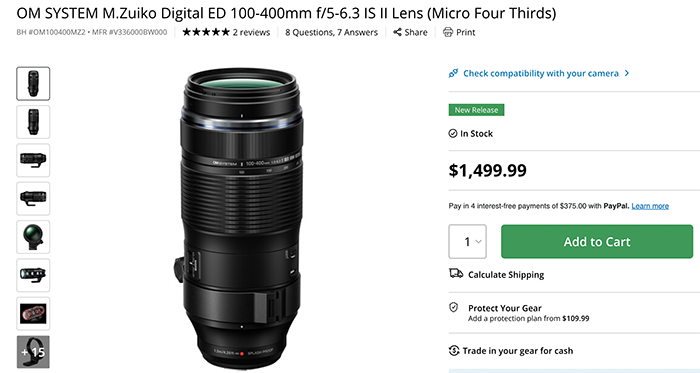
OM 100-400mm II review by PCmag: “worthwhile addition to a Micro Four Thirds kit”

The new lens is at Amazon US&CA&EU, Bhphoto, Adorama, OM Digital.

PCmag tested the new 100-400mm II lens and concluded:

Wins us over with its wildlife-friendly focal length, fully weather-sealed construction, and reasonable carry weight, all of which make it a worthwhile addition to a Micro Four Thirds kit.
If you use Micro Four Thirds gear and want a lens that brings distant scenes into close view, put the OM System M.Zuiko Digital ED 100-400mm F5.0-6.3 IS II on your shopping list. It includes full weather protection to match OM cameras, captures images rife with detail, and is appropriately sized for the system. We also like its close focus capability, which is good for macro images in a pinch, and find it to be a decent value, though shy of a bargain. Put together, it’s enough to earn the M.Zuiko 100-400mm II our Editors’ Choice award.

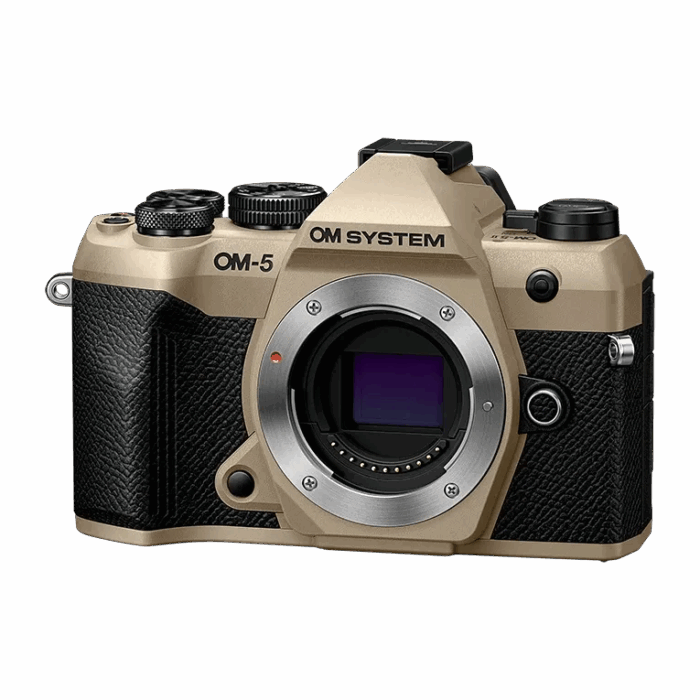
Micro Four Nerds tested the new OM-5II in Iceland

Micro Four Nerds tested the OM System OM-5 Mark II on a rugged photography trip to Iceland, showcasing its weather sealing, portability, and landscape photography strengths.

Key Strengths:
– Compact and lightweight – ideal for hiking and long handheld shooting
– Excellent weather sealing – handled waterfalls, sea spray, and rain with no issues
– Live ND filter – made long exposures effortless without physical filters
– Mechanical burst mode – sufficient for erupting geysers
– Very travel-friendly – never fatiguing to carry

Criticisms:
– Poorly placed computational photography (CP) button – prone to accidental activation
– Only one custom mode on the dial – fewer than OM-1 or OM-3
– Autofocus struggled with birds in flight – reverted to OM System OM-1 for that task
– Plastic base plate unchanged – may be prone to cracking like older models
– On/off switch on the left – ergonomically awkward for quick use

Performance Summary:
– JPEGs looked excellent using custom presets; RAW not yet tested
– Ergonomics mixed – great size and weight, but poor button layout choices
– Subject detection AF needed for fast wildlife – missing on OM-5 M II
– Great build confidence – camera endured sand, water, salt, and impacts

Best Use Case: Landscape photographers, hikers, travel shooters, and anyone needing compact rugged gear.

Upgrade Value: Minor refresh, not a must-upgrade for OM-5 users. More suited for new users entering OM System or Micro Four Thirds.

Quote: “The most Micro Four Thirds Micro Four Thirds camera you can buy.”

Gear Used:
OM System OM-5 Mark II
Olympus 40-150mm
OM System OM-1

Final Thoughts: The OM-5 Mark II is a small, tough, capable camera for outdoor adventures. While not groundbreaking, it’s a great travel companion with serious durability and excellent JPEG image quality straight out of camera. Needs more innovation from OM System to stay competitive.

OM-5II preorders at BHphoto, Amazon, Adorama, Fotoerhardt, WexUK.