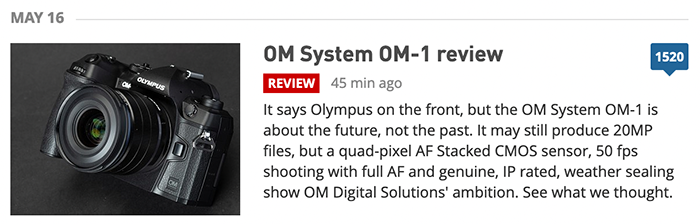
Dpreview published the full review and concluded:
The OM System OM-1 is probably the best all-round Micro Four Thirds camera yet, which is exactly what OM Digital Solutions needed to emphasize that it’s a system with a future. It’s not a perfect camera, but with a bit of work on the photographer’s part, it’s one that’s punches well above its weight.
Essentially the OM-1 adds speed and much-improved AF and video to the image quality, stabilization and weather sealing that higher-end Olympus cameras were known for. This greatly extends the kinds of shooting it feels at home with. Particularly if you’re shooting some one of the subjects the camera has been trained to recognize, the sum of the OM-1’s attributes make for a very powerful combination.
The OM-1 is pretty usable as a sports camera, even working outside its comfort zone in very low light. And, though the hitrate wasn’t as high as with the Nikon Z9, the option to use a brighter lens on the OM-1 meant it was able to deliver comparable image quality.
It’s not as polished a camera as the (much) more expensive, typically full-frame, flagships its speed draws comparison with, though. The AF capabilities aren’t as well integrated with one another (or with the camera’s physical controls), and the subject tracking of non-recognized subjects is a noticeable weak-point in an otherwise impressive performance. It’s around half the cost of most pro sports models though and yet can, where necessary, shoot around twice as fast.
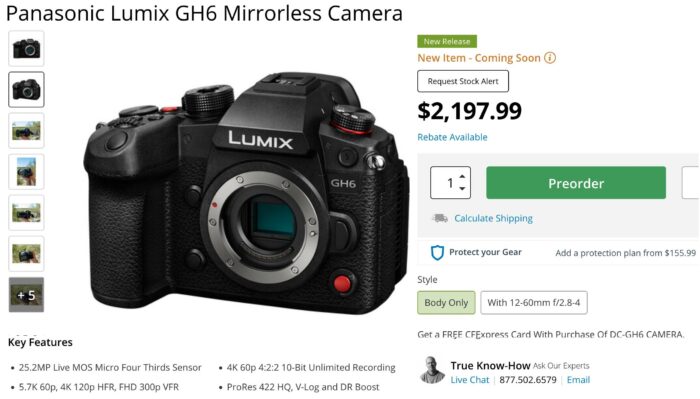
The OM-1 can also capture very detailed 4K video. These gains are only really to be seen in the H.265 modes (which are also the 10-bit modes) where you’re limited to Log or HLG HDR capture. Videographers aren’t as well provided for as they would be on the likes of a Panasonic GH, but compared with most stills/video cameras, the OM-1 delivers very good footage, ably supported by the camera’s stabilization system.
OMDS has continued to build on the strengths established under Olympus’ ownership, but hasn’t messed with things like the JPEG engine and the rich, attractive color its ‘Standard’ mode brings.
Image quality is what you’d expect from a modern Micro Four Thirds camera. Resolution-wise 20MP puts it level with the excellent Canon EOS R6 and not meaningfully behind its many 24MP rivals, but tonal quality and noise will be behind larger sensor cameras unless you can find a way to capture more light. But, if your scene is static enough, you can close some of the image quality gap to larger-sensor cameras with one of the OM-1’s clever multi-shot modes.
The OM-1 excels in situations such as wildlife shooting, where its power and compact telephoto lenses mean it’s able to offer an unmatched combination, but it can also be a pretty capable sports camera or a general, everyday photographers’ camera expected to shoot a bit of everything. So, while it can’t generally match a comparably priced full-frame camera for image quality, but there’s nothing else that offers this level of all-round capability (shooting speed, AF performance, IS performance, weather sealing) in such a small package.
Preorders:
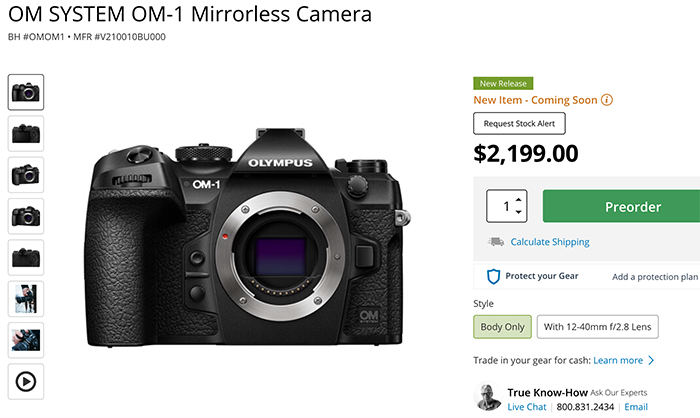
OM-1 at BHphoto, Adorama, Amazon. GetOlympus.
OM-1 in EU at Calumet DE. Fotokoch DE. Wex UK. Olympus DE, Olympus UK, Olympus FR, Olympus IT, Olympus ES. Olympus NL. Olympus BE. Olympus AT. Olympus CH.