Snappiness review of the Alice Camera

The Alice camera is now available at BHphoto (Click here).

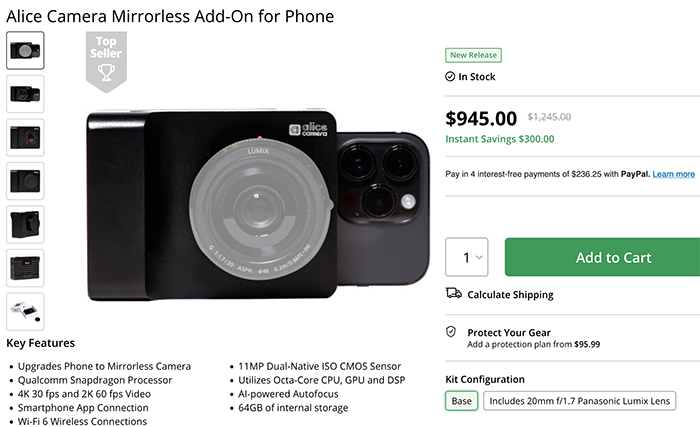
In a new video, YouTuber Snappiness gives an in-depth look at the much-anticipated Alice Camera, a unique smartphone-camera hybrid featuring a Micro Four Thirds sensor and interchangeable lens mount.
Unlike traditional cameras, the Alice clips directly onto your smartphone and relies on an app for controls, offering a modern twist for mobile-first content creators. It combines computational photography with real optics—thanks to the Micro Four Thirds lenses mount support.

Key Highlights

  • Smart design with cold shoe, USB-C, headphone jack, and tripod mount
  • 64GB internal storage (no SD card slot)
  • Excellent white balance and color science
  • Built-in AI subject detection autofocus
  • Support for manual lenses and classic MFT glass

The Alice Camera doesn’t work as a standalone camera—it needs the app to shoot. But in return, it gives you lightning-fast wireless transfers, deep manual control, and flexible AI-assisted shooting modes.

What Needs Work

  • Autofocus is still not perfect—especially for fast-moving subjects
  • Boot time is slow compared to traditional cameras
  • No SD card support limits expandability
  • Resolution is just 11MP—fine for web, but not for cropping or large prints

Despite the downsides, Alice is among the most advanced attempts yet at merging smartphones and dedicated cameras. It’s perfect for hybrid shooters, vloggers, and tinkerers who want to travel light without sacrificing image quality.

Would you consider switching to a camera like this? Let us know in the comments!
Tom Calton’s review of the Yi M1 – The Ambitious Chinese MFT That Never Took Off

The Yi M1 is perhaps one of the most underrated and forgotten cameras in the Micro Four Thirds space. Launched in 2016, it boasted a 20MP Four Thirds sensor developed by Sony (same as in the Panasonic GX8 and Olympus PEN-F).

Despite impressive specs and a Leica-inspired design, it failed miserably. Why? Poor launch timing, weak autofocus at launch, lack of features like IBIS, viewfinder, and even basic options like RAW+JPEG initially. It felt more like a smartphone with a lens mount—operated entirely via touchscreen with minimal physical controls.

Over time, firmware updates did improve many aspects including autofocus and UI, but the damage was done. Yi discontinued the camera quietly and never followed up with a successor. Tom Calton still thinks that this camera is a collector’s oddball gem—and proof that even bold entries can fail without polish.

The Best Tiny Micro Four Thirds Lenses for Your Everyday Carry – Micro Four Nerds’ Top Picks


If you love Micro Four Thirds for its portability, then this video from Micro Four Nerds is a must-watch. It dives into a handpicked selection of the smallest and most versatile MFT lenses — ideal for building a lightweight, high-quality everyday carry kit.

George Holden: Fujifilm vs Micro Four Thirds for Street Photography

According to George Holden, when it comes to street photography, two brands often stand out for their vintage aesthetics and practical usability: Fujifilm and Olympus (now OM System).

While neither Fujifilm nor Olympus use full-frame sensors, both bring unique advantages to the table. Fujifilm relies on APS-C sensors, while Olympus uses Micro Four Thirds. Surprisingly, for street photography, these smaller sensors can actually be a benefit—offering greater depth of field and compact lenses, perfect for everyday shooting on the go.

Fujifilm’s strength lies in its digital implementation of zone focusing, first introduced with the Fujifilm X-T2. This allows photographers to pre-set a focus distance and use depth of field for faster, more reliable shooting without depending on autofocus. Holden praises this feature for its precision and efficiency in fast-paced street environments.

Olympus (OM System), on the other hand, benefits from its two-times crop factor. Lenses like the Olympus 45mm f/1.8 deliver a 90mm equivalent field of view in a tiny, lightweight body. This makes it easy to achieve telephoto reach without carrying heavy glass. The deeper depth of field from Micro Four Thirds sensors also helps keep scenes sharp from foreground to background, which can be ideal for storytelling in street photography.

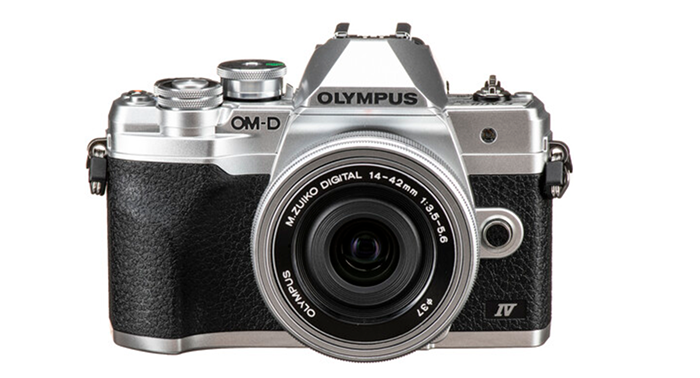
Price is another factor. Fujifilm cameras like the X-T1, X-E1, and X-Pro1 still hold value, but bargains can be found. The X-T2 in particular remains a great option thanks to its zone focus interface. Olympus bodies such as the OM-D E-M5, PEN E-PL10, or the compact OM-D E-M10 series offer affordable entry points into the Micro Four Thirds ecosystem.

Ultimately, Holden highlights that the choice between Fujifilm and Olympus depends on your style. If you value film-like shooting with advanced focus tools, Fujifilm delivers. If you want lightweight telephoto reach and consistent sharpness, Olympus has the edge. Both brands, however, give street photographers a vintage-inspired experience that encourages getting out and shooting more often.

Lumix G9II long term review by Micro Four Nerds

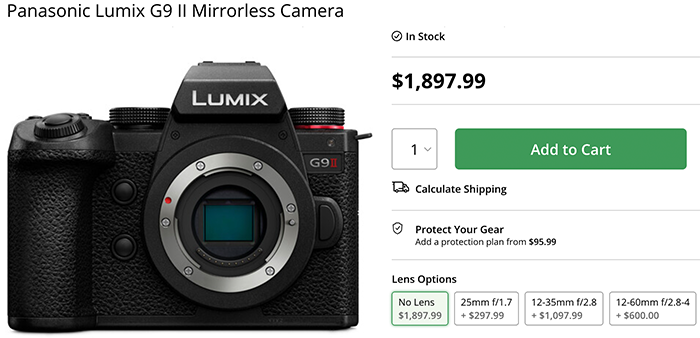
Micro Four Nerds published the long term review of the now two year old Lumix G9II. Her conclusion is that the Lumix G9II proves itself as one of Panasonic’s best Micro Four Thirds hybrids — with excellent autofocus, great stabilization, strong burst modes, and impressive low-light performance. It’s not the smallest body, but for photographers and videographers who want a rugged, versatile, and reliable tool, the G9II still stands out as a flagship that deserves more recognition.

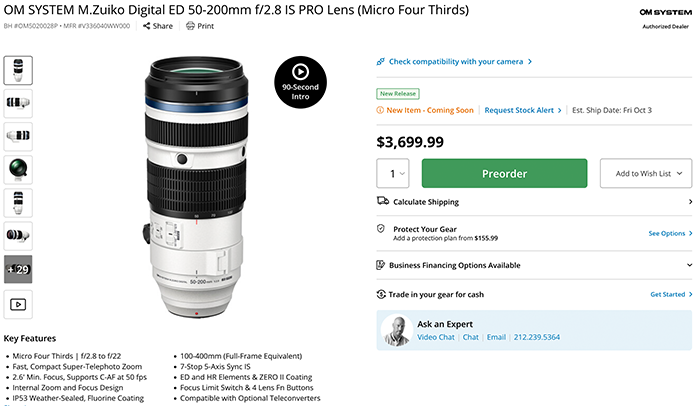
OM 50-200mm PRO review at Photographyblog: “desirable lens that every wildlife and sports photographer should consider.”

OM 50-200mm at BHphoto, Amazon, Adorama, OM US store, Fotokoch, Foto Erhardt, Calumet, WexUK, Clifton, OM EU stores.

Photographyblog tested the new 50-200mm PRO lens and concluded:

The main downside is the price – the full RRP of £2999.99 in the UK and $3699 in the USA certainly makes the made-to-order 50-200mm F2.8 IS PRO a considered purchase, especially as the older but still very popular 40-150mm f/2.8 Pro is less than half the cost.

If you can stretch to this 2025 lens, though, and you don’t mind pairing it with a teleconverter, it could effectively replace both the 40-150mm and 100-400mm zooms in your kit bag, making it much more financially viable.

Overall, the new OM System M.Zuiko Digital ED 50-200mm F2.8 IS PRO is a somewhat surprising but very desirable lens that every Micro Four Thirds wildlife and sports photographer should consider.