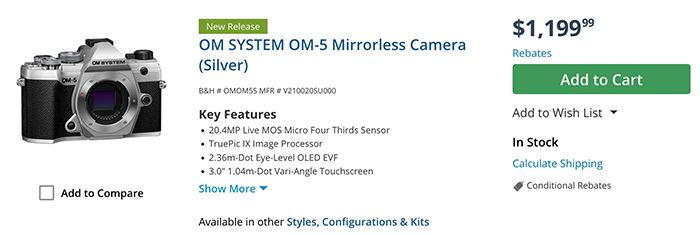
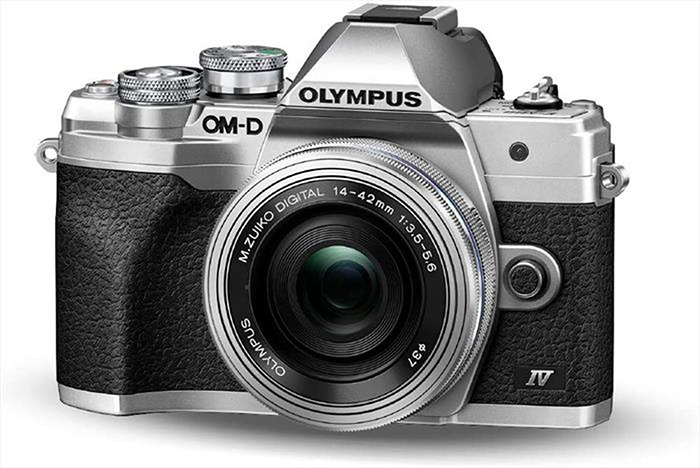
Peter Forsgård: OM SYSTEM OM-5 and E-M5 Mark III – 5 most EXCITING differences.
Peter Forsgård lists the 5 most EXCITING differences.

Peter Forsgård lists the 5 most EXCITING differences.
The video above starts at minute 4.
Gary W:
What if I tell you, you don’t always need a GH6, or an OM-1? Today I’m sharing top 5 mistakes and misconceptions people make when using Micro Four Thirds cameras and lenses. These mistakes ranges from only caring about the pro level best Micro 4/3 cameras and lenses, to not bringing their M43 cameras and lenses when they go out or travel, and to wish to switch to full frame, APS-C, medium format, or other camera format. I will also discuss how to avoid these MFT mistakes so that you’ll get the most out of your Micro Four Thirds cameras and lenses, whether it’s a Panasonic or Olympus OM System.
The Narrowband writes:
These are all the features and cool things I would love to see in a new camera. Now they do not have to come by Christmas. I know just how long it can take to make a good winning camera. Most of this is astrophotography stuff. Some though any person would love to have though I am sure.
Red35:
As many already said, there are technical differences between formats. Most people often compare Micro Four Thirds and Full Frame, and in today’s video, I want to highlight some of these differences, but more importantly, from a professional angle, and in my case, from a documentary and portrait photographer. Everyone has his/her use case and may prefer different formats, but this video is more about Micro Four Thirds.
Robin Wong:
I shoot primarily with prime lenses for my professional photography jobs as well as for my own personal projects. I find prime lenses offer some important advantages that help me achieve better results in my shots. I discuss why I prefer prime lenses over zooms in this video.