

Landscape photography with µFT cameras (

by Andreas Wonisch)

The following is a guest post by Andrea Wonisch. Feel free to contact me at 43rumors@gmail.com if you want to write an article for 43rumors. Thanks!

Landscape photography with µFT cameras
by Andreas Wonisch (www.andreas-wonisch.com)

If you think of landscape photography you usually think of photographers armed full with heavy backpacks, carrying large lenses and even larger cameras. You would think that having a professional full frame camera is the only way to go. Think again: During the last six years I almost exclusively used micro four thirds cameras and lenses to photograph landscapes all over the world.

OLYMPUS DIGITAL CAMERA
Sunrise on the Rocks, Olympus OM-D E-M5, M. Zuiko 9-18 mm

Before starting to write about why I use cameras other photographers sometimes call “toy cameras”, let me talk a little bit about my philosophy when being out in nature. My aim when doing photography is finding special places and moments in nature that I can enjoy and admire. I aim for these magical moments that may be only visible for a few fleeting minutes at best. I want to preserve and depict these moments and share them with other people so they can enjoy them as well. My camera, my lenses, my computer at home and my image processing software are all just tools that I use to better capture and represent these moments. I’m not doing photography for the sake of photography but because I enjoy nature and I’m again and again amazed by what I find there.  Photography is my way to share these findings with other people.
P1080260-1_resized_hr
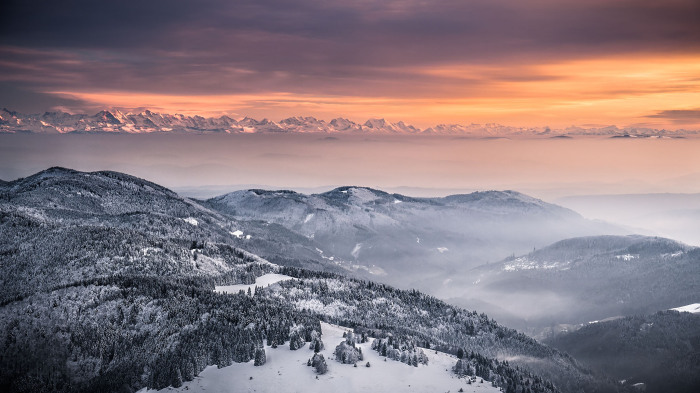
Farewell Sun, Panasonic GH1, Panasonic Lumix 14-45 mm

That’s why I do not aim for having the most advanced camera, the sharpest lens or the largest sensor. I feel that I need the best tool that let me create the landscapes I admire. And in the past this worked best for me when using µFT cameras. I think there are several advantages in using compact, lightweight mirrorless cameras. One is obvious: You don’t need to carry so much stuff around. This can be especially of advantage when doing hiking tours in the mountains. Just a few kilograms less can make or break a shoot since you arrive less exhausted at your location and can concentrate on the important things: the landscape around you. I remember once doing a tour in the Alps with another landscape photographer and he had to carry more than 20 kg because of his heavy gear and lenses. I was below 10 kg and still was able to do the same kind of photography.
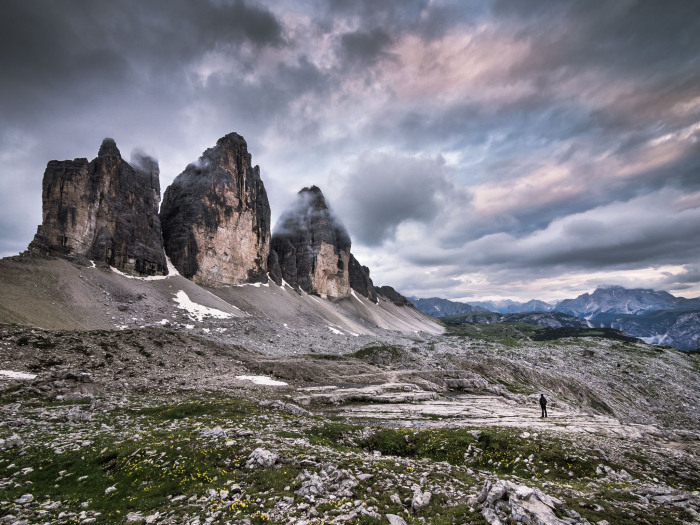
OLYMPUS DIGITAL CAMERA
The Pinnacle, Olympus OM-D E-M5, Lumix 7-14 mm

The second advantage is that with mirrorless cameras it’s really “what you see is what you get”. This is very helpful when photographing landscapes because what you see through the viewfinder of a traditional DSLR is not what your sensor will capture. This leads to the awkward technique of first looking through your viewfinder, then quickly putting the camera down and looking at your screen to find out what you captured. Often then you have to change settings again until you will be finally able to take the photo you want. With µFT cameras or mirrorless cameras in general you already see through the (electronic) viewfinder what the final photo will look like. This can significantly speed you up. This might seem counterintuitive when doing landscape photography but since the best light is usually only there for a few minutes at best you will be glad for every second you save hassling with your gear and be able to take photos instead.
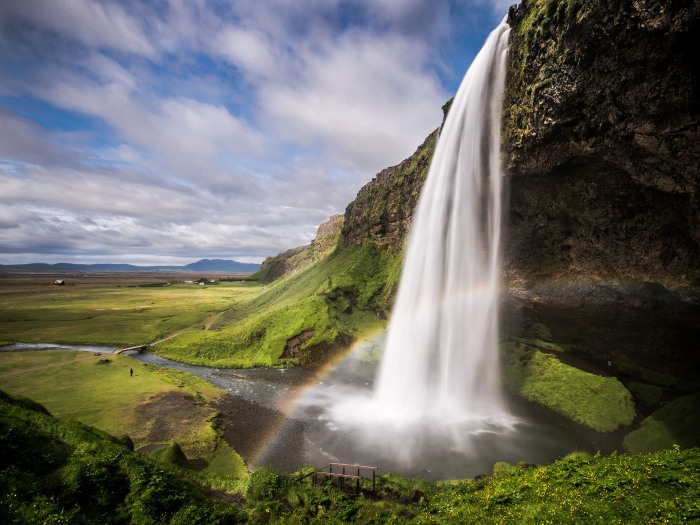
OLYMPUS DIGITAL CAMERA
One of a Kind, Olympus OM-D E-M5, M. Zuiko 9-18 mm

The third advantage for µFT cameras is that they are so easy to carry around. If you are a hobby photographer like me you won’t be able to carry your full gear with you everywhere. Especially not if you travel with your significant other or family. In these case syou can still bring a µFT camera with you, especially the new ultra-compact cameras like the Panasonic GM1 or GM5. I was surprised on how many good photos I took with my GM1 when being just on a leisure trip. Often you are getting great light at a moment you would least expect it. And in that moment most of the time you won’t have your heavy DSLR with you. But you can still carry a compact µFT camera almost everywhere.
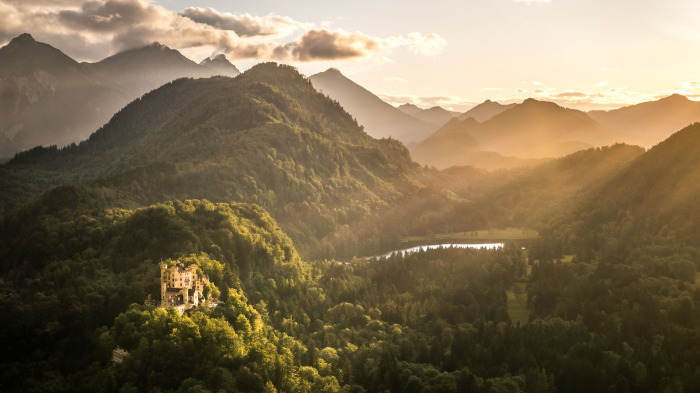
P1320610-1_resized_hr
Castle in the forest, Panasonic GM1, Lumix 14-32 mm

But what about the picture quality? No doubt: Full format cameras have an advantage here. And so do medium format cameras. Or even large format cameras. You will always find a camera that will do better in picture quality. But the question is: What sensor / camera size combination is the best for your photography? And here I think µFT really shines in most situations. It’s not that I do not own any other camera (for pre-planned shootings I sometimes also use a full format camera) it’s just that I like my µFT gear the most. And if you have any doubt that you are hampered in your photography efforts because you don’t own the latest, great camera forget about it. Your camera is just a device to help you share your view of the world. In my opinion the best camera is the one you don’t even notice when being surrounded by beautiful nature.

More about Andreas Wonisch’s landscape photography can be found at his Facebook page: https://www.facebook.com/andreas.wonisch.photography?ref=bookmarks
Olympus 40-150mm PRO IQ beats the Zuiko FT lenses (Pixelmania).

olympus-40-150mm_pro_04

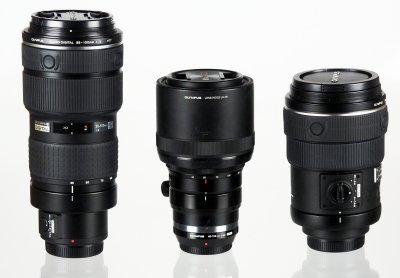
Side by side comparison of the new M.Zuiko 40-150mm and the older Zuiko 35-100mm en Zuiko 150mm on Dutch website Pixelmania.nl

Does the new 40-150mm PRO really outperform the best Zuiko FT tele lenses as said by Olympus? The Dutch site Pixelmania compared the new PRO lens versus the Zuiko 35-100mm en Zuiko 150mm FT lenses. Just watch the images on their site and click on them to compare. And indeed they conform the new lens beats their Image Quality and what impresses the reviewer is that they achieved that goal on a lens that’s less heavier and smaller than the other lenses! Consider also that the 40-150mm PRO lens is priced lower than the other and that’s why it earned the “Pixelmania Award

40-150mm PRO shop link:
In USA/Canada at Amazon, Adorama, Bhphoto, GetOlympus and GetOlympus Canada.
In Europe at Wex UK, Technikdirekt and Amazon.
In Asia at Digitalrev and Amazon Japan.

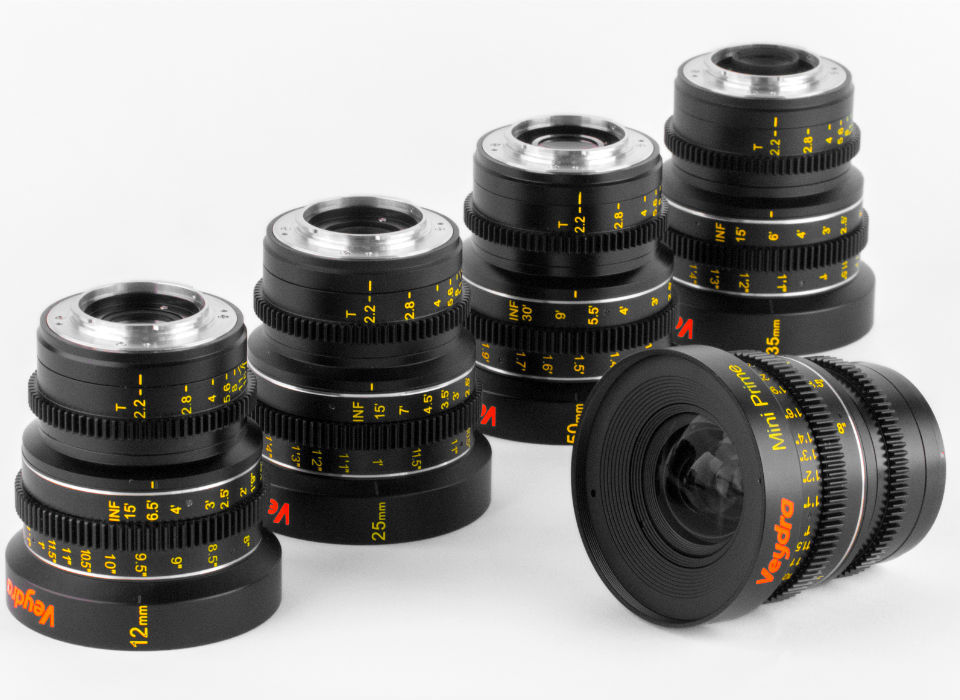
First look on the new Veydra Mini Primes for Micro Four Thirds.


ProVideocoaltition (Click here) is the first site testing the new Veydra MFT Cine lenses:

If I had to describe Veydras in one pithy phrase, I’d say, “scaled-down Ultra Primes for micro four thirds cameras”. They’re sharp, rectilinear, and clean: good, workmanlike optics with no nasty surprises.
They aren’t the fastest lenses available, but they also avoid the soft, soapy renderings you get WFO on lenses like Super Speeds, Rokinon T1.5s, and Nokton f/0.95s: you can shoot these puppies wide open and intercut them with T5.6 shots from the same lenses and not worry about a substantial change in the look.

Official Veydra website: http://www.veydra.com/

Olympus 12mm F/2.0 Vs. Rokinon 12mm F/2.0 by Pier Yves.

Olympus 12mm Vs Samyang 12mm Video Test from Pier-Yves Menkhoff on Vimeo.

Pier Yves sent us the following Olympus 12mm F/2.0 Vs. Rokinon 12mm F/2.0 comparison:

Before everything, I would like to thank Hervé Danes for the loan of the Olympus 12mm F/2.0 lens. It was not possible with Olympus France. Jonathan Lang and Martina Beckman did not deign to answer to our request of loan. It was the same thing with Marc Rabuteau of Samyang France. This happens frequently in France !!!
In theory and often in practice, there is a difference of quality between a lens at 800 € and another one at 330 €. However, we are not in California. Where is the difference when you live in a gray city ? When we are in the rain in Lyon in winter ? Will we see a real difference ? The shot was made with a Panasonic DMC-GM1 camera on a tripod. I only alternated the lenses for each plan. Recording at 1 080p. No correction at the editing.
When we place side by side the Olympus 12mm F/2.0 and the Rokinon 12mm F/2.0 lenses, the difference is huge. The first is compact, the second is massive. Among the advantages of the Olympus, perfect aperture and autofocus synchronization with Olympus and Panasonic M43 cameras. We note a difference of framing between the two brands. Olympus offers a tighter framework. The Samyang present an alternative advantage: its price. Nearly half of the Olympus. But the difference has a cost. No electronic contact with the body of the camera. All controls are manual. Another aspect can be disabling for every user. The focus ring of the Rokinon lacks flexibility. It is firm. Very firm. The Olympus is dedicated to those for whom AF is a major asset.
At the light of the above pictures, you can decide whether to invest € 320 or € 799 for a 12mm F/2.0 lens. It’s up to you !!
Enjoy…

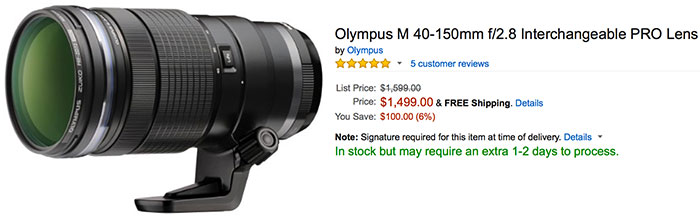
Olympus 40-150mm PRO in Stock at Amazon. MC-14 1.4X TC tested at SLRgear.

olympusPRO

After quite a long time the Olympus PRO 40-150mm lens is back in Stock at Amazon US (Click here). And SLRgear (Click here) reviewed the Olympus MC-14 1.4X M.Zuiko Digital Teleconverter and writes:

It’s also extremely small, lightweight, fully weather-sealed and doesn’t negatively impact image quality or AF speed to a significant degree. If you own or are planning to own the Olympus 40-150mm ƒ/2.8 Zuiko Pro or 300mm ƒ/4 Zuiko Pro lens, the MC-14 teleconverter is a no-brainer accessory to have in your kit.

Olympus 40-150mm PRO lens review by Luminous Landscape.

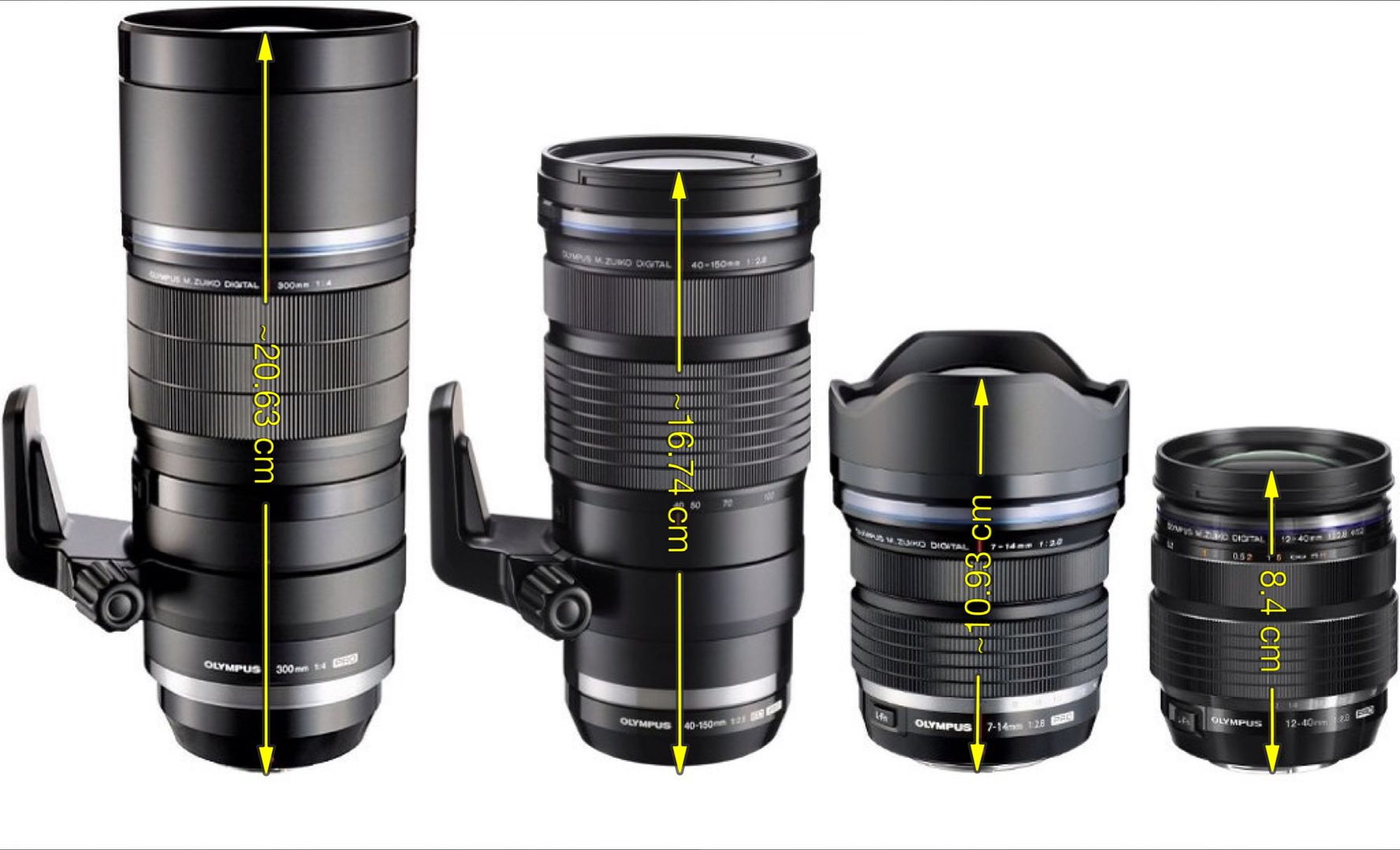
The PRO lens size comparison

Luminous Landscape (Click here) posted their Olympus 40-150mm lens review. They also posted a video on Vimeo (Click here). They writes:

The image quality, the build and overall experience of using these lenses won’t disappoint you.

It’s funny how things change and how much they stay the same.  Many years ago (during the  seventies) back in the film days I moved to Olympus from my big Nikon systems.  Their original OM series cameras specifically OM-3 and 4 were ground breaking as far as size and performance.  Now it seems we are seeing this evolution happen all over again.  My full frame Nikon DSLR system hasn’t seen action for a number of months now.  Olympus has won me over with its feature rich E-M1 camera and Pro series lenses.

40-150mm PRO shipping info at:
In USA/Canada at Amazon, Adorama, Bhphoto, GetOlympus and GetOlympus Canada.
In Europe at Wex UK, Technikdirekt and Amazon.
In Asia at Digitalrev and Amazon Japan.