Panasonic GH5 firmware 2.3 tests

You can download the firmware update here: http://av.jpn.support.panasonic.com/support/global/cs/dsc/download/index.html.
Here are eight videos shwoing the GH5 2.3 firmware improvements:

You can download the firmware update here: http://av.jpn.support.panasonic.com/support/global/cs/dsc/download/index.html.
Here are eight videos shwoing the GH5 2.3 firmware improvements:
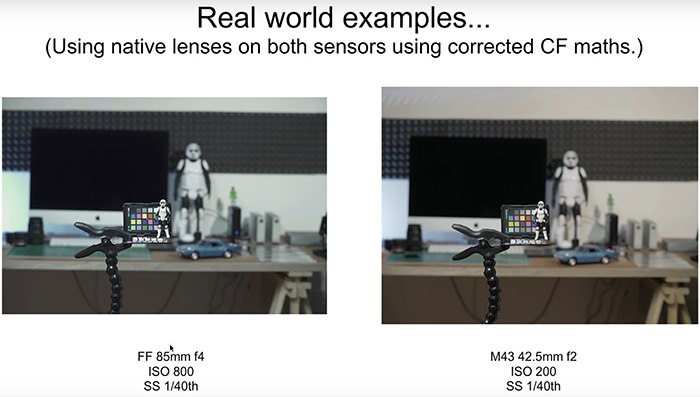
“Biscuits Alive” posted that video where he explains in detail how the FF and MFT equivalence works. He writes:
There is still a lot of incorrect information out there about –
-Depth of field
-Crop sensor vs full frame cameras
-Speedboosters
-Light refractionAnd it seems many people who profess to know all about their camera gear, don’t actually fully know some of the basics regarding-
-Aperture
-Focal length
-The focus plane
-Crop factor
-The Circle of confusion
-ISO
-Image noiseSo I decided to talk about all of the above, and I drew some simple illustrations for you, and also took a few photos to help show what is actually happening to the light as it travels through our cameras lens.
Ben sent me his valuable insights on the GH5:
My name is Ben Pendlebury and I’m a wedding videographer from a city called Derby in the UK. I’ve been filming weddings for over four years now and last year I switched over from Canon to a full GH5 set-up. I’ve really fallen in love with this camera and after using it for over six months, I was keen to make a Youtube review, talking about the good and bad things about the camera from a wedding videographer’s point-of-view.
I’ve spent a long time making the video and have included lots of b-roll showing the camera in use, as well as footage captured at weddings:
This is a guest post from John Gallo (fotograficoweb)
–
Mythbusters… Olympus OM-D E-M1 Mark II at ISO 20000… And fine bokeh…

M.Zuiko Digital 40-150mm f2.8 PRO @110mm (35mm equiv. 220mm). 1/80s@f2.8 ISO 20000, handheld.
One of these days I was asked if I was using Olympus professionally, if Olympus was my gear on the field. “Yes” I replied. Unfortunately some minds are still full of misconceptions and prejudice, stuck in a Canikon world where size, weight, noise and backache were synonyms to professional photography. The pictures published today reflect the extreme quality, sheer performance and reliability of the Olympus Micro Four Thirds system. Image quality is second to none – in extreme situations, this is what this article is about – image stabilization (IBIS) is probably the best one can have and although there is the myth (another one) that with Micro Four Thirds it is not possible to have bokeh “layers” in any given photograph, these images prove otherwise.

M.Zuiko Digital 40-150mm f2.8 PRO @150mm (35mm equiv. 300mm). 1/160s@f2.8 ISO 20000, handheld.
Yes, all facts and distances, aperture and focal length being the same a smaller sensor will produce images with more depth of field. But how much more? For an image produced with a short telephoto lens (85mm FF equivalent), with the subject standing 2,5m away from the lens and background at a distance of 5,9m from the lens, Full Frame cameras will have a total of 6.8 centimeters of DOF, while APS-C will have 8.9 centimeters and Micro Four Thirds will have 10.6 centimeters. Peanuts, I dare say. Comprehensively, rendering is quite different. And bokeh “layers” will be rendered differently by any of aforementioned systems. Do you know how different they will look from each other? Do you know which one is softer/more or less feathered/more or less pleasant in any given scenario? No, you do not, neither do I, because the variables are so many that one cannot anticipate a specific result.

M.Zuiko Digital 40-150mm f2.8 PRO @150mm (35mm equiv. 300mm). 1/320s@f2.8 ISO 8000, handheld.
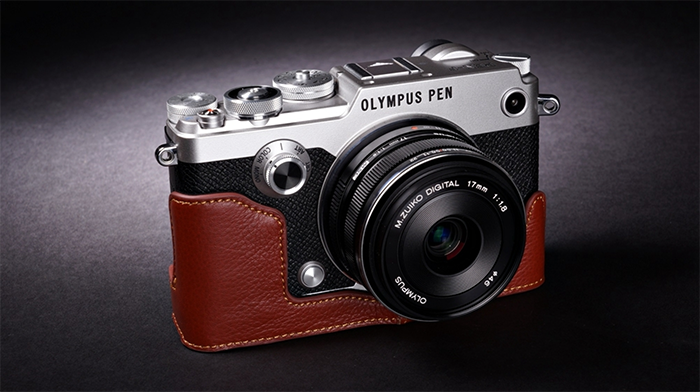
Micro Four Thirds systems offer what any other system cannot offer: considerable size and weight reduction, in a system capable of performing at a true professional level. Olympus cameras are absolutely remarkable – I believe that Olympus OM-D E-M1 Mark II is a true benchmark, a beast regarding performance, build quality, reliability, with resources and functions to spare, infinitely configurable to taste and capable of pleasing anyone looking for a truly professional camera. Olympus Pen-F is one the most, if not the most beautiful camera available on the market today. And yes, it is also a beast.

M.Zuiko Digital 40-150mm f2.8 PRO @85mm (35mm equiv. 170mm). 1/160s@f2.8 ISO 3200, handheld.
M.Zuiko Digital lenses, PRO and Premium range deliver stunning performance – Olympus has a very strong reputation regarding lens quality and this new collection, developed for the Micro Four Thirds system is outstanding. Looking carefully at some of the images published here easily we get to conclusions: at full aperture, extremely high ISO, resolution (MTF) is outstanding in the center and extremely good if not extraordinary towards the edges. Some of Olympus’ lenses so sharp that you’ll be hard pressed to see any difference in sharpness across the frame between f/2.8 and f/11 (https://www.ephotozine.com/article/olympus-m-zuiko-digital-75mm-f-1-8-lens-review-20557#Performance)
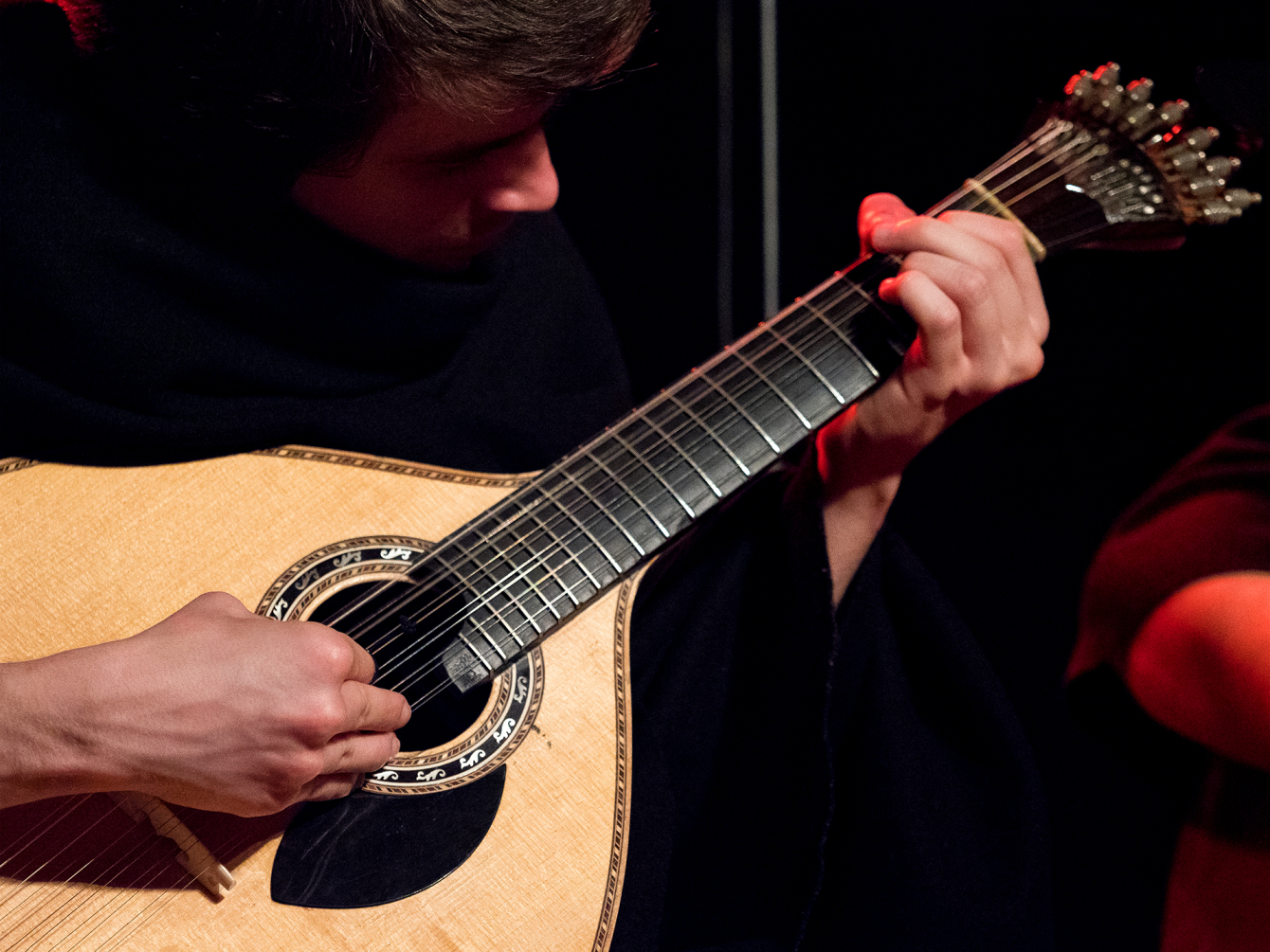
M.Zuiko Digital 40-150mm f2.8 PRO @142mm (35mm equiv. 284mm). 1/250s@f2.8 ISO 8000, handheld.
I use this zoom (M.Zuiko Digital 40-150mm f2.8 PRO) extensively, not only because of the covered focal length range (35mm equiv. 80-300mm) being very, very useful, but also because of outstanding optical quality. The Olympus 40-150mm lens is not only stunningly sharp by zoom lens standards, but also sharp by prime lens standards. And this is wide open at ƒ/2.8 at practically every other focal length. Corner-to-corner sharpness is also tremendously good, with almost no change in sharpness from center softness at every focal length. The blur characteristics are very flat. For all intents and purposes, this lens is sharp, everywhere, all the time from ƒ/2.8 to around ƒ/11-ƒ/16, where we see minor diffraction softness coming into play (https://www.imaging-resource.com/lenses/olympus/40-150mm-f2.8-pro-m.zuiko-digital-ed/review/)
And this is one of the biggest, although many times forgotten, advantages of Micro Four Thirds – given the size of the sensor light gets to the the extreme corners of the CMOS almost perpendicularly, as opposed to full frame cameras (specially DSLR’s) where light reaches the corners of the sensor with much less perpendicularity, therefore resulting in much less possible resolution in the image’ borders, and in the corners/extreme corners of the photograph. The practicality of this? I can compose and frame as I want, without having in mind that bigger apertures mean less resolution as a rule of thumb, or that “cornering” my subject will affect tremendously the resolution and the quality of the final image and therefore perception viewers have when they see my work in any given media, especially when enlarged significantly for exhibition. My artistic expression is not fenced by technical shortcomings.

M.Zuiko Digital 40-150mm f2.8 PRO @150mm (35mm equiv. 30mm). 1/200s@f2.8 ISO 8000, handheld.
To be continued (…)
All images Olympus OM-D E-M1 Mark II, Olympus M.Zuiko Digital 40-150mm f2.8 PRO. RAW (ORF) files ACR converted and Photoshop CC 2018 to taste at fotograficoweb.wordpress.com/2018/04/30/mythbusters-olympus-om-d-e-m1-mark-ii-at-iso-20000-and-fine-bokeh/
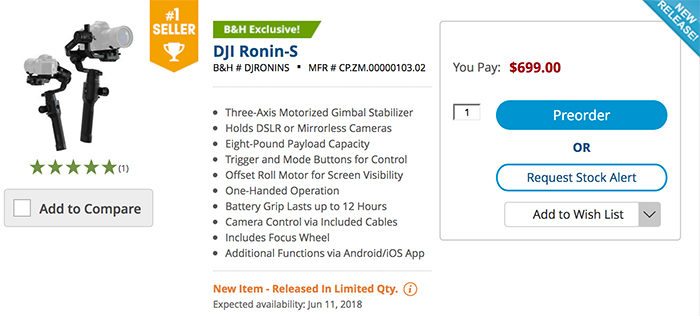
As you may have heard DJI released the new Ronin-S which you can preorder now at BHphoto.
Darryl Carey is the first testing the new Ronin-S with the GH5 cameras:
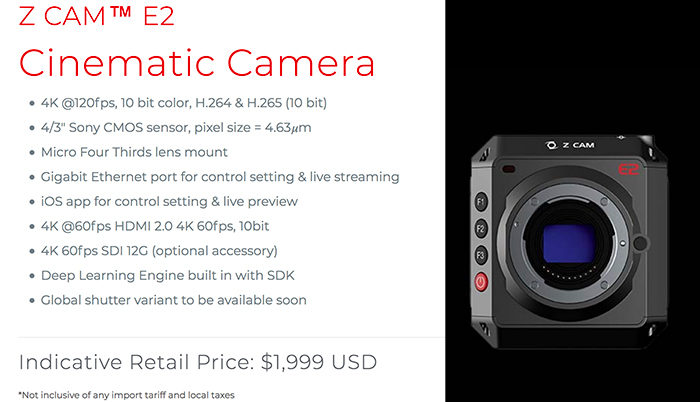
The new Z Cam E2 Micro Four Thirds camera has impressive specs like 4k at 120fps and with 10bit. But untilt today we didn’t see real footage. Well here it is:
Quebec sample (Google Drive) and Quebec sample graded (Google Drive).
4K @120fps (10 bit color H.265) shot on Z CAM E2 (Google Drive).
sRGB sample footage shot on Z CAM E2 with Veydra Mini Prime 35mm T2.2 (Google Drive).
Shot in ZLog at f/4. One button color grading (Google Drive).
LUMIX GH5 Firmware Version 2.3
Panasonic just uploaded these new videos to give you an overview of the new firmware update features
LUMIX GH5S Firmware Version 1.1
LUMIX G9 Firmware Version 1.1
You can download the firmware update here: http://av.jpn.support.panasonic.com/support/global/cs/dsc/download/index.html.