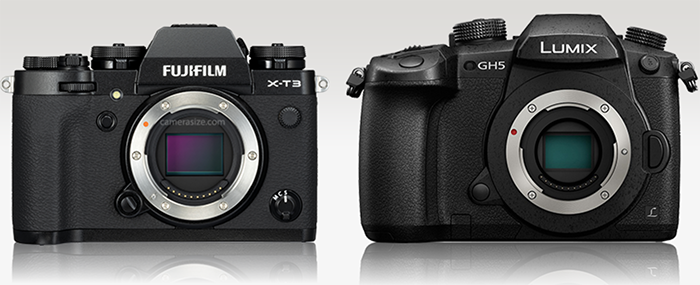
“We’ve been using two copies of the Panasonic GH5 for more than 18 months now, and our experiences are mostly positive. It does a lot of things great! It has some serious weaknesses, too, like the autofocus… so we still switch to other cameras at times, including the Canon 6D Mk II and Sony a9.”
An unexpected competition arrived yesterday for the GH5: The new Fuji X-T3 seems to be the first real challenger for the Panasonic. The Dpreview team compared the video performance of the two cameras. Check out their findings:
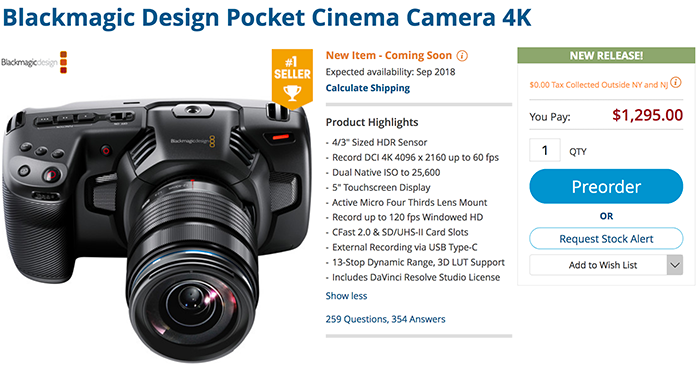
Here you can watch the first footage shot with the Blackmagic Design Pocket Cinema Camera 4K that is expected to ship out in September (preorders here at BHphoto).
https://www.youtube.com/watch?v=4Dv4iSzhMjA
Blackmagic Pocket Cinema Camera 4K | 10 Things Answered:
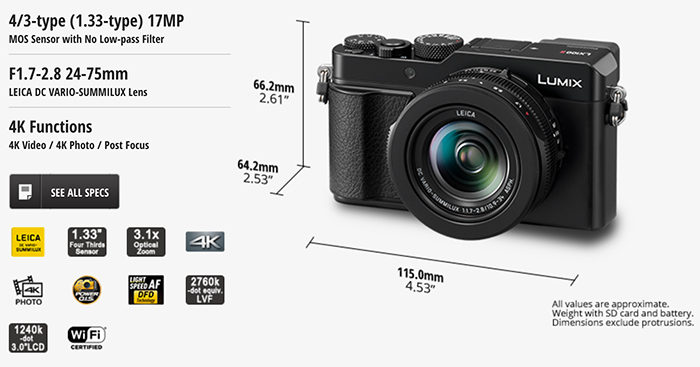
Richard Butler from Dpreview wrote an article about why he is delighted to see an LX100 II:
Why do I like the LX100 concept so much? Because I enjoy the process of taking photos. I like playing with settings. I like feeling involved. One of my colleagues referred to the LX100 as almost being a Fujifilm X100 with a zoom, and I think they’re exactly right. Despite their very similar control layouts, I’d not spotted the comparison partly, I think, because the hybrid viewfinder and fixed 35mm equiv lens make up so much of my conception of the X100, but also because the LX100 is noticeably smaller.
In the Field with the Panasonic Lumix DC-LX100 II by Allan Weitz:
I liked shooting with the Panasonic original Lumix DMC LX100, and the LX100 II reinforced my original impressions. There’s a choice of several very able premium point-and-shoot cameras in this price range, some with 1″ sensors and some with APS-C sensors, and the Panasonic Lumix DC-LX100 II gives each of them a run for the money.
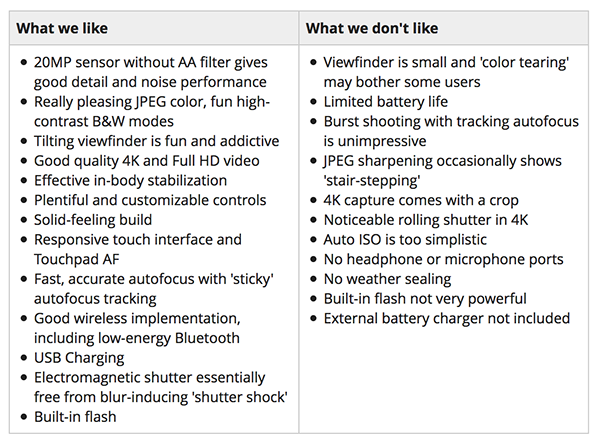
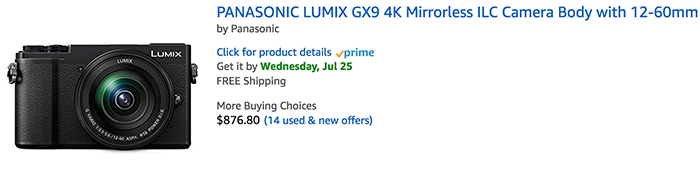
With its compact size, robust feature set, abundant controls and overall responsiveness, the Panasonic Lumix DC-GX9 is a great camera for all kinds of photographers. The trick tilting viewfinder is a neat touch (though we wish it were larger), and limited battery life remains a sticking point. But impressive in-body image stabilization, a pleasing JPEG engine and good quality 4K capture mean the Lumix GX9 is a camera we can easily recommend.
Detailed personal view on Xiaomi (aka XiaoYi) Yi M1 mirrorless camera with m43 sized sensor. While sharing same sensor with highly acclaimed Panasonic GH4 camera it uses much simpler main LSI. It has lot of pluses like small price, nice photos, good timelapse capabilities, cheapest 4K. But it has also lot of issues, make sure to check our review video about all the sides of this highly controversal camera.
DPreview tested the GX9 autofocus system while shooting a live music concert. The conclusion:
The GX9 was a really good companion for this type of event. Paired with the Lumix 35-100mm F2.8, I had a compact, responsive package that wasn’t all that conspicuous, but I had plenty of reach and ended up with far better image quality than, say, a 1″-type superzoom. Of course, this combo can’t quite match up to a full-frame DSLR and a 70-200mm F2.8 lens, but that’s not really the point here. Sure, the GX9 wouldn’t be my first choice for critical, action-oriented work (and Panasonic makes higher-end models for that sort of purpose anyway). But for the casual user who wants a small, stylish camera and wants to occasionally photograph a concert or sporting event for fun, the GX9 is easily up to the task.