Lensbaby announces the Composer Pro II with Edge 50 Optic for MFT.
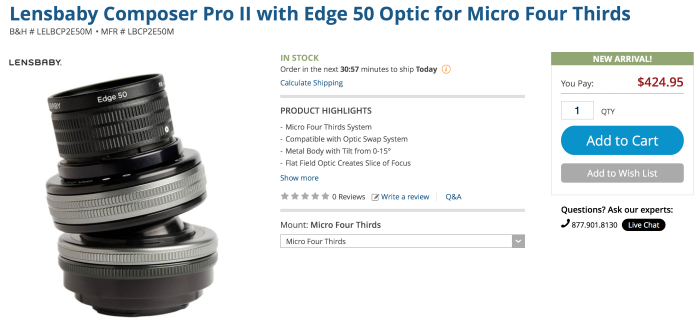
Lensbaby announced a new Composer PRO II with Edge 50 Optic for MFT (preorder here at BHphoto).

Lensbaby announced a new Composer PRO II with Edge 50 Optic for MFT (preorder here at BHphoto).

You can now download (for free!) the new Olympus UK issue: en.olympusmag.co.uk/october2015
LUMIX GH4 “SEAFOAM” in 4K by Bryan Harvey
Walimex Pro 100mm f/2,8 Gold Box at Amazon Germany.
A Review of the Panasonic LUMIX DMC-G7KS 4K mirrorless camera (4K.com).
Mitakon 25mm f/0.95 review at MU-43.
Olympus OM-D E-M10 Mark II ou E-M5 Mark II : lequel choisir? (OpenPN).
Panasonic Cashback in Japan.
Creator 35mmf /2.0 lens review at itmedia.co.jp.

It’s official! The Leica SL has been announced and you can follow the full coverage at Mirrorlessrumors. The camera has been made with Panasonic tech and even uses Panasonic V-LOG!!! See the
Leica also makes one bold claim: It says this is the world’s fastest autofocusing camera! If it’s made by Panasonic than we can expect a lot from the GH5!

screenshot from the spec file (pdf on Wetransfer here).
Leica SL camera and lens specs at BH/Adorama:
Leica SL camera at BHphoto (Click here) and Adorama (Click here).
Leica SL 24-90mm at BHphoto (Click here) and Adorama (Click here).

Iridient Developer 3.0.5 update adds support for RAW images from the Olympus E-M10 II and also fixes a bug with support for the Panasonic DMC-FZ300 (and FZ330).
The update is available for download here:
http://iridientdigital.com/products/iridientdeveloper_download.html
Remember Crete from Emeric on Vimeo.
Revisiting the Olympus OM-D E-M5 in Moldova (Admiringlight).
Panasonic 14-140mm f/3.5-5.6 Review (Mirrorlessons).
Protech show panasonic dvx200 shoulder mount adaptor for eng style operation (Newsshooter).
E-M10II test at DC.watch.
Ray: “Some of your readers, who use 4/3 lenses with m4/3 cameras like I do, may be interested in this little device that I created. It’s like the GoWing Lens Flipper, but as they don’t make them for 4/3 lenses, I decided to make my own: http://australianimage.com.au/wordpress/index.php/a-flipping-good-idea/. It was very easy to make, the materials were surprisingly easy to source and it works very well.”
Alexandru: “So a few weeks ago the shutter on my Elikon 535 (soviet era camera made by BeLomo) stopped working. Opened the little sucker up to fix it but thanks high quality soviet era engineering and built quality that turned out to be somewhat impossible.
Didn’t want to completely scrap the little guy as I was quite fond of the way it rendered images. The Minar/Minitar-2 35mm f/3.8 lens is a direct descendant of the Minitar-1 32mm f/2.8 lens found on the LC-A one of the most iconic cameras of the Lomography movement , so it would of been a shame to never use it again.
I decided to adapt the optics from the Elikon 535 for use on my Micro 4/3 cameras.
First thing that I had to do was to measure what will be the future flange distance of the lens.
I tore down the camera completely and removed the lens. Had to completely disassemble the optics and clean each of the 4 elements as time and poor seals haven’t been kind on it.
Created a 3D design in Sketchup and with the help of my 3D printer and an old C-mount to Micro 4/3 adapter I created a simple manual focus , fixed aperture lens. I thought the cog design will honor it’s heritage :).
Biggest issues were getting the flange distance just right so the lens can focus from close up to infinity and making sure it is going to be centered over the sensor.
This is how the lens came out.
https://www.flickr.com/photos/hatetosketch/22067397195/in/datetaken/
And here is an album with the first pictures I took with it.
https://www.flickr.com/photos/hatetosketch/albums/72157659680025405“
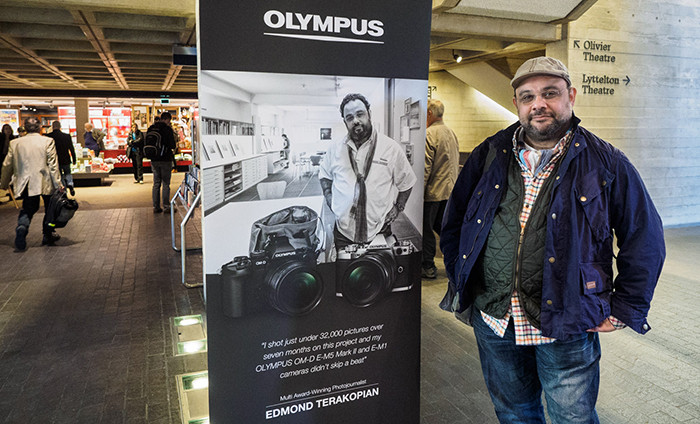
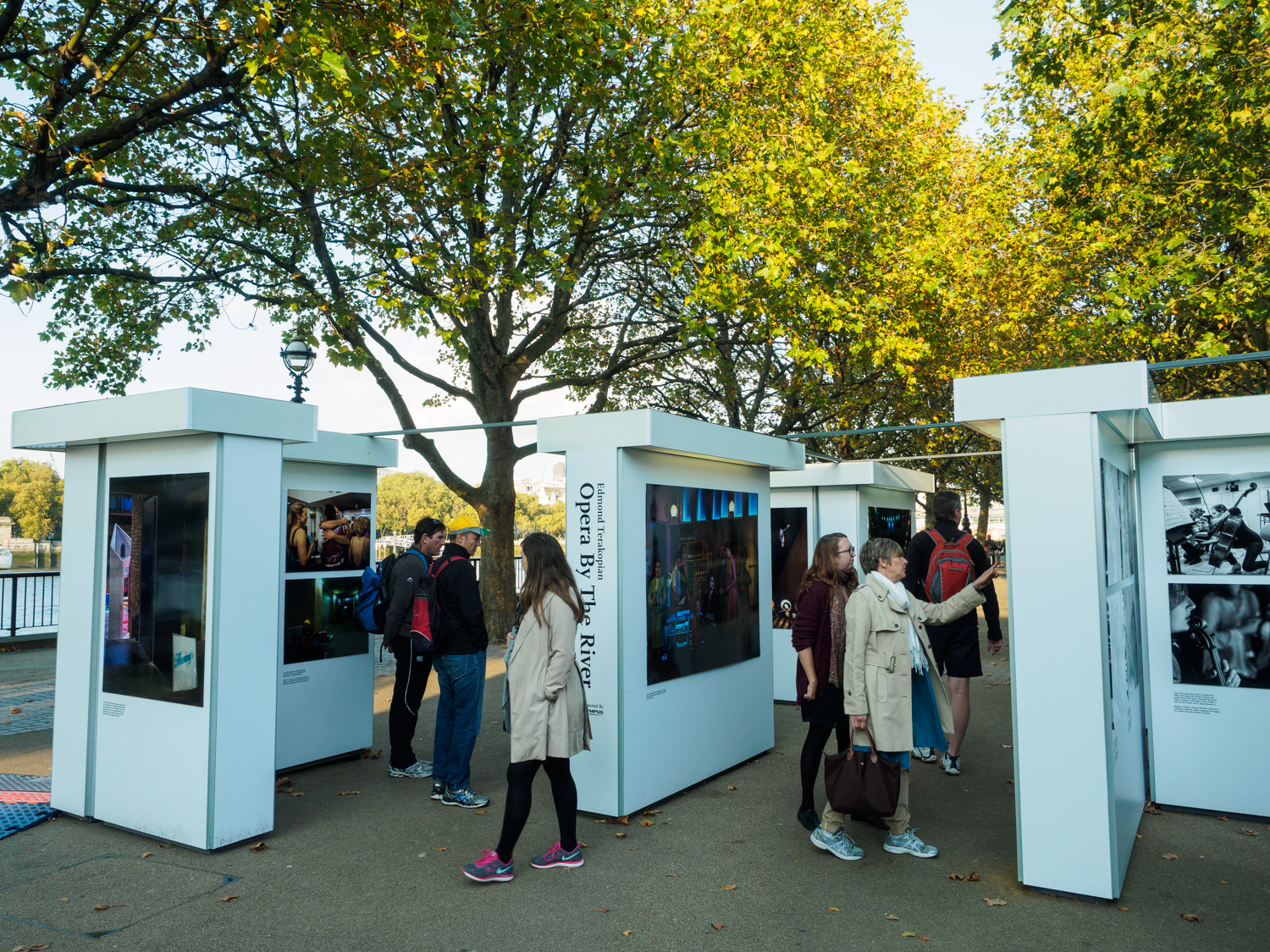
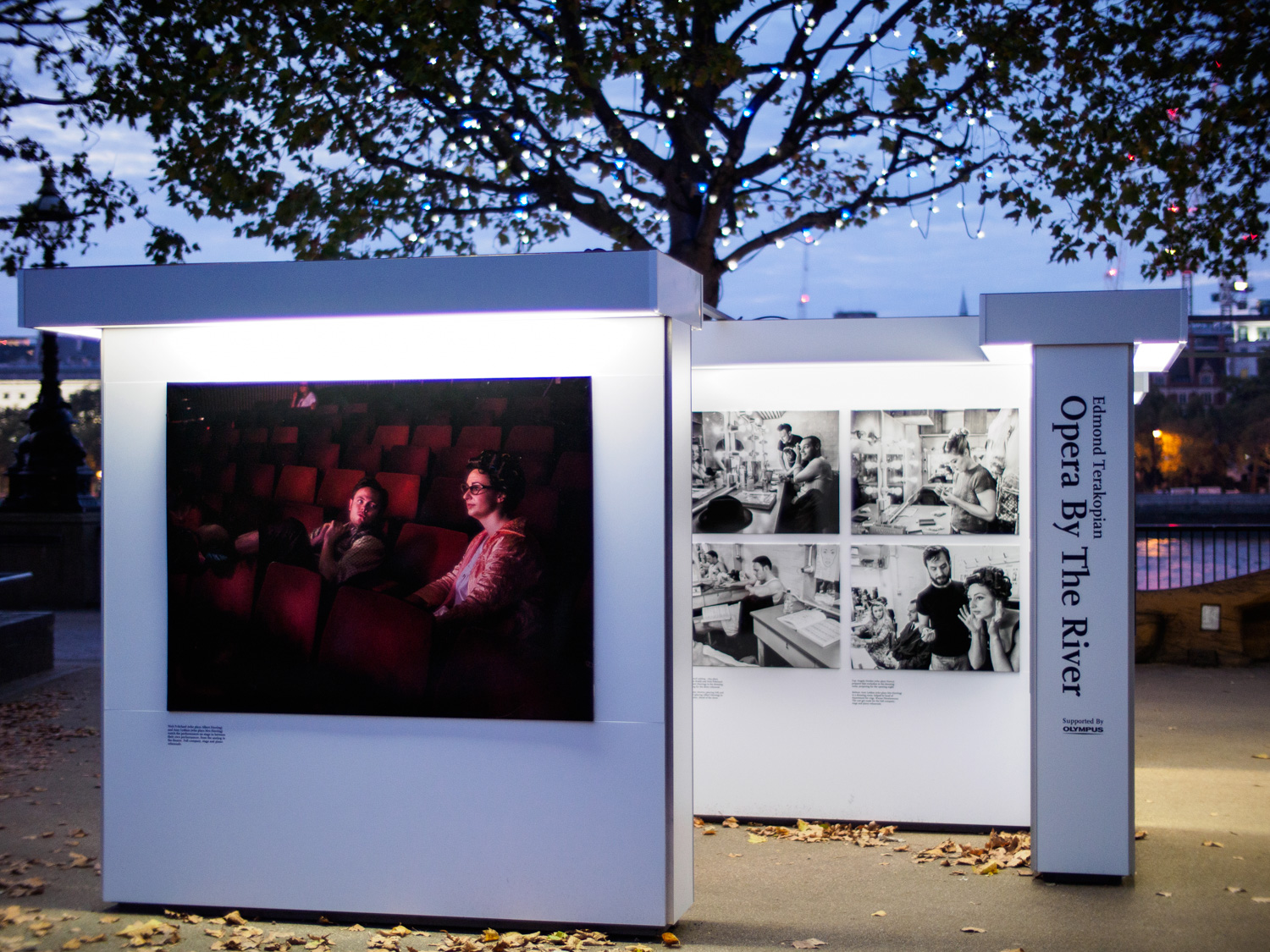
M43 shooter and Olympus Visionary Edmond Terakopian created this great project which has been featured also by BBC and Amateur Photographer. He spent seven months photographing this personal project at the Royal College of Music which culminated in an outdoor exhibition of 62 images on London’s South Bank. This is how he used the MFT gear to tell this story:
I shot the majority of the work on a pair of Olympus OM-D E-M5 Mark II cameras and the rest on the OM-D E-M1. My choice for the E-M5 Mark II was simply based on just how quite it is. I wasn’t shooting with the electronic shutter as these sometimes have issues with cycling lights (fluorescent tubes for example) but just it’s regular mechanical shutter. Whisper quite. I like to work in close and in these environments of rehearsals and performances, quite and unobtrusive cameras are an absolute necessity. One doesn’t want to put off the performers. What was wonderful was many of the performers and tutors saying just how unobtrusive I was and they hadn’t even noticed me working.
The top five lenses I used, in order of most used, were:
• Olympus Micro Zuiko 12mm f/2
• Olympus Micro Zuiko 40-150mm f/2.8 PRO
• Olympus Micro Zuiko 17mm f/1.8
• Olympus Micro Zuiko 25mm f/1.8
• Voigtländer Nokton 17.5mm f/0.95
• Voigtländer Nokton 25mm f/0.95
The M.Zuiko 40-150mm f2.8PRO (with and without the x1.4 teleconverter) was the perfect lens for the stage work. To keep things steady and help with muscle fatigue, I steadied this setup on an FLM carbon fibre monopod and locking FLM ball head.
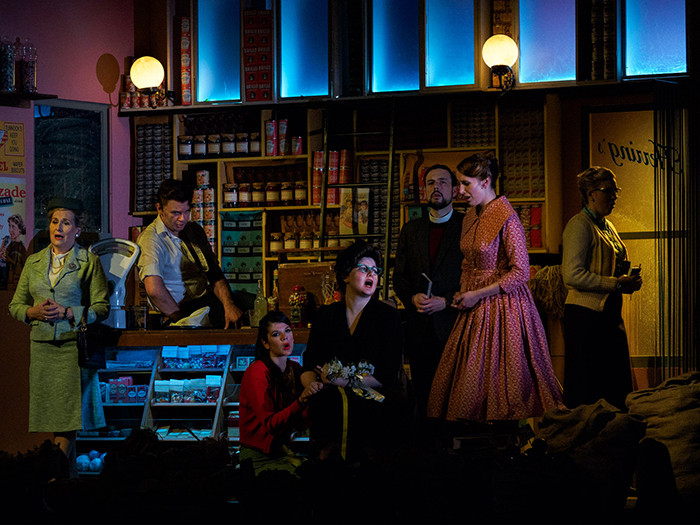
Another piece of gear that was invaluable for the dress rehearsals and four performances was a pair of Think Tank Photo Skin Body Bag pouches on a belt. This let me carry all the lenses, spare batteries and memory cards I needed and let me work quickly and without fuss when moving around backstage, front of house and in the dressing rooms.
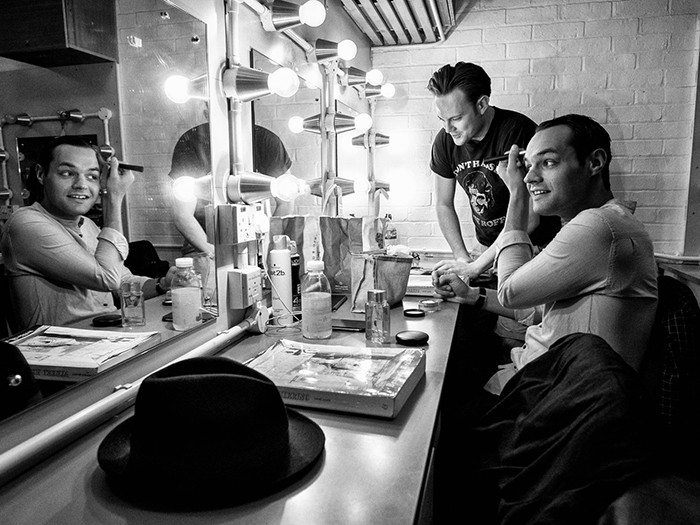
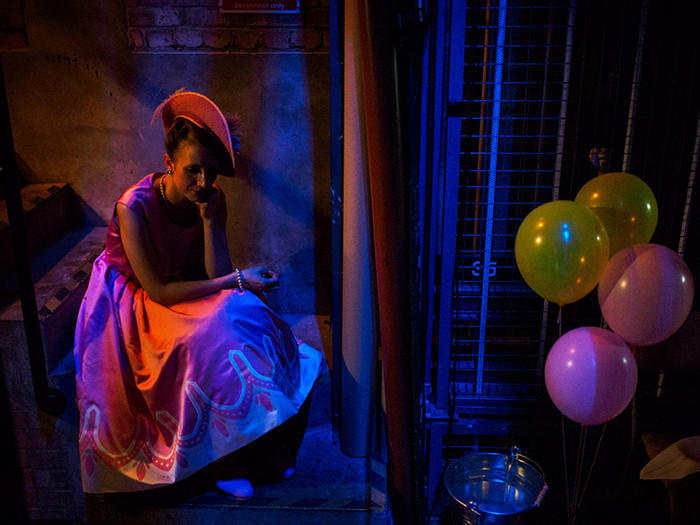
When backstage during the dress rehearsals, I realised the practically pitch black conditions needed faster lenses, so before the performances I got myself a pair of Voigtlander f0.95 Noktons; the 17.5mm and 25mm. These worked a treat and also illustrate nicely how versatile the m43 mount is.
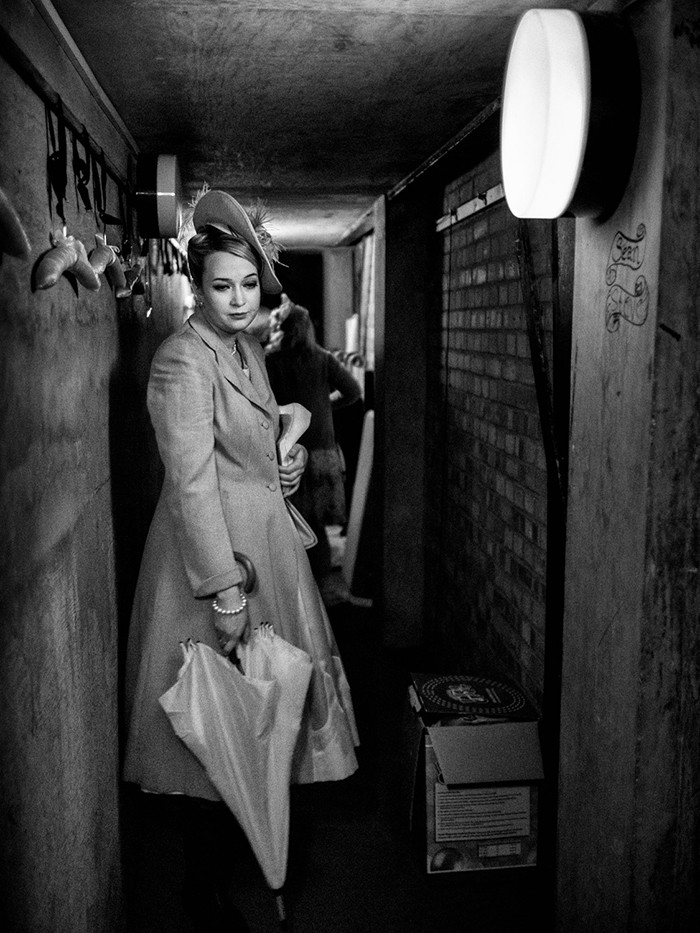
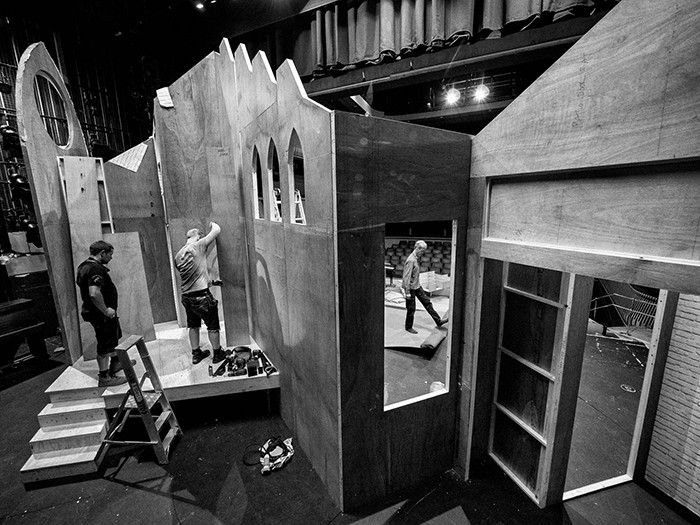
Another lens which came into it’s own during set construction was the new M.Zuiko 7-14mm f2.8PRO. The rotating set filled the stage and was also tall, but this lens really helped get pictures I wouldn’t have been able to get.
Edmond Terakopian
Website: terakopian.com
Blog: photothisandthat.co.uk
Video: teravision.eu
twitter.com/terakopian
instagram.com/terakopian/
flickr.com/photos/terakopian
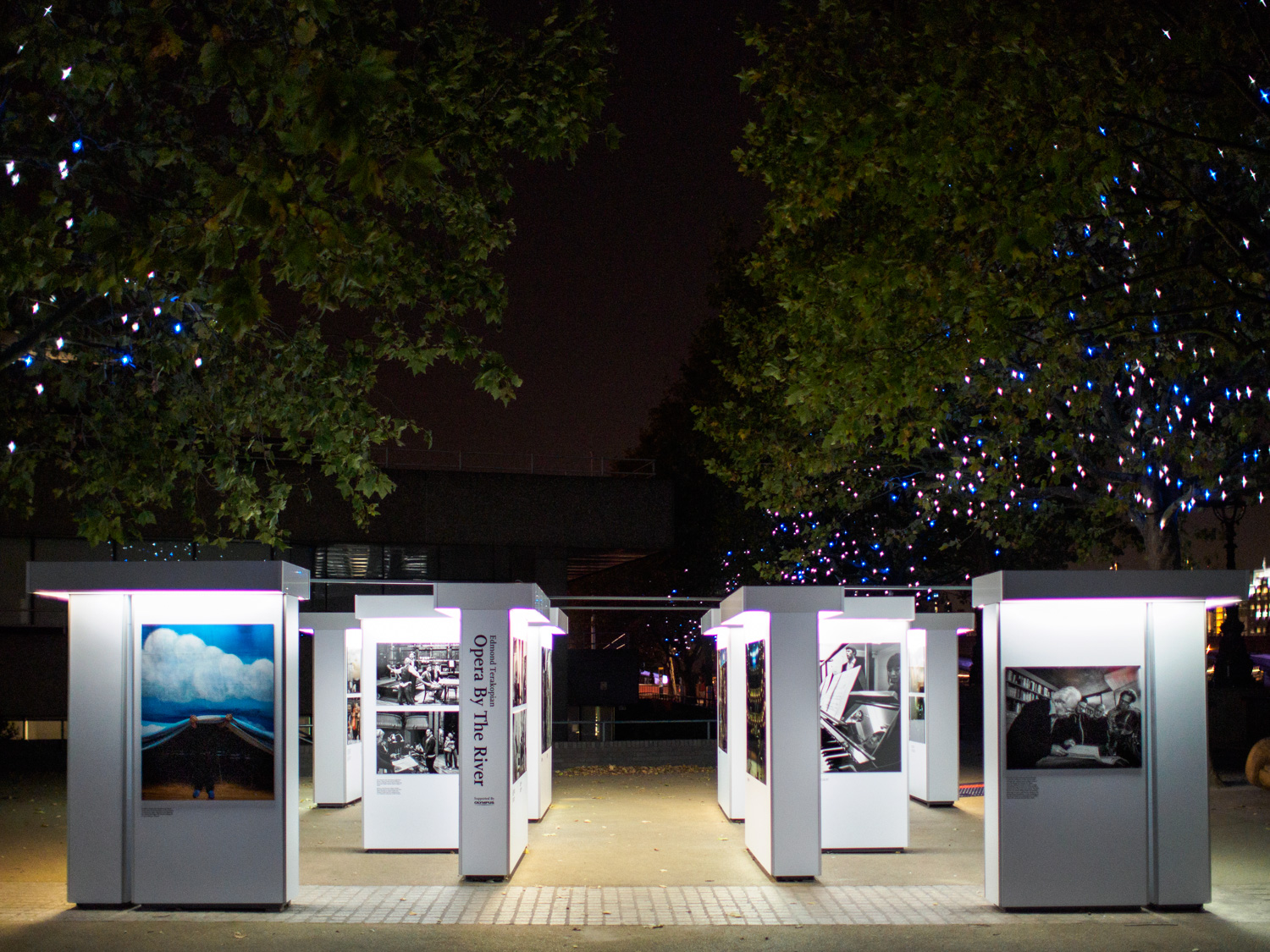
And here is the official Olympus press text about the exhibition (exhibition is now over).
Press information from Olympus
Photo reportage by Edmond Terakopian:
The Royal College of Music photo essay project.
Southend, Tuesday 15th September. Opera by the River is an outdoor photographic installation, exhibiting the work of Edmond Terakopian. Supported by Olympus, Terakopian spent over 7 months photographing the Royal College of Music (RCM), documenting the entire process of staging an opera from the initial auditions through to the final stage take down.
From January 2015 Terakopian worked closely with the RCM and they gave him unique access to their preparations for the production of the opera ‘Albert Herring’. The photo essay captured intimate and revealing images of the opera singers, members of the orchestra and production team as they developed and finally staged the historic opera by Benjamin Britten, a former pupil of the RCM himself.
The photo essay was shot primarily on the OM-D E-M5 Mark ll, the remainder on the OM-D E-M1 and has been edited to 62 images, giving a glimpse into the one of the world’s great conservatoires, The Royal College of Music. The photographs will be displayed at an outdoor exhibition entitled ‘Opera by the River’, on the SouthBank London and is free for the public to view, 24 hours a day.
Terakopian said “Rehearsals, performance and backstage. All very highly tense places for the performers. The OM-D E-M5 Mark II let me be quiet and unobtrusive, so I could get close and make images that would normally be impossible to shoot in these situations. Having such small and lightweight cameras and lenses meant the long days didn’t cause fatigue and the speed of the kit let me work quickly, reacting to moments as they occurred. Making these photographs was a pure joy”.
The exhibition is being staged at RiverSide West on the SouthBank. Overlooking the River Thames it is a 4 minute stroll from the National Theatre and is situated behind the IBM building. It will open from Wednesday 30th September to Sunday 11th October 2015.
Artist’s Statement
Opera By The River
A photo reportage by Edmond Terakopian
Albert Herring; an opera by Benjamin Britten
Performed by the Royal College of Music
I read a wonderful phrase recently; “What would the earth be without art? It would be eh!’. Such a true sentiment. Whilst my career has encompassed photographing hard news stories comprised of politics, bombings, murders, war and earthquakes, my passion has always been stirred when experiencing and photographing the arts. Talent and creative expression have always been a major interest and motivation for me.
With long term assignments sadly becoming a thing of the past, I began to crave shooting a long term project. I coincidentally met a keen photographer on one of my workshops and from there my idea started to move towards shooting an arts project on opera at the Royal College of Music, where he teaches.
My timing coincided with an upcoming staging of Benjamin Britten’s Albert Herring. With Britten being a former pupil of the Royal College of Music and the theatre at there being called the Britten Theatre, every thing was aligned and felt that it was meant to be. I must say that I’m extremely thankful to the Royal College of Music for seeing my vision and allowing me this unique access.
My idea was to document every aspect of this opera, especially the parts no one sees. Auditions, set building, costume fittings, rehearsals, lighting and the dressing rooms. My favourite imagery soon came from what was going on back stage during the dress rehearsals and performances, so I spent a fair amount of my time photographing these beautifully silent and introspective moments.
I started shooting the auditions in January 2015 and the photography aspect of the project took me through to July 2015. After which, around two months of editing, image processing and exhibition design has led me to this point, where I can share this reportage in the form of an exhibition.
The free exhibition is called Opera By The River and is on Riverside Walkway (behind the IBM and ITV buildings) on the South Bank in London. The show begins on Wednesday, September 30th and will go on until Sunday, October 11th 2015. I am forever thankful to Olympus for seeing my vision for this project and supporting it. Without them, this exhibition would never have been possible. I’m also thrilled to have collaborated with Stuart Smith from Smith Design who has curated the exhibition. The open air installation construction and printing has been done by the amazing team at Standard8.
For me there were three main challenges to this reportage; the first being able to find special moments and juxtapositions during the many, many rehearsals. On the face of it, a white room with fluorescent lights and singers in normal attire aren’t the most visually arresting scenes. Also, one rehearsal looks pretty much like another. The second challenge was to keep creatively motivated during this long term shoot.
I needn’t have worried as being surrounded with so much talent from the Opera School made this project an absolute joy to photograph. That creative energy kept me buzzing throughout the months and really motivated me to make these images sing. Later in the process when the orchestra joined in the rehearsals, the energy was kicked up a notch, just making the process even more magical.
The third challenge was to be unobtrusive. I like to work in close, but naturally didn’t want to put off the musicians. Working gently and with my small and quite OM-D cameras and M.Zuiko lenses made this a possibility and I was thrilled (and blushed) when the head of opera mentioned in his closing speech after the last performance, just how unobtrusive I had been; he even said “barely noticeable”.
One of the interesting parts to the project was a visit to Aldeburgh, Benjamin Britten’s home town. Visiting The Red House where Britten lived and worked, to see the original hand written musical score was fascinating, but it became an even more special moment when Michael Rosewell who as well as being head of the opera school was also conducting the piece, flipped through the pages as he wanted to double check one single note, which sounded like it maybe incorrectly printed in the modern reprints. The note was correct!
It took seven months to shoot, resulting in 31,794 images (and a head ache in the editing stage) with 62 of these photographs making it to the exhibition. It’s been a fascinating journey for me, being one of the highlights of my 26 year career, and I’m thankful to both the Royal College of Music and Olympus for their help and support, and very thrilled to be able to share this exhibition with all who can visit and hopefully enjoy it.
www.terakopian.com
Twitter: @terakopian
#operabytheriver