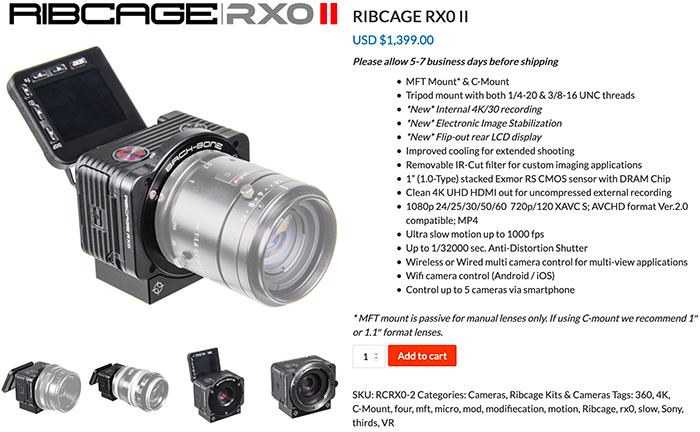
This is weird: Modified Sony RX0II with a MFT mount!

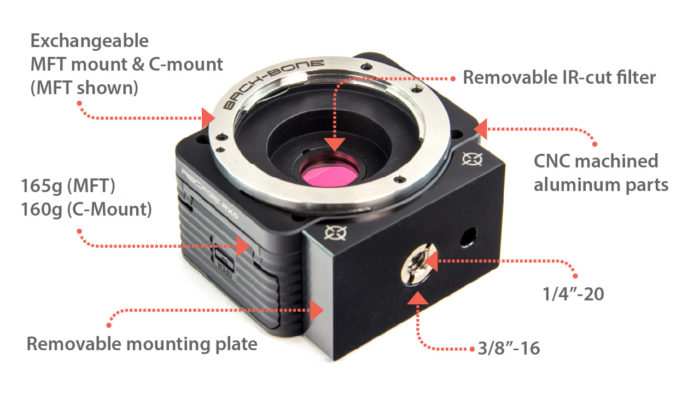
Ribcage offers this modified MFT mount Sony RX0II.

Description

Important: RIBCAGE RX0 II is not waterproof. The MFT mount is designed for manual lenses only.

Put your own glass on the amazing Sony RX0 II with our Ribcage interchangeable lens mod. This fully modified RX0 II camera comes configured with a passive micro four thirds (MFT) mount* and can be re-configured to C-Mount at any time with the included mounting ring. With this mount combination you can attach almost any lens, or use your camera with imaging equipment such as microscopes and telescopes. Use your SLR lenses with an optional adapter, or use some great vintage cinema lenses for a unique look.

If desired, the removable IR-cut filter allows you to capture footage in the wavelength of your choice for custom imaging and scientific applications. Control up to 5 cameras at once via WiFi and Bluetooth (Android/iOS/PC). Pair each camera with the new Sony CCB-WD1 Wired Control Box and create massive VR or bullet time arrays of up to 100 cameras with frame-by-frame sync accuracy!

In addition our premium aluminum components help keep the camera cool for extended shooting!

Why Olympus Added 12-45mm F4 To Their Lens Roadmap

Robin Wong:

Olympus announced an updated lens roadmap with a few interesting new items, and I am drawing the attention specifically to 12-45mm F4 PRO lens. I think something else is happening here, and I am exploring the possibilities of a new PRO lens line-up from Olympus!

New Mitakon Creator 85mm f/2.8 1-5X Super Macro for MFT announced

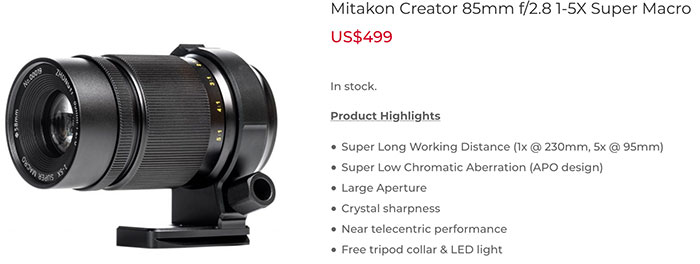
Mitakon released the new Creator 85mm f/2.8 1-5X Super Macro lens which is also available as native MFT mount option:

Zhongyi Mitakon 85mm f/2.8 1-5X Super Macro Lens has a wide magnification range (from 1X to 5X) allowing photographers to capture subjects at different sizes. Users no longer need to DIY or use any extension tubes to reach high magnification shooting. The lens is also designed to have one of the longest working distance for ANY super macro lens. The closest working distance at 5x magnification is 3.93” (10cm) and 10.7” (27.2cm) at 1x magnification. This working distance is so much longer than traditional macro lenses in the market. Photographers can now start shooting macro objects without getting too close and scare them away. The extended working distance also implies lighting can get to the subjects easier. It is also more friendly to use on video shooting. This new super macro lens also has a near telecentric performance which is a big advantage when it comes to macro image stacking photography or industrial usage.

The new 1x-5x Super Macro lens incorporates a 12 elements in 8 groups structure which delivers impressive resolution from corners to corners. The chromatic aberration is also controlled to the minimum (APO design). Weighing merely 1.65 lbs (750g) and 6.7cm long, it is a perfect companion for both wildlife or indoor lab shooting. It is relatively compact in its class which allows photographers to capture extremely fine subjects or patterns with different sizes. Greater magnification can also be achieved by stacking extension tubes or bellows. The high magnification is extremely useful for scientific purposes. The lens can only be used in macro distances and cannot focus to infinity. A 58mm filter thread is also available.

The enclosure of the lens is made of metal to strengthen its durability. Canon EF, Nikon F, Sony FE, Sony Alpha, Pentax K, Sony E, Micro Four Thirds, Fuji X mounts are available.

Sample Images

5 years warranty only covers the lens but NOT the accessories (i.e. tripod collar & LED light)
Panasonic exits chipmaking with sale to Taiwan player

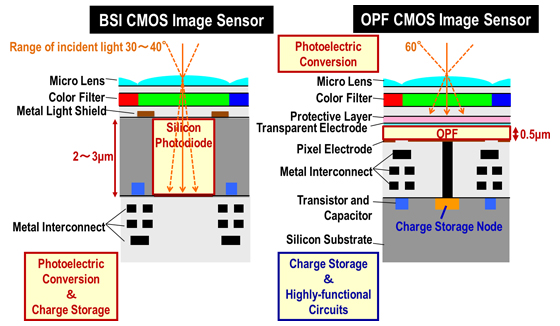
Panasonic sold their 49% share in the TowerJazz joint venture. It means i will no more play any part image sensor production. I don’t think it means the end of their organic sensor development. Probably TowerJazz or Sony or Samyang will produce those future sensors for them.

Reuters reports:

TOKYO, Nov 28 (Reuters) – Panasonic Corp said it would sell its loss-making semiconductor unit to Taiwan’s Nuvoton Technology Corp for $250 million as the Japanese electronics giant struggles to lift its profit amid a lack of growth drivers.

The sale is part of Panasonic’s plans to cut fixed costs by 100 billion yen ($920 million) by the year ending in March 2022 by consolidating production sites and overhauling loss-making businesses.

Panasonic has already divested most of its chip business as it lost to more nimble Korean and Taiwanese rivals, and has shut down or shifted its manufacturing facilities to its joint venture (JV) with Israel’s Tower Semiconductor.

Its semiconductor unit currently focuses on designing power-management chips and sensors for smartphones, cars and security cameras. It sold part of the power management chip business to Japan’s Rohm Co this month.

The latest deal includes the sale of the entire JV, which is owned 51% by Tower and 49% by the Panasonic chip unit. The JV operates three Japanese chipmaking facilities.

Panasonic said the sale will not have any significant impact on its earnings. The value of the deal that Panasonic has announced excludes the amount Nuvoton would pay for Tower Semiconductor’s stake in the joint venture.

Nuvoton said in a statement the all-cash transaction was expected to close by June 2020, and would “increase Nuvoton’s presence in the global semiconductor industry through greater scale and volume of semiconductor solutions”.

Nuvoton, which was spun off from Winbond Electronics Corp in 2008, supplies chips for electronic devices including computers and audio products.

Panasonic has turned its focus away from low-margin consumer electronics and bet on businesses that sell to automakers, as well as to corporations such as factory-owners and firms that automate processes.

But the shift has failed to lift profit at a time when the U.S.-China trade war has hit industrial purchases and output, and the global car market is contracting. (Reporting by Makiko Yamazaki in Tokyo; Additional reporting by Ben Blanchard in Taipei, Neha Malara in Bengaluru; Editing by Himani Sarkar)

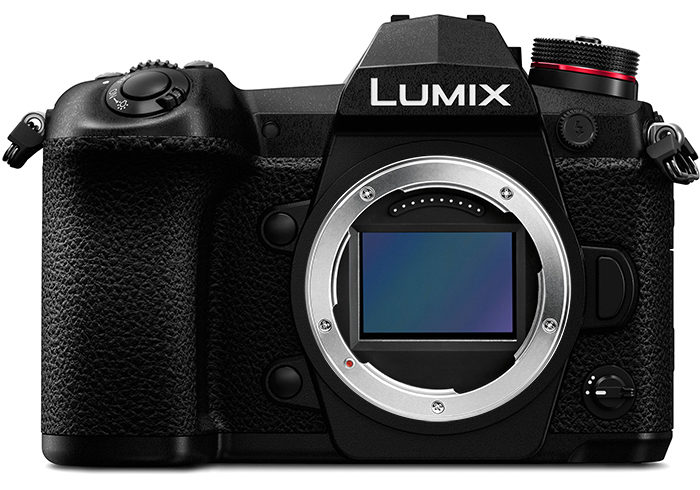
National Geographic says the Panasonic G9 and Olympus E-M1II are among the best “travelers cameras” you can buy

This is what National Geographic had to say about the two cameras:

The OM-D E-M1MKII is the best wildlife camera in the bunch. The combination of dials, buttons, and lever toggles lets you change settings faster than on most other imaging systems, compact or professional grade. The weather sealing rivals that of top-tier professional DSLRs with a fantastic grip for its size. And the lenses! All the pro line lenses have a high-build quality that can take whatever you throw at them and sport wonderful features, such as integrated lens hoods, smooth zoom/focus rings, and round bokeh, or background blur. As a micro four thirds (MFT) camera, its sensor is small, giving you long reach from physically smaller lenses, such as the 300mm (600mm equivalent). The ability to carry a small backpack with a few small lenses, fantastic ergonomics, excellent image stabilization, all-weather durability, and high-speed performance means a potent wildlife photography kit that won’t weigh you down when you’re on the go.

The DC-G9 is comparable to the Olympus OM-D E-M1MKII but comes out ahead in video. This camera has a full-size HDMI, better ergonomics for waist- and chest-level video shooting, and more options for capture rates and color profiles, plus a convenient electronic viewfinder and roomy eyecup. And unlike the more classical AF system found in the OM-D E-M1MKII, the DC-G9 uses Panasonic’s DFD (Depth from Defocus) technology, which provides better results in photos of people, still subjects, and animals with a firmware update, though there can be issues in high-speed situations. Another perk for videos and stills? The IBIS system, which integrates well with Panasonic’s stabilized lenses. The DC-G9 is larger than other cameras on this list, but a pro-style top-down info screen makes up for its size.
Tip: Pair the DC-G9 with the wonderful 12-60mm (24-120mm equivalent) kit lens, and you’re good to go for most subjects on your travels.