



Also Panasonic is working on a new organic sensor.

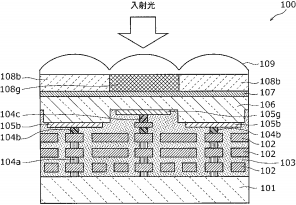
The japanese Blog Egami (Click here) found a new Panasonic patent disclosing a new organic sensor technology. It’s the same idea from Fuji and as you know Fuji claims that their APS-C organic sensor can beats the image quality of any current fullframe sensor. Of course a patent is just that….a paper! It might take a long time before it gets used for real or it might will never happen at all.
Micro Four Thirds needs a new generation of sensor with a boost in image quality. Fuji is going to do that with the organic sensor, and Sigma said they will announce a surprise in early January (maybe a new foveon sensor that doesn’t cost as much as the one used for that crazy priced Sigma SD1 (See price on eBay)). Would be nice to see some surprises from Panasonic and Olympus too!

Oitszek
5 months ago |Lolol wishful thinking, wake me up when my 3 year old d700 is beaten by those sh cameras… And when they release a 17,5mm f 0,7 lens, i ve learnt my lesson and avoid 43 sensor products like the plague
Marcel
5 months ago |and you’re reading a rumor site on m43 because you have nothing to shoot with your fancy D700?
Bob B.
5 months ago |Fancy ..Smancy.
jam
5 months ago |Yeah..I’ve got a m43 camera and actively take part in all the D700 forums…………:)
Boooo!
5 months ago |Fun fact for the day: an f/0.7 lens on m4/3 is an f/0.9 lens on APS-C when it comes to DOF (but the f/0.7 lens is still two thirds of a stop faster when it comes to light gathering).
Now go troll some APS-C people.
Pete
5 months ago |the old, fat d700 from a good friend is beaten every day! it is to fat to carry it a whole day long, with older lenses the quality is not good, he can not make any film at all, live view is hard to find and use, high iso pictures are not very interesting if you don’t take action-sport-pictures – it takes just a few weeks he will buy a MFT kamera too!
Gunt
5 months ago |They’ll have to act fast, fuji’s on fire and might eat huge part of their market shares with the LX, and the upcoming products using their new organic sensor technology.
Ant
5 months ago |There’s still the price range issue though.
That’s assuming the likely chance that Fuji will only release one LX with price comparable to how the x100 and x10 is priced against camera of similar class.
Yun
5 months ago |Yes , Pana is heading in the right direction . This is the department that need revolution !
In order to stay competitive , a new sensor is a must for MFT system , hope to see it in the year of 2012 .
Oitszek
5 months ago |I d rather see an improvement in oly sensor to be honest, but i doubt it will happen
Duarte Bruno
5 months ago |Sincerely, I don’t see what the fuss is all about.
The only real sensor challenge in m43 right now (at least when considering the GH2) is DR.
If the GH3 does indeed feature a global shutter or an fast electronic one that works well for full resolution, then the DR challenge can easily be addressed with image stacking.
Bob B.
5 months ago |Maybe my new GX1 has the organic sensor…and Panasonic just didn’t tell anyone. Shhhhhhhhh! It’s a secret.
Yun
5 months ago |Oh , really ? I’m too got GX1 , really a huge step forward compare with my sold GF2 .
Organic elements ?
Bob B.
5 months ago |I was just joking about the organic sensor….although I do love the GX1 as it is.
Carlos Esguerra
5 months ago |hard to fathom
Abi
5 months ago |hey admin, a patent is not just a paper… it costs about $5000 to register in japan and $1500 to maintain it annually and a patent like this comes from $$$ research, unlike apple’s trash design patents :p
Dummy00001
5 months ago |(removed)
Kralin
5 months ago |and if you see it today, it means panasonic is studying and probably working on it since 3-4 years…
Dummy00001
5 months ago |> The japanese Blog Egami (Click here) found a new Panasonic patent [...]
Worth mentioning that the patent was filed “2010.6.8″, June 8th, 2010.
So no, it is not directly related to the current hype around Fuji’s announcement.
Needless to mention that the organic CMOS, as research goes, is nothing new. Similarly to the printable circuits, they are the main directions of research to replace (or minimize use of) relatively expensive lithography.
> Would be nice to see some surprises from Panasonic and Olympus too!
IMO Panny is already mostly clear on sensor front. They have two decently performing sensors (in GH2 and in G3/GX1). But yes, better sensor, on par/better than NEX-5N would definitely help cement Panny’s position in the camera market.
Oly is … well, they produce no cameras interesting to me. Better sensor wouldn’t help.
st3v4nt
5 months ago |Maybe it’s just me….but is there somewhere someone have any explanation about this so called organic sensor benefit over current sensor used? Heck even the so called EXMOR sensor benefit still unclear for me…and it’s really hard to judge the sensor performance alone from the picture without knowing the setting (speed, light, etc) and the lens quality used to take the picture….or else I say it’s just another marketing technical gimmick they try to sell to us….
OlyFan
5 months ago |No bloody use. If Pana comes with an organic sensor, it will take atleast 2 years for Oly to get that sensor.
Vivek
5 months ago |Perhaps news to you- Olympus never made a sensor. They used Kodak sensor until Kodak ditched them and Panasonic came to their rescue. All liveview view cams made by Olympus employ Panasonic’s NMOS sensor.
narutogrey
5 months ago |That’s exactly what he is saying. Since Olympus uses Panasonic’s sensors, they need to wait at least 2 years before Panasonic is willing to sell them their newest sensors.
snowflake
5 months ago |Advantage of organic film
The advantage of an organic sensor is, as I understand it, two fold. Please correct me if someone knows better.
First, it is not really an organic sensor, it is a sensor with an organic surface.
The first advantage is that the surface is not as reflective. You’ve seen your sensor and it is somewhat mirror like. This reflected light is lost light and reduces the light gathering capacity of the sensor. This is particularly an issue near the edge of a sensor since the angle of incidence to the sensor is conducive to reflection rather than absorption.
The second advantage is, I think, is that when the photons travel through the organic film, the photons can be directed into the sensor itself so the incident angle of the photon to the sensor is more perpendicular to the sensor. This increases the likely hood that a photon will dislodge an electron that will be used to describe an image. In essence one gains speed with out increasing the noise of the sensor.
Bob B.
5 months ago |Thanks Snowflake.
PanaGuy
5 months ago |What about using technology that already exists? Cut the 24MP NEX-7 sensor into two approx. 12MP sensors and it would already be a leap forward compared to now. What are they waiting for?
spam
5 months ago |If you cut the NEX-7 sensor in half then you have one broken sensor, and even if it worked it wouldn’t be big enough for 4:3.
lnqe-M
5 months ago |lnqe-M
5 months ago |I think the organic sensor hopefully, is 2 step better so the old sensor to Panasonic.
P4INKiller
5 months ago |I remain highly skeptical until someone actually explains what an organic sensor entails.
Vivek
5 months ago |Instead of Silicon, synthetic organic materials are used to convert light to electricity.
“Organic” here can not be farther removed than an organic vegetable. In fact, most are very carcinogenic!
BrianP
5 months ago |They don’t use fertilizer to grow them… or give them hormones.
come on pana
5 months ago |sorry but i think ag-af100 already have organic sensor 1. the sensor shine colors 2. they said it is better than dslr…
any suggestion ? http://pro-av.panasonic.net/en/af100/
Esa Tuunanen
5 months ago |Would be more interested about this than organic mumbo jumbo marketing:
http://www.43rumors.com/foveon-like-sensor-patent-from-panasonic-flash-sync-patent-from-olympus/
That’s because unlike of unreliable marketing claims it would surely increase both real image resolution by eliminating bayer CFA&AA filter and also improve sensitivity by utilizing all light per pixel instead of filtering away light of wrong wavelengths.
(Foveon sensor isn’t solution to bayer sensor’s loss of light because it’s even worse in sensitivity)