



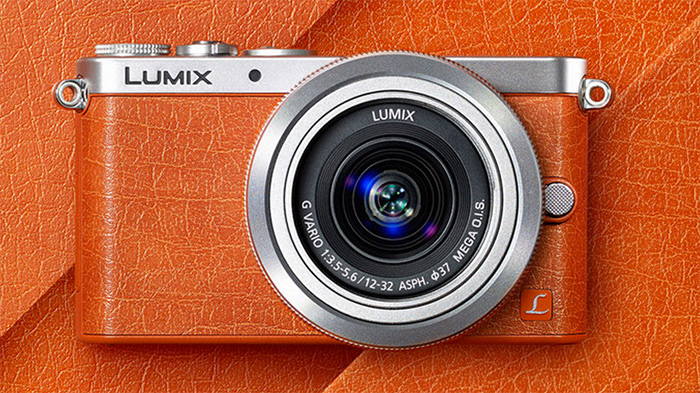
A deeper look to the new Panasonic LX5 sensor…

Image courtesy: Quesabesde.com
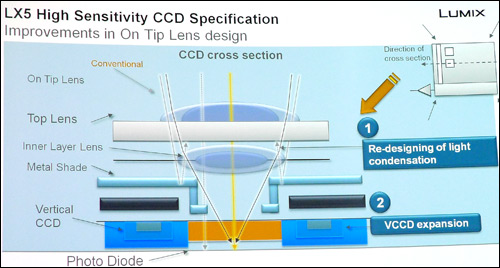
For all those of you interested in MicroFourThirds the new Panasonic sensor (used for the new Panasonic LX5) may give us some hints about the next generation of MicroFourThirds sensors.
According to Panasonic the sensor has a new design which allows to capture more light for every single pixel. Quesabesde also noticed a better chromatic noise control (but this maybe depends form the new Venus engine). You can judge the difference between the LX3 and the LX5 sensor by looking at those images: http://www.quesabesde.com/camdig/noticias/Lumix_LX5_muestra_02g.jpg. Panasonic itself claims that the new sensor is noiseless at ISO 800 which (if true) is a very good news considering that the sensor has a much higher pixel density than current MicroFourThirds sensor. Panasonic also said that the LX5 sensor has a better sensivity (by 31%) and saturation (38%) and greater dynamic range compared to the older Panasonic LX3. More image samples have been posted here at DPreview and by RealityScanner on flickr
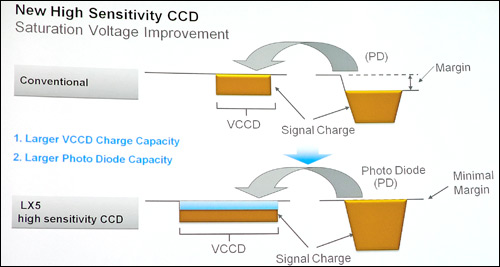
Image courtesy: Quesabesde.com
P.S.: You can now preorder the Panasonic LX5 on Amazon
Tobias W.
2 years ago |The LX5 is supposed to cost 500 bucks whereas the S90 from Canon can be purchased at Amazon for 350 bucks. I’m not convinced the LX5 will find that many buyers with that kind of price.
Dummy00001
2 years ago |> You can judge the difference between the LX3 and the LX5 sensor by looking at those images
LX5 picture is much softer. LX3 has more detail. Just look at the water.
I actually like LX3 picture more.
A.
2 years ago |I’m sorry to say but, after looking at the samples on DPReview, I find the images way too noisy when viewed at full size. It’s true that chroma noise is well controlled, but luminance noise isn’t. And, what is disappointing, the “improvement” comes at an unacceptable price: the software smearing of all detail. Even the image at ISO 640 (some rusty piece of metal) suffers from loss of detail.
Each time I have great expectations from manufacturers, yet each time I feel cheated and disappointed…
MK
2 years ago |hahaha im not disappointed – im happy to keep shooting lx3! my first impression is that the pictures are great – seems like more color saturation but less detail. I still might get one (lx5) the day that lx6 is annouced…. $500 is a huge deal breaker.
i’ll miss the zoom until (1) the nikon evil, (2) the mini gf1 (or gf2), or (3) olympus releases a MFT with good build quality and a body flash. I can has one of these picture devices?
17mm sensor diagonal sounds fantastic with sub-2″ diameter lenses. its gotta have body flash – i hate cumbersome hotshoe ones!!
Rob-L
2 years ago |I’m sorry, is this a M43 rumors fsite or a Panasonic rumors site? As cool as the LX5 may or may not be, it has nothing to do with M43!
clark
2 years ago |I agree the LX3 sample looks sharper… but who knows what the result may be if we venture outside the default settings….
Regarding the “noiseless iso800″ statement, the DPR sample kinda bursts that bubble. It’s definitely not a clean iso800…
Agent00soul
2 years ago |Well, Rob, it might actually have. If the new sensor technology is used in the next M43 sensor.
The illustration calls the sensor a “CCD”. But haven’t we all learned that CCDs won’t do video and live view?
d33psh1t3
2 years ago |Panasonic might have found that ISO800 is clean after the application of a strong noise reduction filter.
However the ISO200 sample from dpreview shows tons of noise
http://s3.amazonaws.com/masters.galleries.dpreview.com/416374.jpg?AWSAccessKeyId=14Y3MT0G2J4Y72K3ZXR2&Expires=1279728342&Signature=grNrB8Ph0IFGEAVMEVxSDp4SY1w%3d
spanky
2 years ago |Agent00soul says: The illustration calls the sensor a “CCD”. But haven’t we all learned that CCDs won’t do video and live view?
Not sure where we’ve learned that. CCDs have been used in video cameras for years. CCTV cameras, for example, are CCD cameras and they provide a live video feed. The issues between a CCD and a CMOS sensor is one of power required by the sensor, the heat generated by the sensor, and the processing power required to process the sensor information.
at
2 years ago |The major problem with the CCD of digital camera when shooting video is vertical smear. Indeed, this can be solved but at a high cost, so it will not be possible on a consumer DC.
Anyway, you will get richer color and sharper images with CCD, but I am not really convinced by the noise of LX5 sample as well. Probably, the sensor size limitation and sharpness of CCD is still not comparable with M4/3 sensor, but already outperforms all the current CMOS DCs in terms of sharpness and picture clarity.
you know my name
2 years ago |full frame transfer CCD wont do liveview feeds, but interline transfer CCD will
most P&S cams are interline transfer CCD
Andrew Reid
2 years ago |Remember however that the MicroFourThirds sensors are CMOS. This one is CCD.
The light-path / micro lens stuff can be transferred to CMOS though, I would have thought, even though they are different types of sensors.
admin
2 years ago |Thanks Andrew! Let us know what kind of improvements you expect form the new MFT sensor
Zonkie
2 years ago |However interesting the LX5 might be (I’m an LX3 owner, so it’s interesting for me), I think that the big news today for m43 is the Fujifilm new sensor introduced in the F300EXR. Didn’t anyone notice that it does phase detection auto-focus in the main sensor??
The big problem of using the great Olympus 4/3 lenses on m4/3 bodies is that those lenses don’t work well (or at all) with contrast detect auto-focus. But what if Olympus could get phase detection to work on the main sensor, like Fujifilm has done? The whole problem would be solved and the merging of 3/4 and m4/3 could be one big step closer.
Now the question is: will the Olympus modular camera have a sensor produced by Fuji that can do that? With excellent color reproduction, huge dynamic range and phase detect autofocus that could be a killer camera for sure. And you could use all Oly’s lenses (changing the mount or using an adapter, but always without a mirror) with fast auto-focus.
Time to investigate and ask your sources!
roger767
2 years ago |time to make a m4/3 version of this new sensor and put in the GF2 (with body IS) And sell those puppies.
manny
2 years ago |i thought lx5 will be using a 43 sensor as you have suggested here.
MK
2 years ago |+1 roger, i only wish panasonic did body is.
sadly them and oly probably have an unwritten agreement where they want to make as much $ as possible so neither will encroach upon each others m4/3 lens lineup (non-stabilized vs OIS). its business. the panasonic 14-140mm is more expensive than the flippin camera… give me a break. $499 for lx5? they’re really gettin crazy over there in tokyo with their pricing schemes
pdc
2 years ago |The LX5 samples look overprocessed to me. Would be nice to get RAWs to compare
LX5 to LX3. A great camera for light load travelling, but I’m really waiting on a new mFT camera with much improved sensor – my collection of 35mm SLR lenses needs
a host with higher IQ than current EP&G/GF/GH offerings. If Nikon or Canon come up
with a mirrorless high resolution live-view system in APS-C or APS-H or larger, I would be in there before you could say jackrabbit, unless I have first spent all I have on Olympus or Panasonic mFT. So who is going to win me over for the next decade?
As for serious video, I’ll probably go with Panasonic AG-AF100, after it has been exposed to some serious competition and the price gets down to 2-3 grand.
Ozz
2 years ago |Why Panasonic JAPAN insist of not posting anything about it!!!!!!!!!
Andrew Reid
2 years ago |For the GH2 sensor, next M43 evolution, I’d say the gapless micro lens rumour as posted here a while ago and a similar change to the light path as on the LX5 are to be taken as certainties. The 7D had gapless micro lenses, it’s a natural progression for CMOS technology.
I am still hoping for Global Shutter though
The GH2 needs to do much better with fixed pattern noise (FPN), and have a cleaner and more saturated ISO 1600, 3200 at a push. That’s where I believe the main weaknesses are with the GH1′s sensor. The Canon equivalents have much less FPN.
Can’t wait for Photokina!!
Lawrence
2 years ago |Thanks for this info about the LX5 sensor.Well,what type of current sensors are being used in Panasonic devices?